

Bangladesh Education Minister Orders Teachers Back to Rural Schools to Address Chronic Staffing Shortages
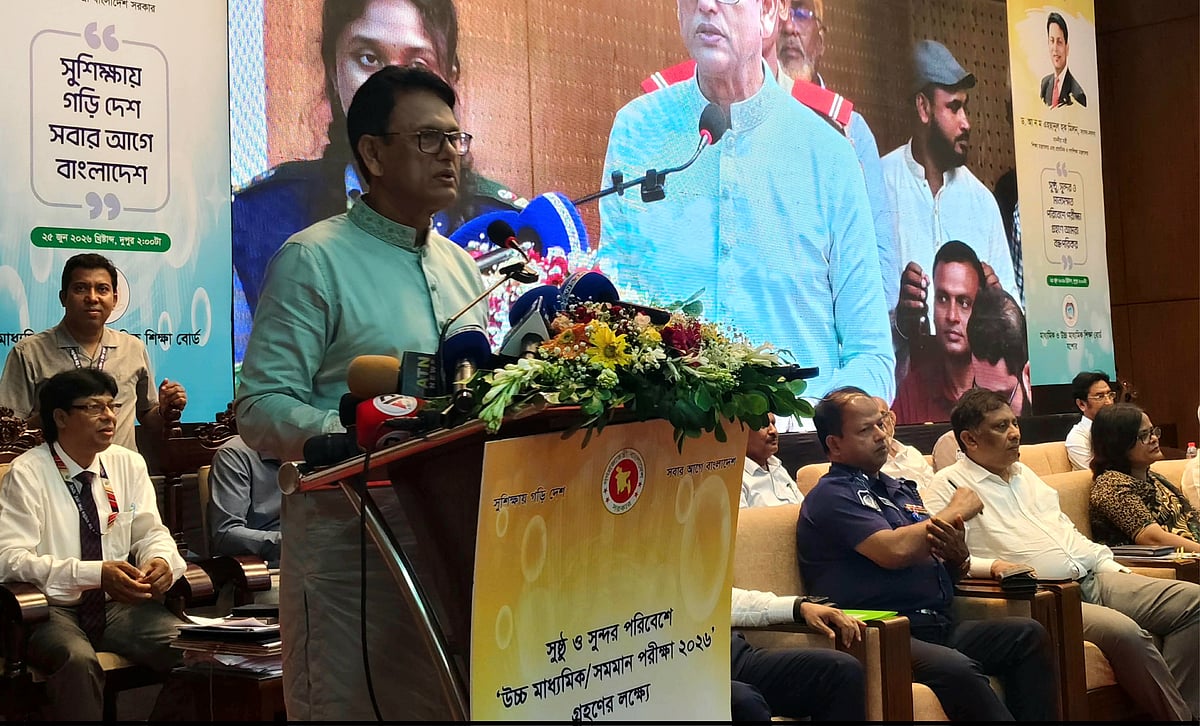
Photo Collected
Education Minister ANM Ehsanul Haque Milan has announced a sweeping directive to address the chronic shortage of teaching staff in rural areas, vowing to forcibly return educators who have spent years securing transfers to urban centers. Addressing a meeting of examination center officials in Khulna, the minister characterized the concentration of teachers in major cities like Dhaka, Sylhet, and Rajshahi as a primary weakness of the national education system.
According to the minister, a comprehensive list of teachers who have utilized influence to migrate from village schools to urban environments over the past two decades is currently being compiled. All such individuals will be required to return to their original postings. Future transfer requests will be strictly regulated by a newly formed committee, and the government has warned against circumventing these official channels.
Highlighting the systemic decay of recent years, the minister emphasized that achieving quality education requires fundamental, wide-reaching reforms. He noted that the ministry is currently operating with a deficit of 60,000 teachers across the country’s 65,500 government schools, a vacancy gap exacerbated by the unauthorized migration of staff to metropolitan areas.
Addressing the integrity of upcoming examinations, Minister Milan signaled a zero-tolerance approach toward academic dishonesty and the emergence of “digital cheating.” He warned that center-in-charge officials will be held personally accountable if educational materials are found in exam halls, noting that any teacher found facilitating digital malpractice will face disciplinary action.
To standardize academic assessments, the government is introducing uniform question papers across all nine education boards, a policy slated for full implementation, including technical and madrasa boards, by next year. Addressing concerns regarding the security of these materials, the minister stated that law enforcement agencies will monitor social media platforms to identify and interrogate anyone spreading claims of question leaks.
As part of broader efforts to restore academic standards, the ministry is initiating an amendment to the Public Examination Act of 1980. This legislative change aims to formalize the process for students to challenge exam results. Furthermore, the ministry will implement random sampling audits of exam scripts to monitor grading accuracy, replacing previous practices that allegedly pressured teachers to inflate student scores. The event, chaired by Jessore Secondary and Higher Secondary Education Board Chairman Professor Faruque Azam Md. Abdus Salam, was attended by senior administrative and law enforcement officials from the Khulna region.
0%
0%
0%
0%