
Internal Dissent at India Election Commission Strengthens Opposition Hand
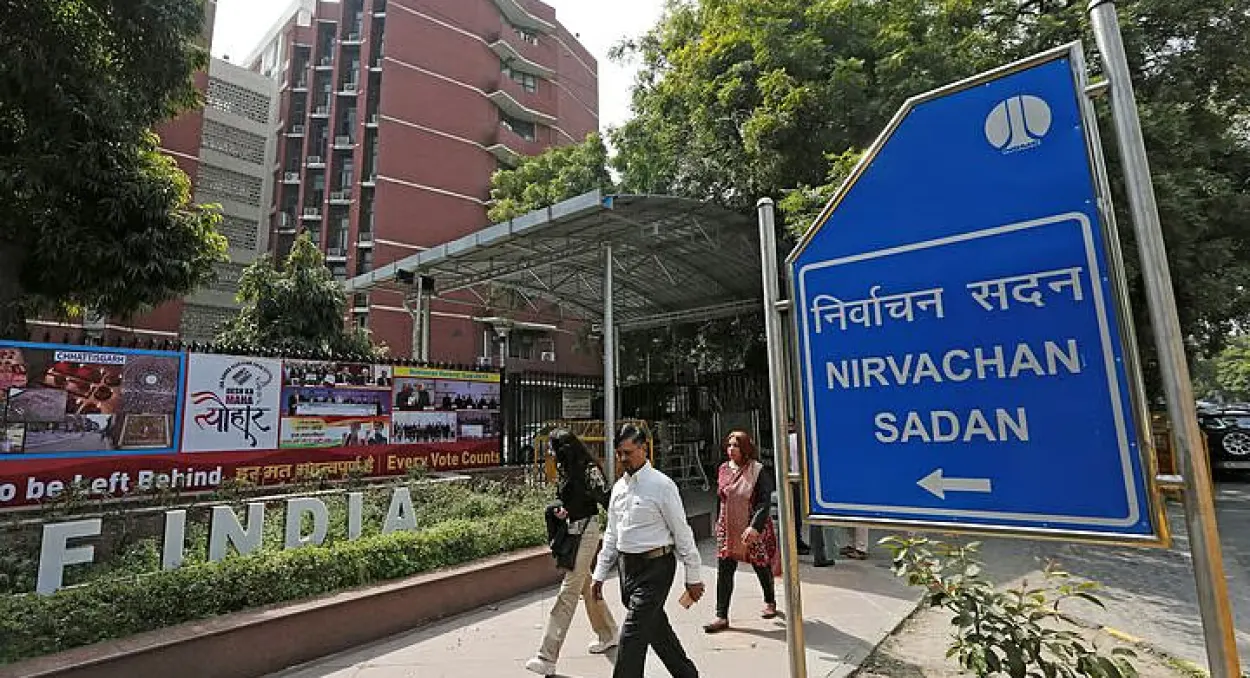
Photo: Collected
An investigative report published by the All-India English daily newspaper The Indian Express has revealed serious internal discord and procedural anomalies within India's Election Commission, highlighting that opposition political parties' longstanding allegations regarding the commission's controversial conduct were not baseless.
According to the report published on Wednesday, the three-member commission—functioning under the supervision of Chief Election Commissioner Gyanesh Kumar—has witnessed unprecedented friction over critical matters such as voter list revisions, deletions, form modifications, database controls, and electoral appeals in West Bengal. Over the past 10 months, election commissioners Sukhbir Singh Sandhu and Vivek Joshi formally registered their objections at least 14 times, branding certain decisions as unauthorized and illegal.
The investigative findings, gathered through interviews with election officials across New Delhi, Kolkata, Goa, and Mumbai as well as internal document reviews, show that the two commissioners were kept in the dark about multiple decisions. In one instance, commissioners Sandhu and Joshi objected to changes made in July to Form 6—used for new voter registrations—which introduced a question requiring applicants to state whether their parents or grandparents were listed in the electoral rolls following the 2002 intensive revision.
Commissioner Joshi had formally noted in May that such modifications could not be implemented without statutory amendments by India's central government, an assessment supported by Commissioner Sandhu. Despite their dissent, the change was enacted, leading Commissioner Sandhu to write on August 13 demanding the removal of the modification, which he termed unauthorized and unlawful.
Further internal disputes arose over the centralization of voter database control. While voter rolls were traditionally managed via the electoral registration officer network, the election commission progressively centralized oversight through the ECI-Net system managed by its IT director. Commissioners Joshi and Sandhu raised concerns in May and August respectively, arguing that state-level electoral officers were being bypassed and stripped of their authority, prompting them to escalate their concerns regarding IT system controls to India's cabinet secretary.
The report also sheds light on controversies surrounding the intensive revision of electoral rolls in the neighboring state of West Bengal, a process that has prompted legal proceedings before the Supreme Court of India. During recent hearings, the election commission disclosed that 3.8 million applications are pending before tribunals, comprising 2.21 million applications from voters seeking inclusion and 1.61 million requests seeking the removal of names previously added by judicial officers.
The report revealed that the identity of the appellants seeking name deletions remains undisclosed. In August, Commissioner Sandhu formally asked officials in New Delhi who had authorized and granted the right to file these appeals on behalf of the commission. Internal reports indicate that neither Sandhu, Joshi, nor the current Chief Electoral Officer of West Bengal were informed about the basis or procedures surrounding these deletion appeals.