

Massive Civil War Mass Grave Yields 572 Skeletons in Sri Lankas Jaffna Region
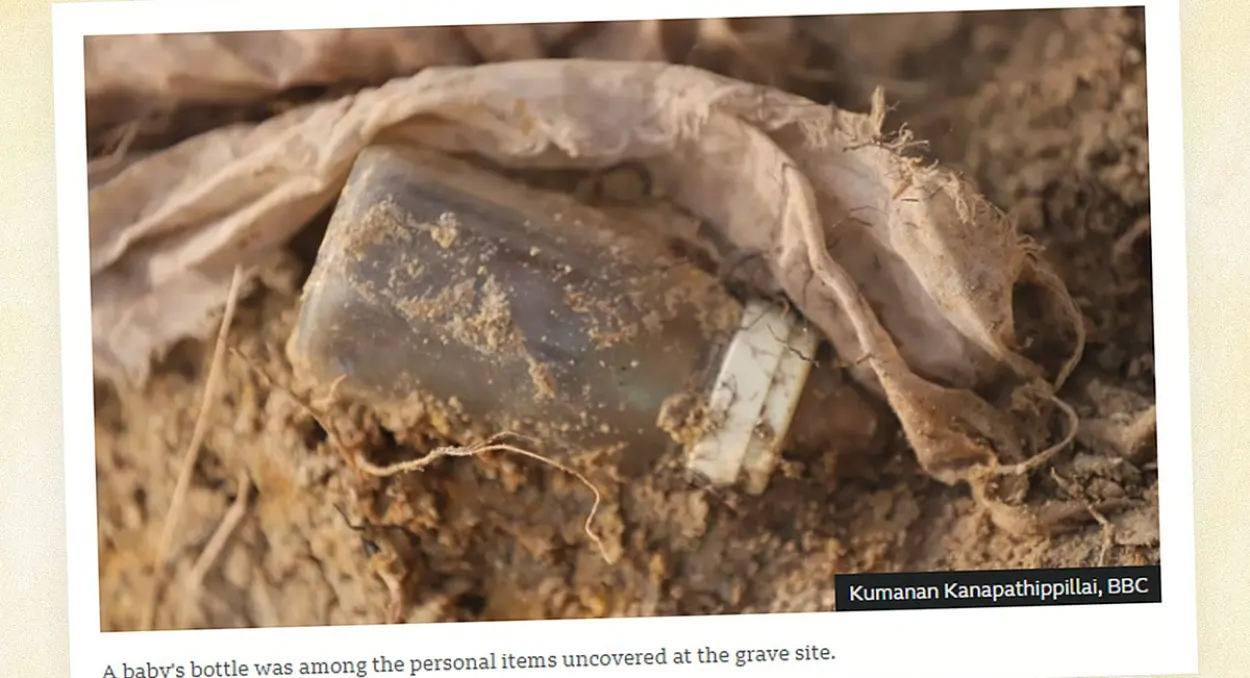
Photo: Collected
Workers expanding a crematorium perimeter in the Chemmani area of Sri Lanka's Jaffna region have uncovered what is believed to be the largest mass grave ever found in the island nation, containing the remains of 572 individuals, including infants and newborns.
The grim discovery began in February when laborers digging into the soil encountered human remains. Following subsequent investigations, archaeologists concluded the third phase of excavation at the site last August. Alongside the hundreds of skeletons, recovery teams unearthed personal items including bangles, a school bag, and a baby feeding bottle.
Speculation surrounding a mass grave in Jaffna had circulated for years. During legal proceedings involving a soldier on trial for the rape and murder of a young woman, testimony indicated the existence of a burial site containing hundreds of bodies. Human rights organizations long maintained that these remains belonged to civilians who disappeared during Sri Lanka's decades-long civil war, though tangible proof had remained elusive until now.
The discovery has reignited anguish and demands for accountability among Tamil families. Jayarubi Jayabalan is among those whose fathers vanished during the protracted conflict, leaving families to hope that the unearthed remains might finally provide answers about the fate of their missing relatives. Many Tamils believe the grave holds victims of extrajudicial killings committed during the war, and are pressing authorities for a thorough investigation and justice.
However, slow progress in the Chemmani excavations has severely tested the patience of grieving relatives. Protests have erupted across northern Sri Lanka, centering on the mass grave as Tamil communities express mounting anger and fear that a lack of political will to uncover the truth will cause the investigation to fade from public attention.
The decades of ethnic conflict in Sri Lanka, particularly concentrated in the Tamil-majority northern and eastern provinces, spanned from 1983 to 2009. During the 26-year civil war, Tamil Tiger rebels fought to establish an independent state, driven by grievances over systemic discrimination against Tamils by successive Sinhalese-dominated governments.
The strategic Jaffna peninsula fell under the control of the Sri Lankan military in 1995 following fierce clashes, marking a major turning point in the war. At the time, critics described the region as an open prison amid persistent allegations that security forces were responsible for the disappearance of thousands of civilians—accusations consistently denied by various Sri Lankan administrations.
The civil war officially concluded in 2009 with the military defeat of the Liberation Tigers of Tamil Eelam. The quarter-century conflict resulted in an estimated 100,000 deaths and left approximately 23,000 people missing, the vast majority of whom were ethnic Tamils. Both the security forces and the Tamil Tiger rebels have faced widespread allegations of committing atrocities and war crimes throughout the conflict.
More News from World


