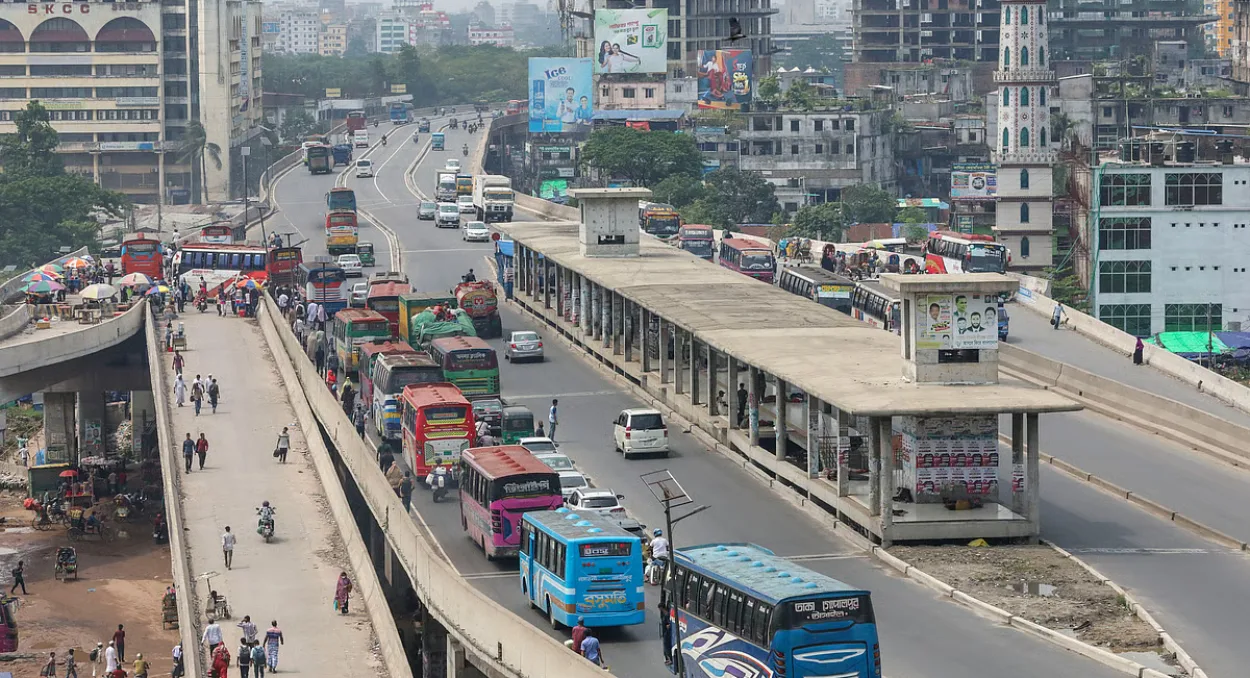
The government has officially decided to scrap the long-delayed Bus Rapid Transit (BRT) project on the 20-kilometre corridor from Dhaka's Hazrat Shahjalal International Airport to Gazipur, opting instead to transform the existing infrastructure into a conventional multi-lane highway. The high-profile decision was finalized during a cabinet meeting chaired by Prime Minister Tarique Rahman on Sunday, and was subsequently conveyed through an official letter issued by the Road Transport and Highways Division on Monday.
Spanning a grueling 14-year construction timeline and consuming 2,811 crore BDT, the initiative was originally designed to introduce specialized rapid transit buses. However, the intended transport system was never launched, leaving commuters to endure severe traffic congestion and escalating hardships along the vital transit route. Under the newly endorsed directives, authorities will dismantle the dedicated BRT stations and lane dividers, expanding the corridor into a general highway ranging from three to six lanes, while two two-lane flyovers are slated for a four-lane upgrade.
To execute the closure, the cabinet has instructed relevant departments to resolve legal complexities in consultation with development partners and initiate procedures to dissolve the Dhaka Bus Rapid Transit Company, transferring its operations under the jurisdiction of the Roads and Highways Department. Officials have been directed to take urgent measures to implement these decisions, with a mandate to submit a comprehensive progress report to the ministry within 15 days, followed by monthly updates by the third day of every month until the transition is fully completed.

Prior to reaching this conclusion, the cabinet evaluated four distinct strategic options, ranging from finishing the remaining works and procuring specialized buses, to operating a mixed fleet of special and private buses, or establishing a toll-collection system before ultimately selecting total project cancellation. Expert evaluations conducted by a Bangladesh University of Engineering and Technology (BUET) team led by Civil Engineering Professor Shamsul Hoque heavily influenced the outcome. In October of last year, the BUET panel submitted a report to the Road Transport and Highways Department, terming the venture a classic case of systemic failure in national infrastructure planning, marred by technical flaws, design deficits, poor coordination among agencies, and a lack of skilled manpower and accountability.
The collapse of the Gazipur corridor also derailed broader metropolitan transit plans, including a World Bank-financed BRT route originally planned from Uttara to Keraniganj, which was ultimately abandoned due to the delays on the Airport-Gazipur section. Furthermore, technical discrepancies regarding vehicle configurations—specifically that standard buses in Bangladesh feature left-side doors while international BRT standards mandate right-side doors—rendered the specialized fleet incompatible with general road networks outside the dedicated corridor. Meanwhile, local civic platform Gazipur Oitijjo O Unnoyon has voiced strong dissent against the cancellation, with its President Md Shamsul Hoque asserting on Tuesday that abandoning the project after achieving 97 percent physical progress ignores 14 years of unprecedented public suffering, prompting the organization to plan a formal protest letter to government offices.