An average of 15,000 soaps are being produced every day in a factory of Thaingkhali Rohingya Shelter Camp (Camp-20) in Ukhiya, Cox's Bazar. These soaps are provided free of cost to Rohingya refugees for laundry and toilet use. The factory, which was opened in January this year, has so far produced around seven lakh soaps, said the management company.
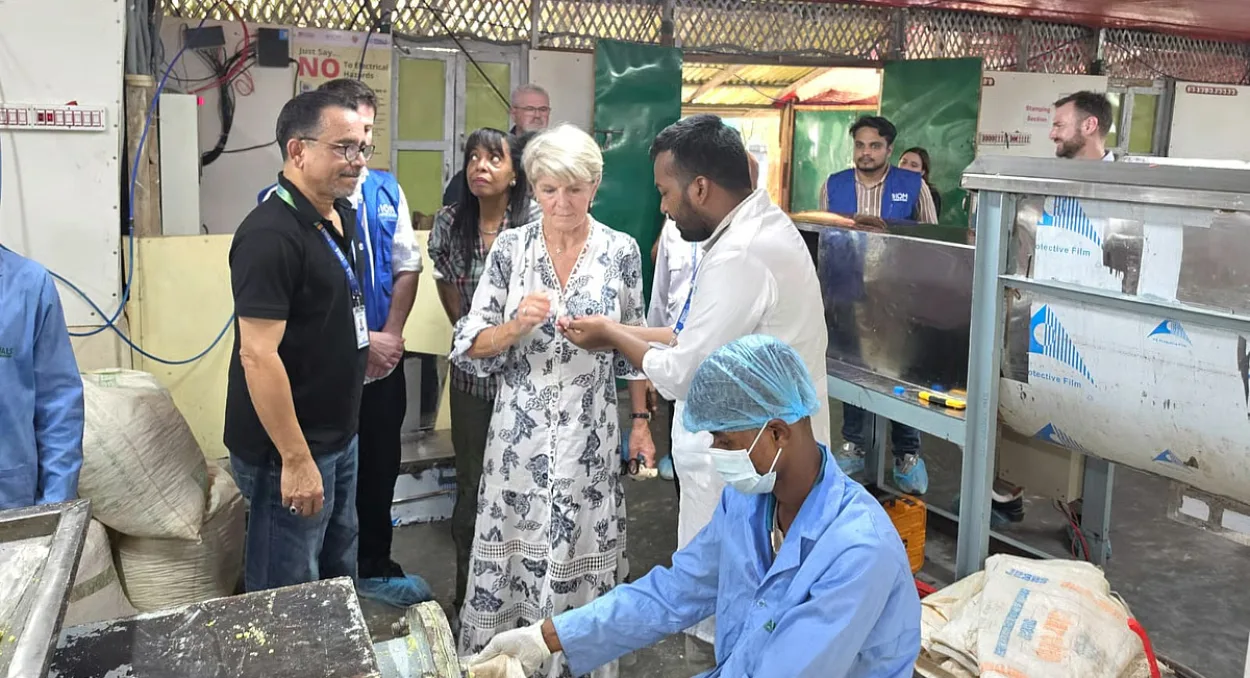
A five-member delegation led by the UN Secretary-General's Special Envoy for Myanmar, Julie Bishop, visited the factory to see the quality and production process of the soap. Today, Tuesday afternoon, they went to the factory at shelter camp number 20 of Ukhia. It is managed by the non-governmental organization Pulse.
The members of the delegation arrived at Cox's Bazar Airport from Dhaka around 10 am. Later they went to Ukhiya shelter camp by road. They reached the factory around one o'clock and checked the soap making ingredients, production process and the quality of the soap.
At this time, the UN Secretary General's Special Envoy, Julie Bishop, praised this initiative which is helpful in increasing the livelihood opportunities and self-reliance of the Rohingya refugees and the local population.
Smerezniak, Acting Representative of the United Nations Refugee Agency UNHCR in Bangladesh Juliet Murekeisoni, Political Affairs Officer of the Office of the UN Secretary-General's Special Envoy for Myanmar Duncan Wilson and Associate Public Information Officer Pia Thet Chail were present.
Executive Director of Pulse Abu Morshed Chowdhury informed the delegation about the soap production process, factory management and livelihood opportunities created through this initiative. At this time, the chemist of the factory also gave details about the process of making soap and the overall activities of the center. In the afternoon the delegation left the shelter for Dhaka.
The initiative is being implemented in partnership with Pulse, with support from the International Organization for Migration (IOM) and funding from the UK's Foreign, Commonwealth and Development Office (FCDO). It aims to promote self-reliance, dignified living, hygiene practices and social harmony of Rohingya refugees and local communities.
Abu Morshed Chowdhury told Prothom Alo that the soap production factory was launched in the shelter camp in January this year. There are 36 volunteers producing an average of 15,000 soaps per day. Bangladesh Standards and Testing Institution (BSTI) approved two types—laundry and toilet soaps—are handed over to IOM after production. IOM distributes these soaps to Rohingya families free of charge. About seven lakh soaps produced so far have been distributed among the Rohingyas.