
Rain Fails to Improve Dhaka’s Air Quality; City Tops Global Pollution Index
Rain Fails to Improve Dhaka’s Air Quality; City Tops Global Pollution Index
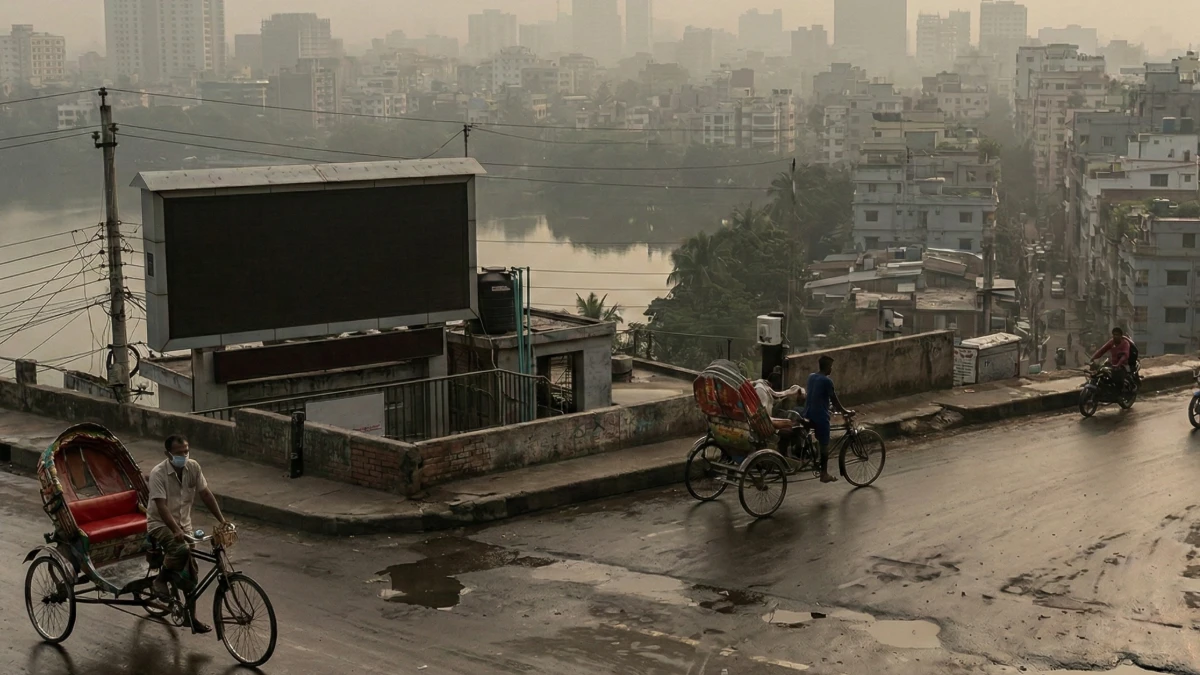
Despite rainfall in the capital yesterday, Dhaka continues to suffer from severe air pollution. As of 9:30am on Tuesday, the city ranked first among 122 cities worldwide with an Air Quality Index (AQI) score of 240 — a level classified as “very unhealthy.”
According to data published by IQAir, a Switzerland-based organization that monitors global air pollution, nine locations in Dhaka recorded alarmingly poor air quality today. In one area, the AQI exceeded 300, which is considered “hazardous.”
An AQI reading above 200 is categorized as “very unhealthy,” while a score above 300 is deemed “hazardous,” posing serious health risks to the public.
Dhaka’s air pollution has been worsening dramatically. Throughout much of February, the city consistently topped global pollution rankings, and the trend appears to be continuing this month. Although rainfall occurred in the capital after 114 days — measuring just 3 millimeters — it failed to significantly improve air quality. Typically, rain helps reduce airborne pollutants, but in this case, the improvement was negligible.
Immediately after the rainfall, at around 5:00pm yesterday, Dhaka once again ranked as the most polluted city in the world. The situation remained largely unchanged overnight, though the AQI score briefly fell below 200.
A report by the World Bank stated that nearly 150,000 people in Bangladesh died in 2019 due to air pollution-related causes. The report also estimated that air pollution cost the country approximately 8 percent of its Gross Domestic Product (GDP).
Over the years, successive governments have announced various initiatives to control pollution. However, these measures have yielded little visible improvement. Even under the interim administration, several initiatives were discussed, but no significant progress has been observed in Dhaka or elsewhere in the country.
Worst-Affected Areas in the Capital
Among the nine severely polluted locations in the capital today, the highest AQI was recorded at Be’s Aege Water in Gulshan, with a score of 374. Other heavily polluted areas include Gulshan Lake Park (280), Baridhara Park (274), Sagufata (270), South Pallabi (262), North Badda–Abdullahbagh (250), Grace International School (240), Becharam Deuri (210), and Shanta Forum (207).
While air pollution is rising across the country, in some cases areas outside Dhaka are now experiencing even worse pollution levels.
Most pollution-control initiatives remain Dhaka-centric, yet their effectiveness has been minimal.
Health Advisory for Residents
According to IQAir’s recommendations, given today’s air quality level in Dhaka, residents should wear masks when going outdoors. Outdoor exercise is strongly discouraged, and windows should be kept closed as much as possible to minimize exposure to polluted air.
With pollution levels remaining dangerously high, public health experts warn that urgent and effective measures are needed to prevent further environmental and health crises.