
Zaima Rahman Calls for Systematic Reform of Bangladesh Road Safety and Licensing Infrastructure
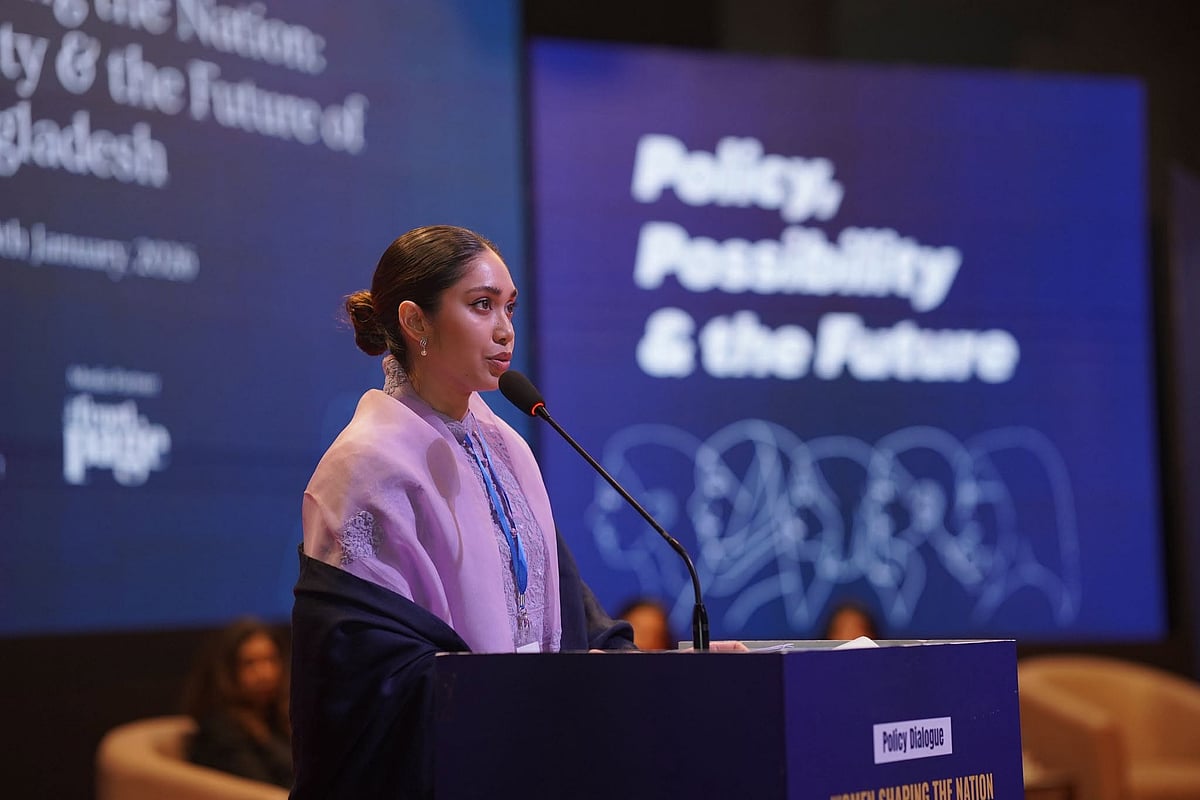
Photo Collected
Zaima Rahman, daughter of Tarique Rahman, has called for a fundamental restructuring of Bangladesh’s road safety framework following her recent experience taking a driving test in the country. In a detailed statement posted to her verified Facebook page on Wednesday, she argued that current regulatory measures fail to address the systemic corruption and operational inefficiencies that plague the transit system.
Reflecting on her experience, Rahman noted that while she passed her driving test in Bangladesh on the first attempt—much like she did in London over a decade ago—the two processes offered vastly different insights into road safety. She highlighted that for many young people in Dhaka, navigating the city is a source of profound frustration, where they are expected to adhere to rules within a system that often feels unpredictable or unsafe.
Rahman pointed to the hazardous conditions faced by pedestrians, who are frequently forced to navigate high-speed roads without adequate crossings or sidewalks. She further emphasized the lack of agency for passengers, who are subject to reckless driving, poorly maintained vehicles, and drivers who may be overworked or inadequately trained.
Addressing the challenges faced by new drivers, Rahman criticized the inconsistencies within the Bangladesh Road Transport Authority (BRTA). While acknowledging that some services have been digitized, she argued that these efforts remain insufficient if they ultimately force citizens to seek in-person resolutions. She noted that these gaps in the digital process encourage the involvement of intermediaries, or brokers, who capitalize on the complexity of administrative procedures. According to Rahman, people often turn to these middlemen not because they wish to break the law, but because the official process is rendered overly difficult.
The critique extended to law enforcement, where Rahman observed that the selective application of rules undermines public trust. She noted that when citizens witness frequent traffic violations and the presence of unfit vehicles going unpunished, they quickly lose respect for the regulatory framework. This environment fosters a culture where corruption becomes a normalized survival strategy rather than an exception.
Rahman underscored that road safety must extend beyond simple licensing and punitive measures to focus on the daily experiences of diverse road users, including students, women, food delivery riders, bus drivers, and individuals with disabilities. She invoked the 2018 student-led road safety protests, noting that many of the concerns raised by youth remain unresolved nearly eight years later.
Concluding her statement, Rahman proposed a shift in discourse, moving away from asking how to force citizens to follow rules toward questioning how to make the system more equitable. She urged policymakers to focus on ensuring consistent service delivery, fair law enforcement, safe reporting mechanisms, and infrastructure design that prevents fatalities caused by human error. She maintained that meaningful change requires a complete reconfiguration of the existing thought process regarding urban mobility.
0%
0%
0%
0%