


Young Entrepreneurs Dairy Farm Grows to $15 Million Valuation in Three Years

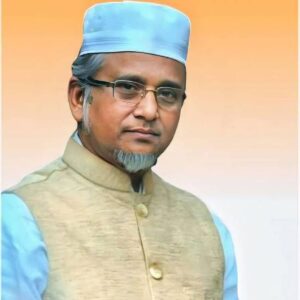
Photo Collected
A university graduate with degrees in Electronics and Telecommunication Engineering and a Master’s from Ahsanullah University chose not to pursue a conventional job, instead returning to his village to establish a commercial cattle farm. Abdur Rauf, who began his venture three years ago with an investment of 2 million Bangladeshi taka, now manages a herd valued at 15 million taka and employs three staff members with monthly salaries exceeding 50,000 taka.
Ahead of the recent Eid al-Adha, Rauf’s farm prepared 43 male cattle for sale. He has already sold 18 of these animals for 3 million taka and anticipates selling the remaining livestock before the Eid period concludes.
বিজ্ঞাপন
Rauf, 27 at the time, established the cattle fattening farm on 3.5 bighas of land in Gati Para village, Sharsha Sadar Union, Jessore district. His operation focuses on preparing cattle specifically for the Eid al-Adha market. This year, he readied 43 bulls, each weighing between 240 to 800 kilograms. He has already sold 18 medium-sized bulls, weighing between 140 to 220 kilograms, at local markets.
Having completed his Master’s degree in Dhaka in 2024, Rauf stated his desire for professional independence as the reason for not seeking employment. Acting on his father’s suggestion, he returned to his ancestral home and initiated the cattle farm.
বিজ্ঞাপন
In his first year, Rauf purchased 11 cattle from Rajshahi to fatten for the Eid market, achieving profitability. This success prompted him to expand his herd. The second year also yielded significant profits, allowing him to reinvest 2 million taka into purchasing land for the farm’s expansion. His current herd of 42 cattle includes eight cows.
During a visit to the farm on Tuesday, Rauf was observed tending to the animals. He recounted his journey to becoming an entrepreneur while working.
“I am an only child,” Rauf said. “My father works abroad in Malaysia, and my mother stays at home. I am married and have a three-year-old son. My parents wished for me to stay at home, which led me to plan a commercial cattle farm. I started in 2023. My farm’s distinctive feature is that I prepare the cattle’s feed myself, prioritizing grass. The emphasis on natural food ensures my cattle are healthier and safer compared to those on other farms. The farm is maintained with constant cleanliness, free from any unpleasant odors.”
Upazila Livestock Officer Tapu Kumar Saha has visited Rauf’s farm. He commented, “One can gauge a cow’s health by its appearance. Rauf’s cattle look healthy, suggesting they are fed a diet rich in natural ingredients. The farm is remarkably clean and odor-free, with a well-managed waste disposal system and a pleasant environment.”
Acknowledging the risks involved, Rauf noted the necessity of constant veterinary supervision and understanding animal behavior. Despite these precautions, he has lost at least five cattle over the past three years. His initial investment of 1.1 million taka, supplemented by further capital, now totals 2 million taka. The current value of his livestock is estimated at 15 million taka. He has acquired an additional five bighas of land for expansion, with three bighas already planted with grass. New housing is under construction to accommodate 44 more cattle, and his ambition is to reach a herd size of 500.
According to the Upazila Livestock Office in Sharsha, the district hosts approximately 50 commercial cattle farms, with four farms housing over 100 animals.
Rauf also highlighted the escalating costs of cattle feed and medication. He noted a price increase from 37-40 taka per kilogram for feed three years ago to the current 50-55 taka, a rise of 13-15 taka per kilogram. He appealed to the government to regulate the prices of feed, medicines, and vitamins to make them accessible for entrepreneurs.
When questioned about potential government measures to stabilize feed and medicine costs for entrepreneurs, Tapu Kumar Saha, the Sharsha Upazila Livestock Officer, confirmed the rising cost of concentrated feed. He stated, “We are encouraging our entrepreneurs to cultivate improved varieties of grass, such as ‘Pak Choy.’ Increased consumption of fresh grass not only improves cattle health but also reduces the demand for concentrated feed.”
0%
0%
0%
0%


