Shibir Announces Four-Day July Uprising Commemoration Festival in Dhaka
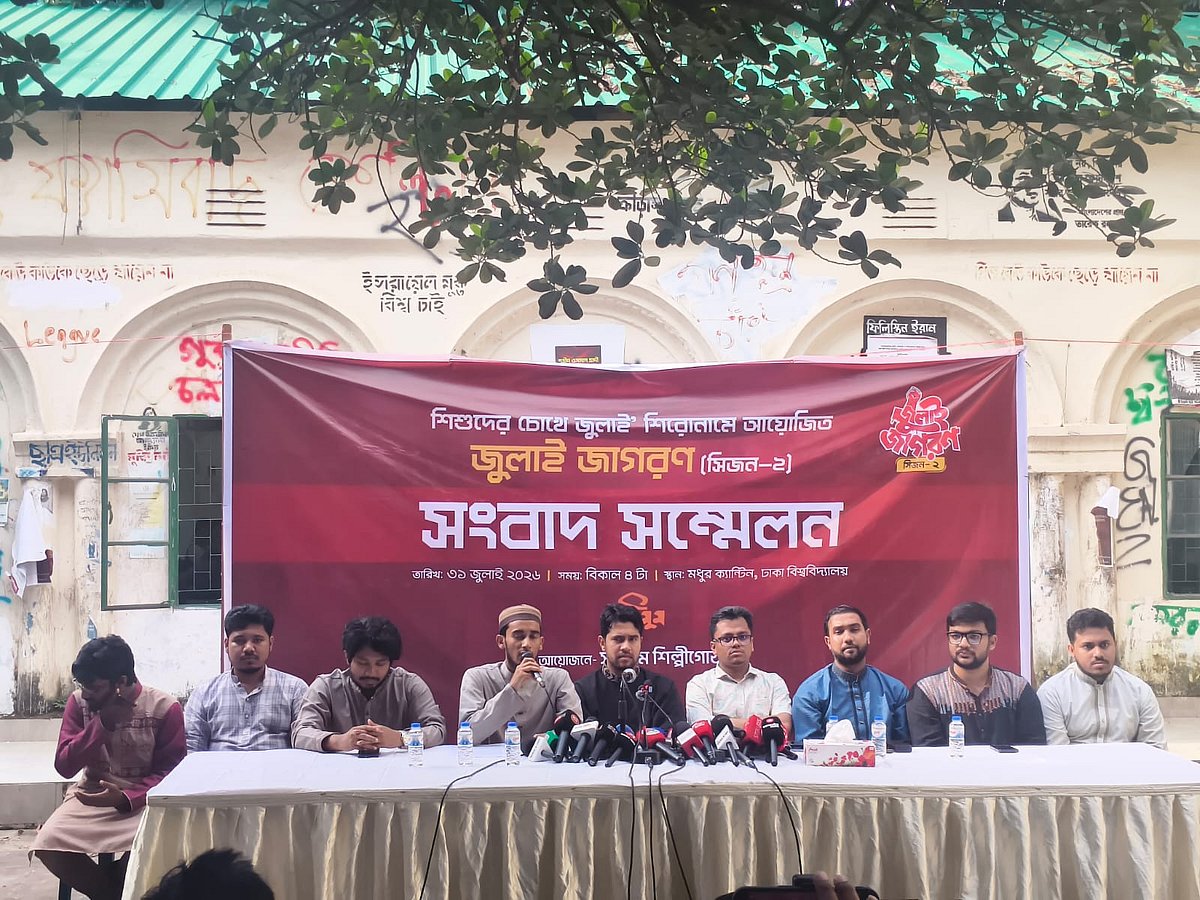
Photo Collected
The Saimum Shilpagoshthi organization has announced a four-day cultural festival, “July Jagaran Season-2,” dedicated to commemorating the second anniversary of the July mass uprising. The event is scheduled to take place from August 1 to August 4 at the National Museum in Shahbagh, Dhaka, with a focus on highlighting the experiences and sacrifices of children during the historic movement.
The details of the festival were unveiled during a press conference held at Dhaka University’s Madhur Canteen on Friday. Bangladesh Islami Chhatra Shibir Secretary General Sibgatullah Sibgat, alongside the organization’s central publicity secretary and former DUCSU General Secretary S.M. Farhad, outlined an expansive program designed to educate the younger generation on the significance of the uprising.
The festival will feature a diverse array of content, including documentary competitions, stage plays, and poetry recitations, with children serving as the primary performers. Organizers have committed to an expanded presentation of the “Aynaghar” exhibition, which proved to be a focal point of last year’s event. Additionally, the venue will incorporate a “Kids Zone” for recreation and a “Miniature Zone” depicting key historic sites associated with the July protests.
A memorial section, titled “Graveyard Corner,” will provide a space for reflection, while the “July Bioscope” will offer children an opportunity to experience traditional cinema. Historical continuity will be explored through exhibitions such as “July Destruction” and “From Bakhtiyar to July.” Furthermore, an “Iconic Corner” will display caricatures capturing poignant moments of martyrs, including Abu Sayed and Mugdho, to honor their contributions to the movement.
According to Sibgatullah, the primary objective of the festival is to articulate the narratives, dreams, fears, and courage of children through various artistic mediums. He emphasized that the July uprising was driven by a collective desire to establish a humane, just state free from political and cultural hegemony, while upholding the nation’s traditional values and religious heritage.
Addressing the current cultural landscape, the Chhatra Shibir leadership expressed concern that these revolutionary aspirations remain under-represented. Sibgatullah alleged that remnants of past cultural dominance are actively working to undermine the achievements of the uprising through propaganda. He stated that the festival serves as a counter-narrative, aimed at preserving the integrity of the mass movement against attempts to restore fascist-aligned perspectives.
0%
0%
0%
0%