


Rights Group Accuses Interim Government of Inertia on Post-Uprising Reforms
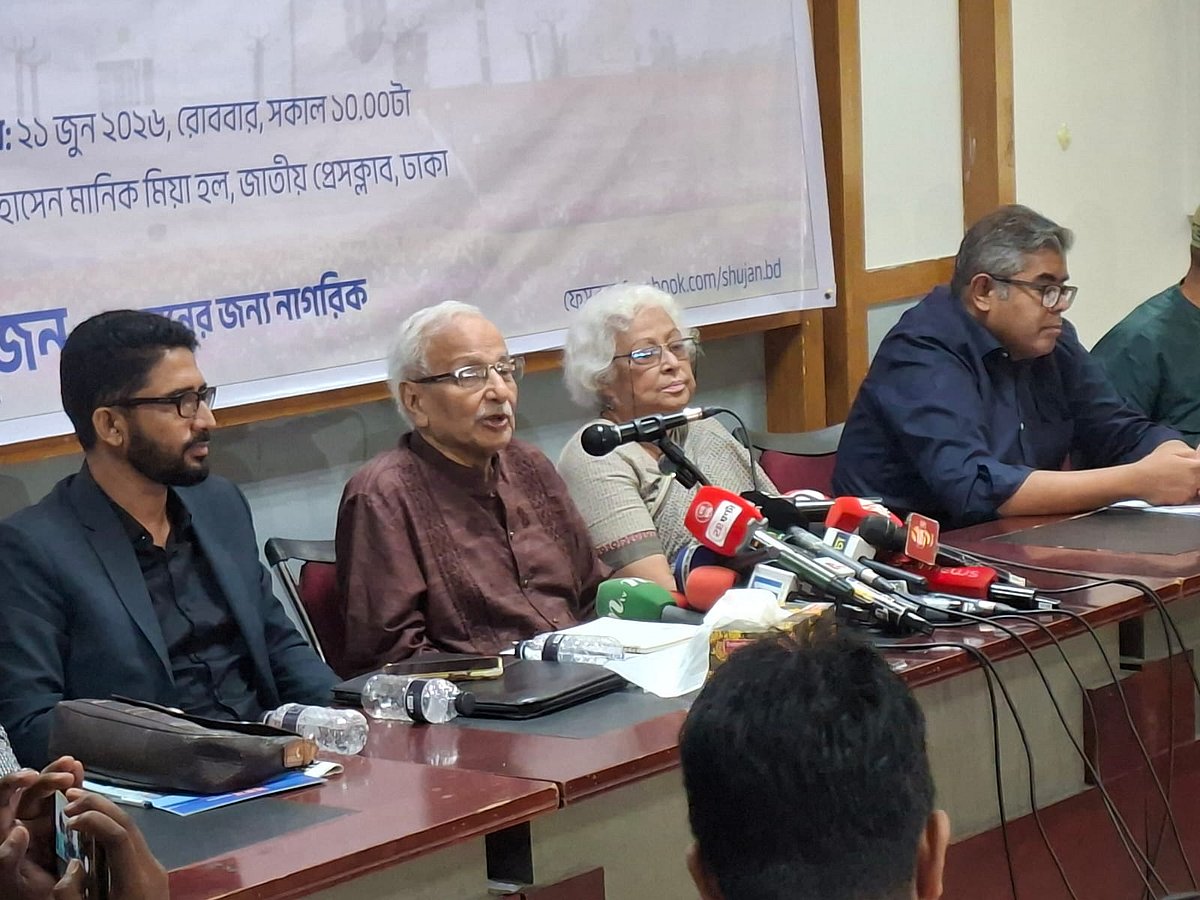
Photo Collected
The civic advocacy group Shushashoner Jonno Nagorik (SHUJAN) has expressed growing concern over the interim government’s perceived inaction and ambiguity regarding the implementation of the reforms envisioned during the July mass uprising. In a roundtable discussion titled “Four Months of the Current Government: Expectations, Achievements, and Priorities” held at the National Press Club in Dhaka on Sunday, the organization warned that the government’s failure to act on structural changes suggests a reluctance to fully embrace the spirit of the revolution.
SHUJAN pointedly criticized the administration’s silence on critical institutional reforms, such as the formation of a bicameral parliament based on proportional representation or the establishment of a National Constitutional Council. The organization argued that while the government officially acknowledges the sentiment of the July movement, its lack of a roadmap or institutional framework for reform undermines the mandate of the uprising.
বিজ্ঞাপন
SHUJAN Secretary Badiul Alam Majumdar emphasized that the country cannot return to the governance models of the past if it expects a different outcome. Reflecting on the authoritarian tenure of ousted Prime Minister Sheikh Hasina, Majumdar noted that the collapse of state institutions, the erosion of voting rights, and the widespread politicization of public offices necessitated a fundamental break from established political patterns. He asserted that the uprising was a rejection of these conditions, and any attempt to walk the “old path” would inevitably lead back to the same political failures.
Presenting a keynote paper at the event, SHUJAN central coordinator Dilip Kumar Sarkar outlined three benchmarks for evaluating the government’s performance. He questioned whether the administration has formally recognized the political and moral significance of the “July Charter,” whether it has established a clear timeline for reform, and whether its current actions align with the revolution’s goals or merely mirror the political behaviors of previous regimes.
বিজ্ঞাপন
The organization further cautioned that the government’s commitment appears currently limited to rhetorical gestures and formal courtesies rather than substantive policy changes. Addressing the assembly, other speakers, including political scientist Dilara Chowdhury and academics from Dhaka and North South Universities, echoed these concerns, stressing that the public mandate for transformation requires a concrete, prioritized, and transparent reform agenda to avoid a return to historical stagnation.
0%
0%
0%
0%