
Renowned Theater Pioneer Ataur Rahman Honored at Posthumous 85th Birthday Tribute
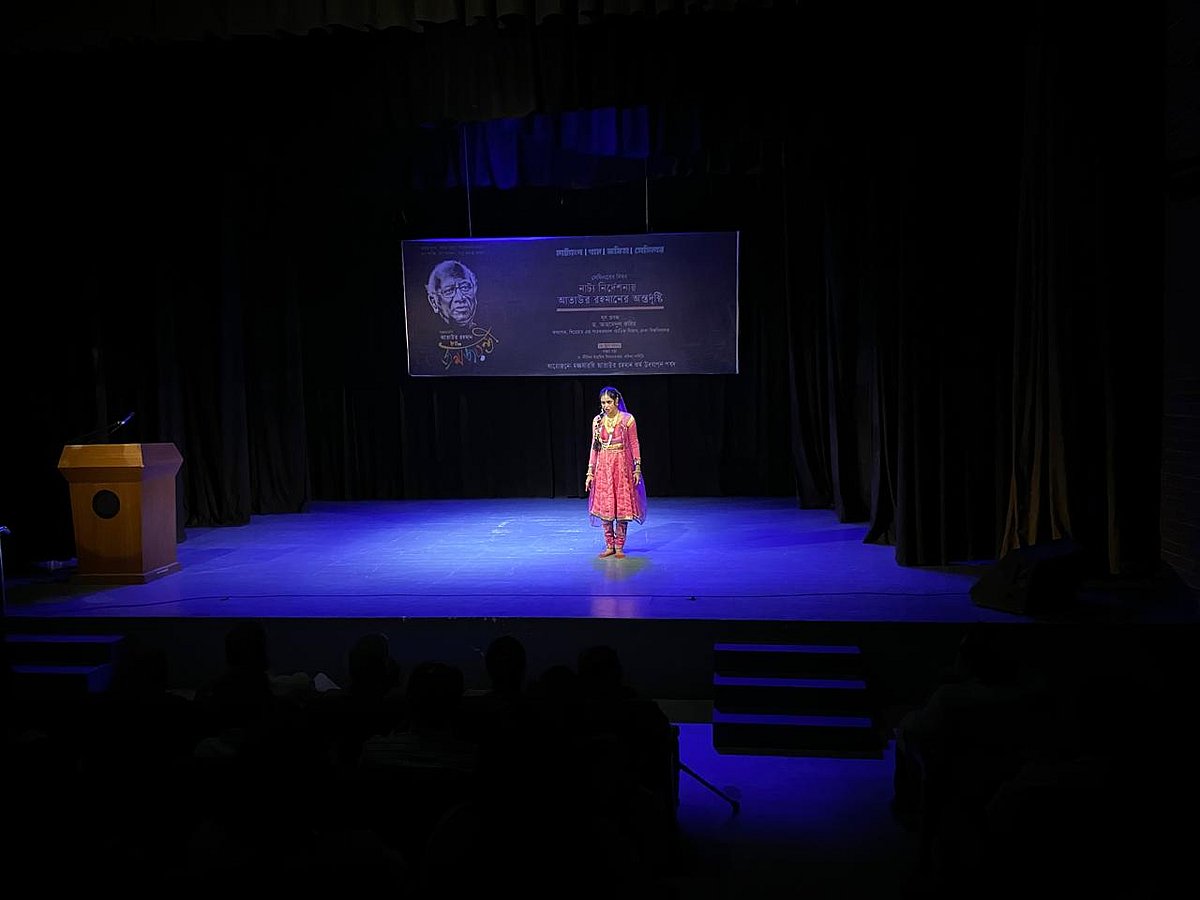
Photo Collected
The theater community in Bangladesh gathered on Thursday to commemorate the 85th birth anniversary of Ataur Rahman, the legendary director, actor, and organizer revered as the “Manchasarathi.” The tribute, held at the Nilima Ibrahim Auditorium of the Mahila Samity, served as a poignant reflection on his life and legacy following his passing on May 12.
Organized by the Manchasarathi Ataur Rahman Celebration Committee, the evening featured a series of performances highlighting the collaboration between Rahman and playwright Syed Shamsul Haque. Notable excerpts were staged from three landmark productions directed by Rahman: “Banglar Mati Banglar Jol” performed by Dipta Rakshit, “Narigan” featuring Joyita Mahalanabish, and “Irsha” presented by Pantha Shahriar. The cultural segment also included recitations by Bhashvar Bandyopadhyay and Naila Tarannum, alongside musical performances by Nirjhor Chowdhury.
বিজ্ঞাপন
A central seminar titled “Ataur Rahman’s Insight into Directing” explored the transformative influence of his work. Professor Ahmedul Kabir of Dhaka University’s Department of Theatre and Performance Studies delivered the keynote, describing Rahman as a pioneer who introduced a revolutionary style to Bangladeshi theater, capable of leaving audiences in profound awe.
Discussants, including Mofidul Hoque, Nasiruddin Yousuff, and Abdus Selim, traced Rahman’s development from his birth in Noakhali in 1941 through the cultural shifts of the Language Movement and the Liberation War. As a founding general secretary of Nagorik Natyasamproday, Rahman championed the belief that theater was not merely a form of entertainment but a potent tool for societal change and intellectual discourse. His lifelong commitment to the stage earned him numerous accolades, including the Ekushey Padak and the Independence Award.
বিজ্ঞাপন
In a separate event held at the Bishwo Shahitto Kendro, the literary community marked the release of a new book dedicated to the late poet Shamim Kabir. Titled “Shamim Kabir: Shoron o Path” and edited by Novera Hossain, the volume explores the life and works of the 90s-era poet who passed away prematurely.
During the launch, speakers including Kumar Chakravarty, Chanchal Ashraf, and Pias Majid reflected on Kabir’s enduring influence on modern Bengali poetry. Participants noted that while Kabir’s untimely death cut his creative trajectory short, his body of work remains a subject of intense interest for researchers and young poets alike. Critics highlighted the depth of his existential inquiries and his ability to capture the complexities of human suffering, noting that despite his frequent thematic focus on death, his poetry remained a profound celebration of life.
0%
0%
0%
0%