
Rabies cases are on the rise, but dog vaccinations are off

Photo Collected
Anas, a three-year-old child, had food in his tiny hands. A dog approaches for that food. As he ran towards the house in fear, the dog immediately pounced and bit his left hand.
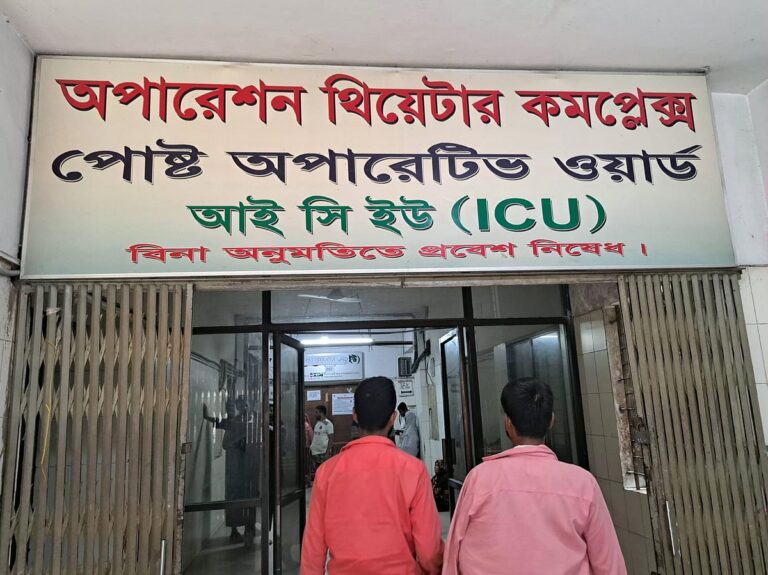
This incident took place in the capital’s Uttarkhan on the morning of April 15. He was quickly taken to the Infectious Diseases Hospital in Mohakhali. Rabies vaccination is given.
বিজ্ঞাপন
Anas’ father Emon Prothom Alo said, “I don’t know whose the dog is.” It suddenly comes and bites. I am afraid of rabies. On the advice of a local doctor, I brought him to the hospital quickly.
Such incidents are no longer isolated in the capital—every day the number of patients suffering from dog bites and scratches is increasing, and the risk of rabies is also increasing.
বিজ্ঞাপন
According to the data of the Infectious Diseases Hospital, 94 thousand 380 people were treated here after being attacked by dogs and cats in 2023. In 2024, it will increase to 1 lakh 22 thousand 263 people. In 2025 this number has increased to 1 lakh 46 thousand 243 people. And 36 thousand 751 people have taken service till March 17, 2026.
Hospital authorities say one of the reasons for this rise in patients is the increase in the number of stray dogs in the capital and the stagnation of the dog vaccination programme.
People of different ages are treated in infectious disease hospitals. The hospital-affiliates said that the number of patients who used to come to the hospital earlier, now that number is continuously increasing. The rate of dog bites and scratches in children is particularly alarming.
A doctor on duty at the hospital said on condition of anonymity, “Many come late.” Some come first with local treatment. This increases the risk.
Experts say one of the reasons for the increase in cases is the increase in the number of stray dogs in the capital and the stagnation of the vaccination programme.
Not all dogs, but bites from dogs infected with the rabies virus are the most at risk. This risk is even greater in attacks from unvaccinated dogs.
According to public health experts, rabies is a disease that is fatal in almost 100% of cases when symptoms appear. So prevention is the only way.
According to the data of the Infectious Diseases Hospital, the number of deaths due to rabies has also increased in the country in recent years. In 2023, 42 people died due to rabies. 58 people died in 2024, 59 people died in 2025. 19 people died in the first two and a half months of 2026.
Hospital-affiliates said that if the number of people dying due to rabies has been low for a long time, it is increasing again recently. This is not a cause for concern right now. However, dog control and anti-rabies vaccine should be given widely among humans and dogs as soon as possible.
Since 2010, an integrated program has been in place in the country to eradicate rabies. It involved vaccinating dogs, birth control, raising public awareness and prompt treatment of those affected.
According to the data of the Department of Health, about 29 lakh dogs have been vaccinated against rabies in more than 60 districts of the country under this programme. The first round of vaccination was completed in 64 districts, the second round in 46 districts and the third round in 8 districts.
According to the World Health Organization, an area can be effectively rabies-free if at least 70 percent of dogs are vaccinated for three consecutive years.
But disease control officials at the Department of Health say the program has virtually stopped after the 2024 political shakeup. New immunization or birth control programs are not being carried out due to lack of allocation of funds. As a result, the number of unvaccinated dogs is rapidly increasing. And these dogs are a major source of rabies infection.
There is no effective coordination between the concerned government agencies for the care and control of stray dogs in the capital Dhaka. Earlier, the Department of Health worked under a national program to control stray dogs across the country, but currently they do not have any such active program. There is no plan to start the program.
Meanwhile, the Department of Livestock has said that they do not have any specific activities or initiatives to control dogs. On the other hand, the two city corporations of Dhaka have taken various steps to manage stray dogs in the past, but currently there is no effective plan or regular activities in this sector.
The city corporations do not have any reliable information about the total number of stray dogs in Dhaka.
Dhaka South City Corporation (DSCC) said that if there is a complaint that there is an increase in dog attacks or panic in an area, they take action in that particular area under their own management.
Before 2024, DSCC was conducting regular dog control activities. But after 2024 that activity has decreased significantly. Earlier, more than 500 dogs were sterilized a year, but in the last 20 months only about 150 have been done.
DSCC veterinary officer Sharan Kumar Saha said, “There is no vaccine supply, there is lack of coordination. So it has become difficult to carry out regular activities.
On the other hand, Dhaka North City Corporation (DNCC) said that their own capacity is limited. Although MoUs were signed with three private organizations in January this year, there is no clear information about the progress of the activities.
Muhammad Lutfar Rahman, public health officer of DNCC, said that they do not have this information about how many dogs there are, where the risk is high. They do not have any information about what the private organizations are doing.
This public health officer of DNCC said that dog control work is not possible due to lack of manpower and structure.
Media worker Mahfuza Haque gave food to the dogs on his own initiative. He said that the problem will not be solved by blaming the dog. He said that dogs cannot talk. So no one understands their language. When a dog bites or attacks someone, it is easy to get angry at that dog. But this is not a solution. Control and vaccination against rabies is required.
Mahfuza Haque said that dog control is possible if the City Corporation and Animal Resources Department take a joint initiative. But the human aspect of dogs should be kept in mind.
The Director of Disease Control Branch of the Department of Health Prof. Halimur Rashid said, ‘I am making a new plan to prevent rabies. But only people will be vaccinated under this. There are currently no plans to vaccinate or control dogs.
This official of the Department of Health also said that the Department of Health should not control or vaccinate dogs. Rather, the Department of Livestock should conduct activities in this regard.
However, speaking to the Directorate of Livestock, it is known that no dog control activities are being conducted by the Directorate at the moment in the capital or anywhere else in the country.
Confirming the truth of this information, the chief of the planning and evaluation cell of the Department of Livestock. Habibur Rahman said, the Department of Animal Resources is making a new plan for stray dogs. But he doesn’t know the details about that right now.
Source: Prothom Alo Bangla
0%
0%
0%
0%