
Questions Emerge Over Multi-Billion Taka Family Card Data Collection Project by Department of Social Services
Photo Collected
The Department of Social Services (DSS) under the Ministry of Social Welfare has initiated a project to compile a new database of households to identify beneficiaries for the government’s “Family Card” program. The project, which involves a projected cost of 2.81 billion BDT, has drawn criticism from experts and officials due to potential redundancy, as the Bangladesh Bureau of Statistics (BBS) previously spent 637 million BDT on a similar National Household Database (NHD) that remains largely underutilized.
Under the Strengthening Social Protection for Improved Resilience, Inclusion, and Targeting (SSPI-RIT) project, the government plans to issue “Family Cards” to female heads of 41 million households, with each family set to receive 2,500 BDT monthly. The initiative, central to the current government’s electoral manifesto, includes 1.91 billion BDT allocated specifically for data collection and card issuance. Additional costs include 550 million BDT for printing smart cards, 676 million BDT for field-level data collection, and 320.7 million BDT for the procurement of Android tablets.
The decision to bypass the BBS, the country’s primary statistical agency, has sparked controversy. BBS officials maintain that the government could have met its objectives by updating the existing NHD or integrating data from the 2022 Population and Housing Census. They argue that commissioning multiple surveys for the same purpose leads to fiscal wastage. However, Shah Mohammad Mahbub, Director General of the DSS, defended the move, stating that the Family Card program requires specialized data collection targeting female heads of households, a task for which his department feels confident despite its limited experience in large-scale nationwide surveys.
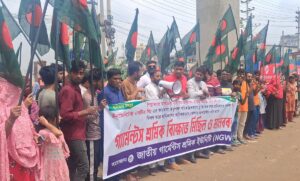
Although the Ministry of Social Welfare requested and received permission from the BBS to proceed, the approval came with strict conditions: the DSS must not label its collection efforts as a “census” or “survey,” and the BBS will provide technical support. Concerns regarding the project’s execution have already surfaced, including protests over recruitment irregularities for 67,000 data collectors and 7,000 supervisors in districts like Natore. Furthermore, officials have yet to finalize data storage protocols, verification procedures, or the third-party post-enumeration checks required to ensure accuracy.
Experts, including Mustafizur Rahman, a distinguished fellow at the Centre for Policy Dialogue (CPD), described the lack of a unified, functional national database as a systemic failure. He noted that the absence of such a resource has led to past inefficiencies, where government incentives were misallocated to wealthy families during the COVID-19 pandemic. According to an evaluation by the Implementation Monitoring and Evaluation Division (IMED), the previous NHD project failed to achieve its objectives, and the data collected remains largely unusable due to a lack of updates.
Critics warn that unless the government consolidates these efforts, the current reliance on the Proxy Means Test (PMT) method—a scoring system used to determine poverty levels—may continue to be prone to error, particularly given the government’s desire to complete the massive data collection exercise in just one month, a significantly shorter timeframe than the standard procedures typically employed by the BBS.
0%
0%
0%
0%