Protesters rally in Jessore demanding urgent flood relief and river management reforms
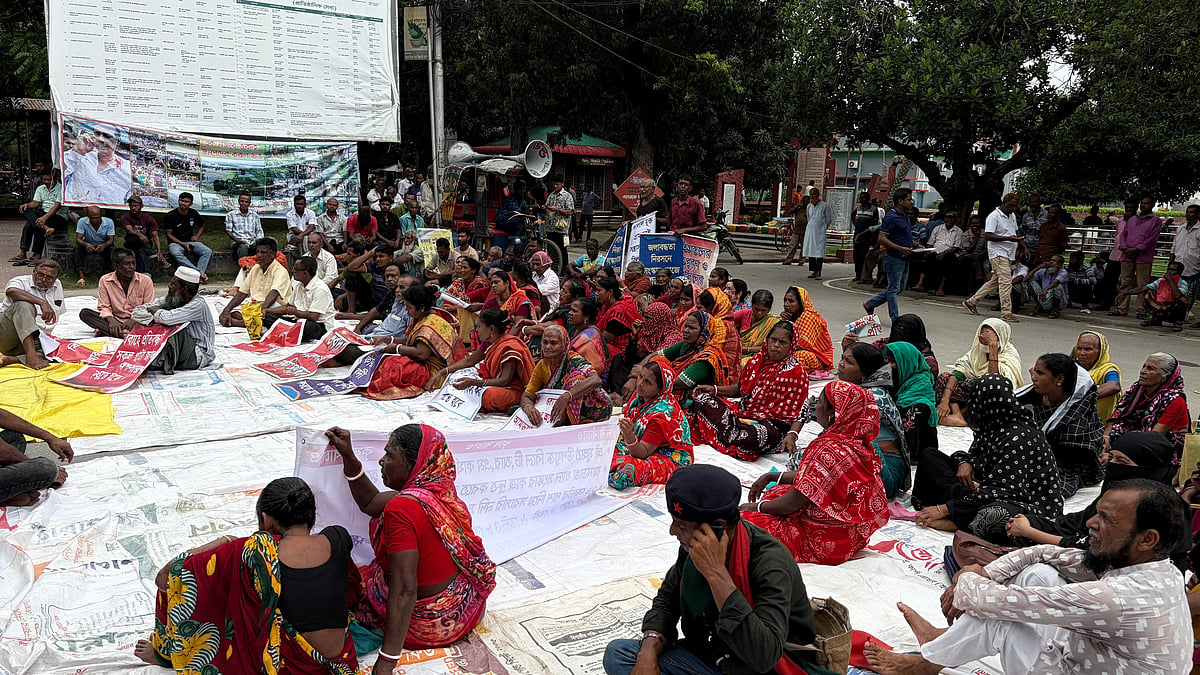
Photo Collected
Hundreds of residents from the waterlogged Bhabdah region in Jessore gathered outside the district administrator’s office on Monday, demanding urgent state intervention to address a man-made humanitarian crisis. Protesters, representing five upazilas across Jessore and Khulna, occupied the area from noon until 3:00 p.m., chanting slogans and waving placards to demand the immediate drainage of stagnant floodwaters and the implementation of Tidal River Management (TRM).
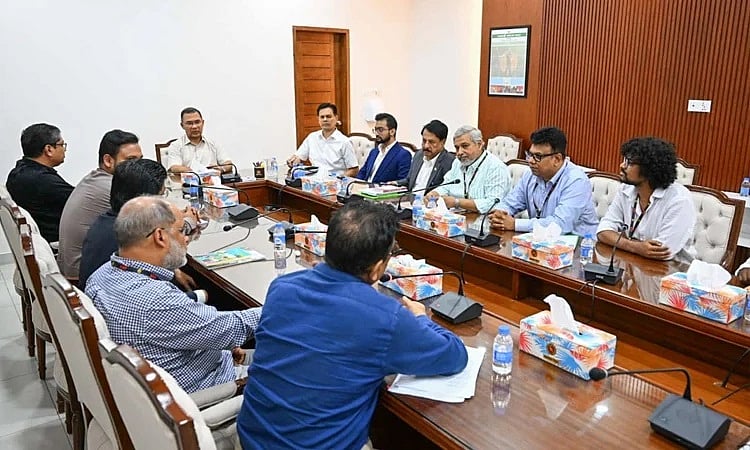
The demonstration, organized by the Bhabdah Water Drainage Struggle Committee, culminated in the submission of a memorandum to the Ministry of Water Resources, which was received on their behalf by Jessore Deputy Commissioner Mohammad Ashek Hasan. The committee’s four-point demand calls for the simultaneous execution of river dredging and TRM, the immediate completion of the Amdanga canal restoration, and the removal of illicit embankments along the Hari River to restore natural tidal flow. Furthermore, the committee demanded accountability for officials responsible for delays in infrastructure projects and requested emergency medical and food aid for the nearly 100,000 people currently stranded by floodwaters.
The Bhabdah region, encompassing parts of Abhaynagar, Manirampur, and Keshabpur in Jessore, alongside Dumuria and Phultala in Khulna, has faced recurring inundation following record rainfall in July. While the government is currently undertaking an 81.5-kilometer dredging project of the Teka, Hari, Sri, and Upper Bhadra rivers at a cost of approximately 140 crore taka, residents argue that dredging alone is insufficient. Protesters and experts alike contend that without the implementation of TRM—a traditional system that allows for managed sediment deposition—the dredged rivers will quickly silt up again, rendering the massive investment futile and causing permanent environmental damage.
Speakers at the rally, including committee chief advisor Iqbal Kabir Zahid, criticized the persistent “cordon policy” imposed in the 1960s, which they claim has dismantled local water management systems and caused forty-five years of cyclic flooding. The human toll remains stark: rural families reported knee-deep water in their courtyards, flooded cow sheds, and the complete loss of agricultural land, leaving many struggling to secure basic food supplies.
As the protest concluded, leaders emphasized that unless the government adopts a holistic approach that integrates local wisdom with scientific river management, the cycle of displacement and economic loss will continue to devastate the region. The committee has vowed to maintain pressure on the administration until a sustainable solution for the tidal basin is prioritized.
0%
0%
0%
0%