Poets pledge to uphold July uprising spirit through creative activism
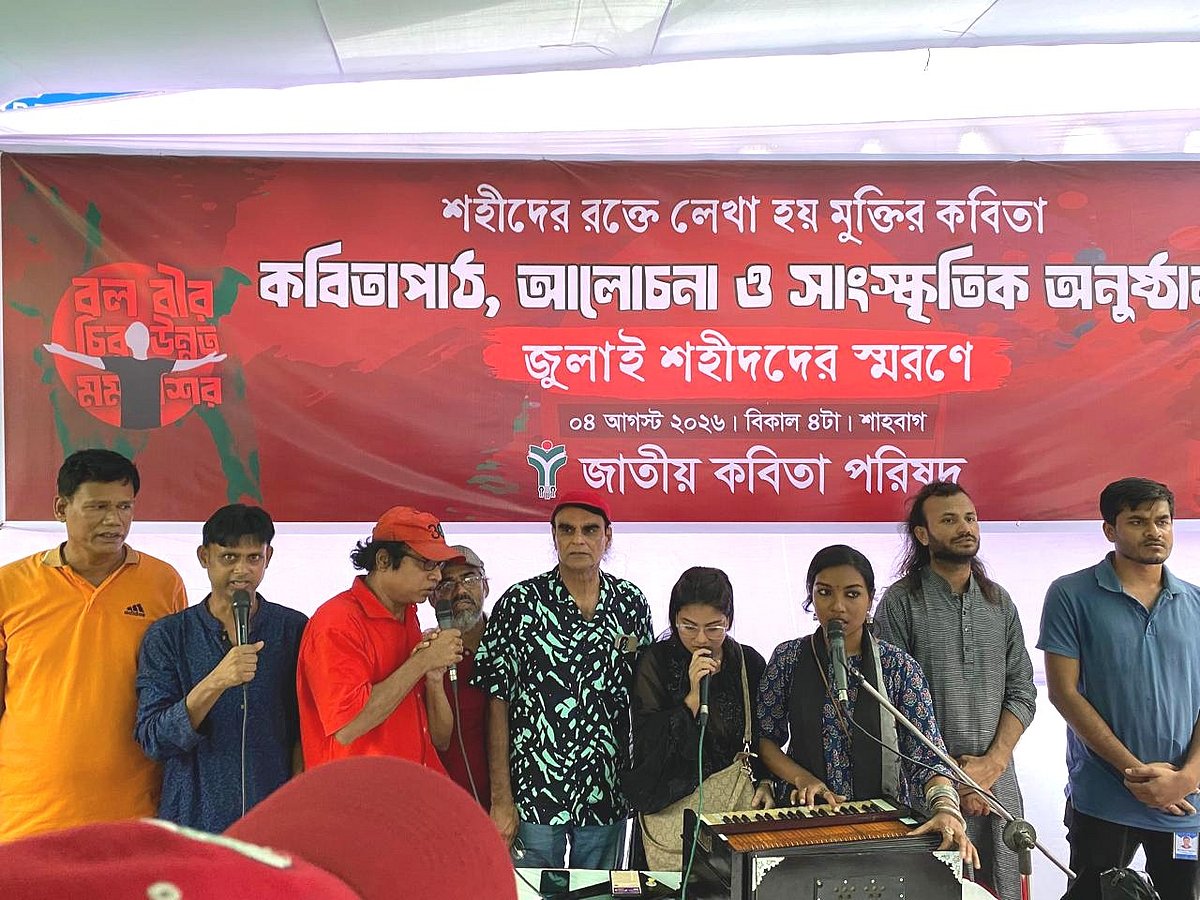
Photo Collected
Poets and literary activists gathered before the National Museum in Shahbag on Tuesday, pledging to sustain a creative movement aimed at fulfilling the aspirations of the 1971 Liberation War through the spirit of the July uprising. The event, titled “Freedom’s Poetry is Written in the Blood of Martyrs,” was organized by the Jatiya Kabita Parishad to honor those who lost their lives during the recent student-led mass movement.
Presiding over the gathering, organization president Mohan Raihan reflected on the history of the Jatiya Kabita Parishad, which was formed in the 1980s to resist the autocratic regime of H.M. Ershad. He emphasized that poets have historically occupied both the page and the street, noting that members of the organization stood in solidarity with students and citizens during the 2024 uprising. He reaffirmed the commitment of the literary community to uphold the objectives of the July movement, ensuring that the sacrifices of students and workers continue to fuel the struggle for a reformed nation.
Political observers and activists in attendance expressed concern over the trajectory of post-uprising governance. Nazmul Haque Prodhan, general secretary of the Bangladesh Jasad, argued that while the 2024 movement provided a renewed opportunity to build a free, democratic society, that potential is currently at risk. He cited the rise of mob violence and attacks on dissenting voices as detrimental to the core values of the uprising, urging the Jatiya Kabita Parishad to remain a steadfast beacon of progressivism against reactionary forces.
Others were more critical of the structural changes following the fall of the Sheikh Hasina administration. Communist leader Belal Chowdhury asserted that while the authoritarian leader was ousted, the underlying fascist system remains intact. He raised alarms regarding new national agreements and shifts in military alliances, warning that systemic corruption, religious extremism, and inequality are resurfacing. These developments, he argued, stand in direct opposition to the mandate established by the July uprising.
The event featured a blend of political discourse, poetry recitations, and musical performances. Nearly fifty poets, including Russell Ahmed, Nithor Mahbub, and Tasquina Yasmin, shared works dedicated to the themes of resistance and democratic renewal. The program was further punctuated by performances from artists including Hridika, Ishan, Abir Bangali, and Rakib Farayezi. Speakers collectively emphasized that the July uprising successfully instilled a sense of courage and national unity, which they maintained must now be harnessed to construct an inclusive and humanitarian society aligned with the original vision of Bangladesh’s independence.
0%
0%
0%
0%