
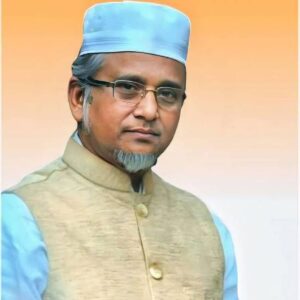


Khulna Police Inspector Under Fire Over Corruption and Political Patronage Allegations

Photo Collected
Khulna Metropolitan Police (KMP) Inspector Taimur Islam has emerged as a central figure in a sprawling network of alleged corruption, extortion, and criminal collusion in Khulna, according to internal police reports, victim testimonies, and multiple government inquiries. Despite facing numerous documented allegations of misconduct and receiving several administrative transfer orders, Islam remains stationed in his long-held stronghold within the KMP’s detective branch, effectively shielded by institutional inertia and high-level political influence.
Investigations by internal police surveillance units and accounts from residents reveal a pattern of systemic abuse. Victims allege that Islam uses his authority to facilitate property seizures, manipulate legal proceedings, and extort substantial sums from businessmen and citizens under the threat of fabricated criminal charges or extrajudicial violence. Specifically, he has been accused of acting as a key facilitator for disgraced former Inspector General of Police Benazir Ahmed, allegedly coercing families into selling land for the latter’s private resort.
বিজ্ঞাপন
The inspector’s influence transcends simple policing. Multiple sources indicate that Islam, who has deep-rooted connections in Khulna and has spent the majority of his career in the region, has successfully navigated changing political tides. Once known as a close associate of the previous administration’s leadership, he has allegedly cultivated new ties with local political actors, reinforcing his position even after the government’s fall. Internal audits, including reports from the Police Internal Oversight (PIO) unit, have flagged his activities, citing evidence of illicit monthly collections from gambling and drug dens, as well as the intimidation of witnesses.
Despite these findings, efforts to remove Islam from the KMP have repeatedly failed. Between October 2023 and March 2024, police headquarters issued at least three formal transfer orders—including a direct instruction to move him to the Tourist Police—but each was either rescinded or ignored. Senior officials, including Additional Inspector General A.K.M. Awlad Hossain, declined to provide detailed explanations regarding why these orders were nullified, citing administrative busyness and a lack of desire to justify the decisions.
বিজ্ঞাপন
The impact of this alleged impunity is felt across the city. In one notable instance, a claimant involved in a legal dispute over the management of a private university was reportedly abducted by Islam’s team, detained for over a month, and coerced into silence. Similar allegations appear in PIO records, where victims recount being threatened with “crossfire” or death unless large sums were paid. Investigations by the Anti-Corruption Commission (ACC) into his accumulation of illicit wealth are currently ongoing.
Islam has categorically denied all allegations, dismissing them as politically motivated or based on misinformation. KMP Commissioner Md. Zahidul Hasan acknowledged hearing reports of such illicit links but maintained that no formal complaints have been lodged against the inspector that warrant further action, noting that he does not believe an inspector could exert such influence over senior command.
Experts, however, argue that Islam’s case is symptomatic of a broader failure in accountability. Transparency International Bangladesh Executive Director Iftekharuzzaman stated that when police personnel are protected by a combination of political patronage and administrative failure, criminal behavior becomes institutionalized. He noted that the inability to enforce transfer orders or address systemic corruption suggests that the protection of such individuals is a structural issue, preventing the dismantling of organized criminal networks that operate under the guise of law enforcement.
0%
0%
0%
0%


