
CPD Criticizes Bangladesh Budget for Prioritizing Fossil Fuels Over Renewable Energy
CPD Criticizes Bangladesh Budget for Prioritizing Fossil Fuels Over Renewable Energy
The proposed national budget for the 2026-27 fiscal year continues to prioritize fossil fuels over sustainable alternatives, with only 2 percent of total energy sector allocations dedicated to renewable energy. According to an analysis by the Centre for Policy Dialogue (CPD), the remaining 98 percent of the budget reinforces a long-standing reliance on traditional energy sources, signaling that the administrative framework within the Ministry of Power, Energy and Mineral Resources remains tethered to a fossil-fuel-centric mindset.
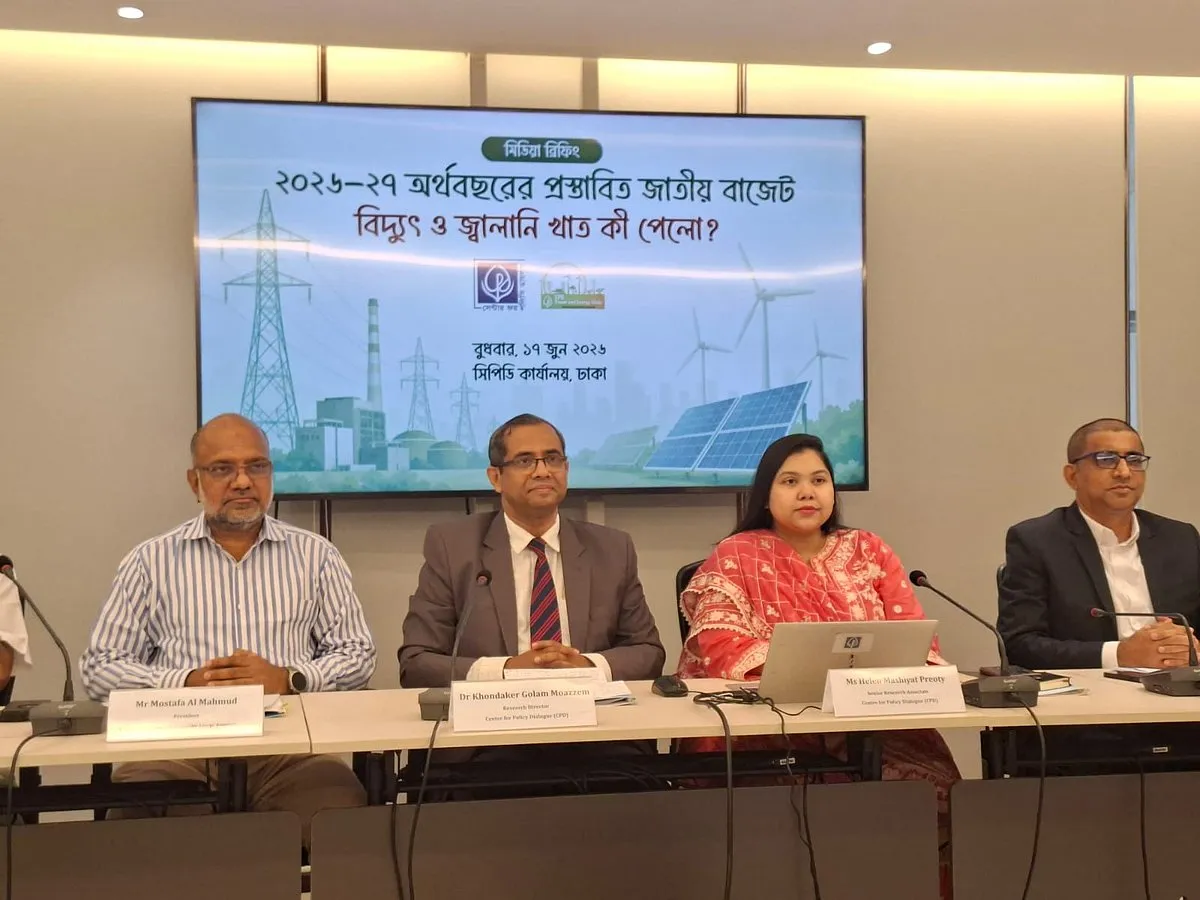
Presenting the findings at a media briefing in Dhaka, CPD senior research associate Helen Mashiyat Priyoti noted that the government has earmarked 17.34 billion taka for the power and energy sector. While this represents a 2.3 percent increase from the revised budget of the previous year, the sector's overall share of the national budget has actually declined from 2.15 percent to 1.85 percent. Within this allocation, the Power Division saw a 3.9 percent decrease in funding, while the Energy and Mineral Resources Division received a 72 percent boost, driven largely by new gas exploration and extraction projects.
The CPD lauded several fiscal measures aimed at incentivizing solar energy. The proposed budget introduces a zero-tax policy for solar power production until 2035 and offers a 5 percent tax rebate to consumers on solar electricity bills. Furthermore, the government proposed significant reductions in the high tax burden on essential solar infrastructure, including aluminum and steel structures, electric conductors, lithium-ion batteries, and solar inverters. Tax exemptions for electric vehicle (EV) charging stations were also welcomed by the researchers as positive steps toward green energy adoption.
However, the organization sharply criticized the persistence of fiscal policies favoring carbon-intensive energy. The budget retains VAT exemptions on liquefied natural gas (LNG) imports and extends duty benefits for coal-imported power plants until 2030. Additionally, the government has set a target to extract 600,000 metric tons of domestic coal by the 2026-27 fiscal year. CPD research director Khondaker Golam Moazzem argued that these provisions are antithetical to the global mandate for energy transition.
Moazzem emphasized that despite incremental progress in solar incentives, the budget fails to address underlying fiscal imbalances. He questioned the logic of providing continuous incentives to LNG—which remains the most lightly taxed fuel—while simultaneously claiming to reduce dependence on expensive imports. Experts at the briefing, including representatives from the Bangladesh Sustainable and Renewable Energy Association and the Democratic Budget Movement, urged the government to phase out subsidies for coal, oil, and LNG to create a more equitable and sustainable energy landscape.