


Environmental Group Issues Seven-Day Ultimatum to Shut Down Polluting Barishal Recycling Plant
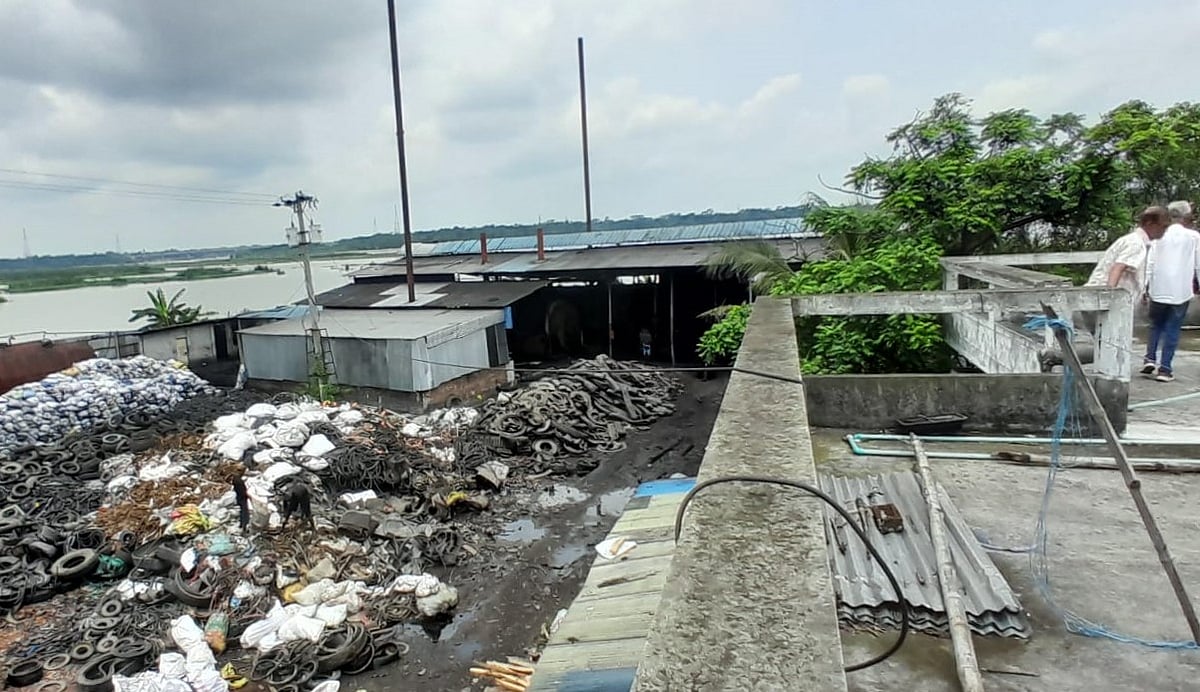
Photo Collected
The Bangladesh Environmental Lawyers Association (BELA) has issued a formal demand for the immediate closure of the Payra Recycling Plant, a tire and plastic pyrolysis facility operating on the banks of the Sugandha River in the Gournadi area of Barishal. The environmental advocacy group has given the operators seven days to shut down the plant, warning that failure to comply will result in a writ petition being filed with the High Court to protect public health and ecological integrity.
Legal counsel representing BELA served a “Notice of Demand for Justice” on June 25 to ten government entities, including the Ministry of Environment, Forest and Climate Change, the Ministry of Industries, the Department of Environment, and local administrative and police authorities. The notice asserts that the facility is operating in direct violation of the Environment Conservation Rules, 2023. According to the association, the plant’s emissions of toxic gases, black smoke, and industrial waste pose a severe threat to local residents and the river’s ecosystem.
বিজ্ঞাপন
Local residents have long voiced concerns regarding the facility, which was established four years ago by Mizanur Rahman on leased agricultural land. While the operation initially faced little opposition, community members claim that persistent exposure to hazardous emissions has rendered the living environment unbearable. Despite filing a formal grievance with the Babuganj Upazila Nirbahi Officer (UNO) last year, residents report that no effective action has been taken to mitigate the pollution.
In response to the allegations, plant owner Mizanur Rahman maintained that the facility holds all necessary licenses and clearances from relevant government agencies, including the Department of Environment and the Fire Service. He further defended the operation by highlighting its economic impact, noting that the plant directly employs 50 people and provides livelihoods for approximately 100 families involved in the tire collection supply chain. He characterized the push for closure as a campaign by local interest groups.
বিজ্ঞাপন
BELA’s Barishal divisional coordinator, Lincoln Bayen, emphasized that the proximity of a heavy-polluting industry to a vital waterway poses long-term risks to regional biodiversity, agriculture, and fisheries. The organization maintains that the environmental degradation caused by the plant necessitates immediate intervention before further irreversible damage is inflicted on the community and the Sugandha River’s ecological health.
0%
0%
0%
0%