

Chittagong City Corporation faces dead end in bridge reconstruction due to poorly planned elevated expressway and overpass construction
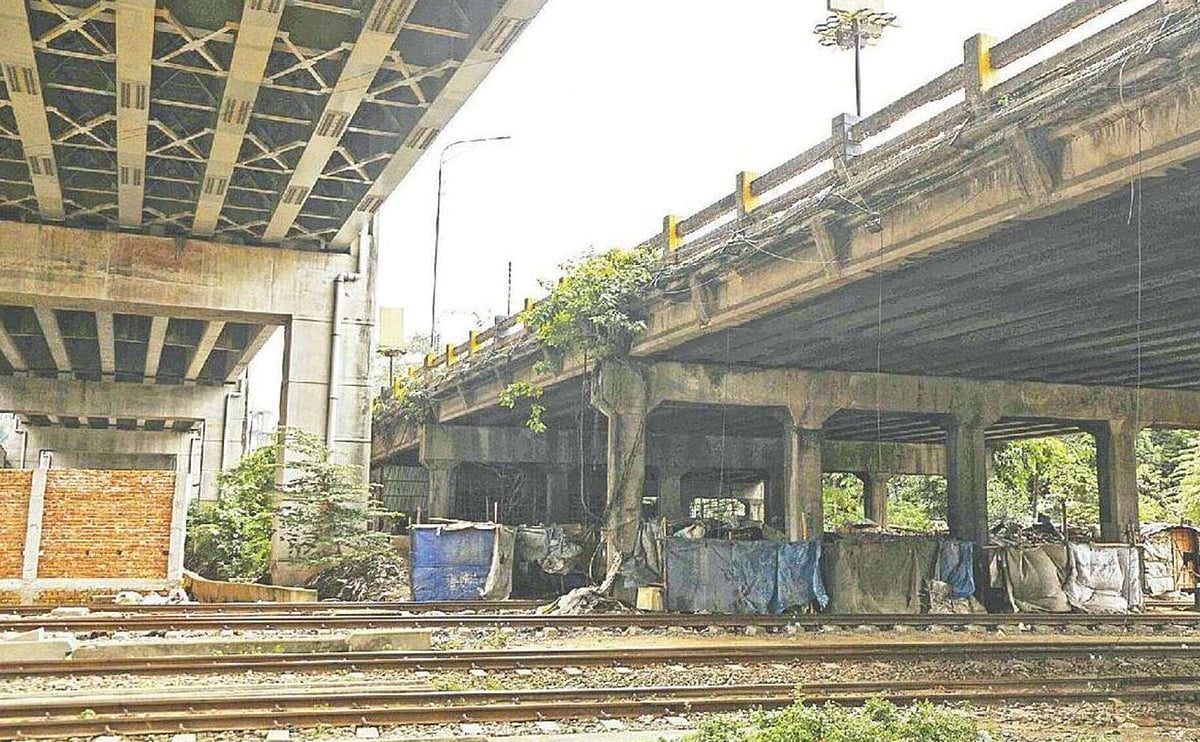
Photo Collected
The Dewanhat Bridge in Chattogram, a critical transport link connecting the northern and southern parts of the city, has been declared dilapidated and hazardous, leaving authorities struggling to find a viable path forward. While the Chattogram City Corporation (CCC) initially planned to demolish and reconstruct the aging structure, the recent completion of the Chattogram Elevated Expressway and the Dewanhat Overpass has blocked the space required for a new build.
Built between 1978 and 1980 by the Roads and Highways Department, the 50-meter-long bridge serves approximately 75,000 vehicles daily. According to current Bangladesh Railway regulations, any new bridge spanning the rail line must have a clearance of 8.5 meters. The existing structure sits at only 5.5 meters, having subsided due to prolonged use. To meet the safety standard of an 8.5-meter height, the bridge’s length would need to be extended to approximately 160 meters. However, the presence of the Dewanhat Overpass on one side and the overhead alignment of the Elevated Expressway makes such an expansion physically impossible.
Urban planners attribute the current gridlock to a lack of integrated planning. The Chittagong Development Authority (CDA) implemented both the overpass, which opened in 2013, and the Elevated Expressway, inaugurated in August 2024, despite repeated warnings from the CCC and various civic forums. Critics had previously urged the CDA to terminate the expressway’s alignment at a wider section of Sheikh Mujib Road rather than near the congested Dewanhat hub, but those proposals were ignored.
CCC Chief Engineer Anisur Rahman stated that reconstructing the bridge based on traditional designs is now effectively impossible due to the spatial constraints imposed by the new infrastructure. Consequently, the city corporation is shifting its focus toward “retrofitting”—strengthening the existing structure with modern technology—as a primary alternative.
A recent CCC survey identified critical structural failures, including cracks in the bridge deck, exposed and corroded reinforcement bars, and crumbling concrete. Additionally, the bridge suffers from excessive load stress, as it currently carries far more heavy freight traffic than it was originally engineered to support. Mechanical issues, such as failed bearings and clogged expansion joints, are further straining the structural integrity.
Consultants have presented three alternatives: full reconstruction, which remains hampered by space; integrating the bridge into the Elevated Expressway, which would require massive land acquisition; or constructing a complex ramp system totaling nearly a kilometer in length. If these options prove unfeasible, the CCC plans to proceed with retrofitting, which officials estimate could increase the bridge’s load-bearing capacity by 45 percent and extend its operational lifespan by 25 to 30 years.
Engineer Delwar Majumder of the Parikalpita Chattogram Forum criticized the development process, noting that the crisis serves as a stark example of how fragmented planning destroys urban infrastructure. He emphasized that the risk posed by the Dewanhat Bridge was known long before the current projects were initiated, yet the warnings of experts were disregarded by the implementing authorities.
0%
0%
0%
0%