

China Seeks Late June Visit for Bangladesh PM, Key Issues Expected

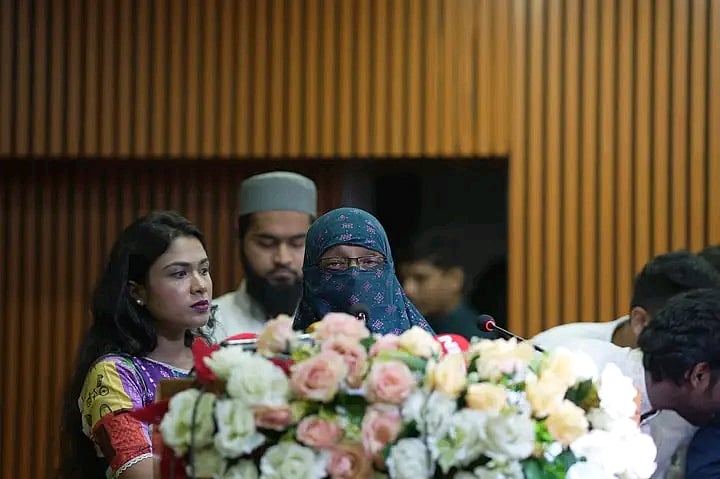
Photo Collected
Bangladesh’s Prime Minister Tareque Rahman is poised for a significant visit to China in late June, a trip Beijing hopes will elevate bilateral ties to “new heights” amid deepening political engagement between the two nations since the Bangladesh Nationalist Party (BNP) government took office. The proposed visit is expected to span more than two days, signaling China’s intent for comprehensive discussions.
Senior government officials, speaking anonymously to the Bengali daily *Prothom Alo*, confirmed the planned visit, though specific dates remain under finalization. Initial discussions suggest Prime Minister Rahman could meet with both Chinese President Xi Jinping and Premier Li Qiang on the same day he arrives in Beijing.
বিজ্ঞাপন
The prospective journey underscores the growing strategic partnership between Dhaka and Beijing. Responding to queries last week, Humayun Kabir, the Prime Minister’s foreign affairs adviser, affirmed the visit, calling China a “very important development partner” and noting the Prime Minister would travel “at a convenient time.” Chinese Ambassador Yao Wen, during an event in Dhaka on May 8, expressed optimism that the visit would usher in a new era for bilateral relations, reiterating China’s commitment to supporting Bangladesh’s political stability and economic development.
Diplomatic sources in Dhaka and Beijing confirmed to reporters that the potential prime ministerial visit was a central topic during a May 6 meeting between Bangladeshi Foreign Minister Khalilur Rahman and Chinese Foreign Minister Yao Wen in Beijing. Their discussions emphasized intensifying political-level contact to advance existing ties.
বিজ্ঞাপন
Diplomatic analysts observe a consistent increase in political and governmental exchanges with China following Bangladesh’s February elections and the formation of the new government. Last month, a delegation led by BNP Secretary General and Minister for Local Government, Rural Development, and Cooperatives, Mirza Fakhrul Islam Alamgir, visited Beijing and several Chinese provinces. Foreign Minister Khalilur Rahman’s recent trip to China followed this engagement.
While details are still being finalized, sources indicate the Prime Minister’s discussions in Beijing are likely to focus on strengthening political relations, enhancing economic cooperation, and accelerating infrastructure development projects. Bangladesh is expected to propose initiatives aimed at increasing trade and investment, including the relocation of Chinese industries, the establishment of economic zones, progress on the Teesta River comprehensive plan, the modernization of Mongla Port, and the introduction of direct flights between Guangzhou-Chattogram and Shanghai-Chattogram.
China is also keen to integrate Bangladesh into its broader international initiatives, particularly the Global Development Initiative (GDI) and the Global Security Initiative (GSI), both pillars of President Xi Jinping’s foreign policy unveiled since 2021. China has consistently urged Bangladesh to join these initiatives, even under previous administrations. Diplomatic sources suggest that discussions during the upcoming prime ministerial visit will explore Bangladesh’s potential involvement.
Beyond bilateral cooperation, China, a major partner in Bangladesh’s infrastructure development, is actively seeking to draw Dhaka into broader regional frameworks. From June to December 2025, China intensified diplomatic efforts and held various discussions to include Bangladesh in a trilateral initiative. Beijing engaged with the interim government, as well as the BNP and Jamaat-e-Islami, on this matter.
The interim government led by Professor Muhammad Yunus did not directly agree to the trilateral proposal. In January of this year, a four-country forum was suddenly proposed, with Pakistan putting it forward but China playing a key role behind the scenes. In late January, Pakistani Deputy Prime Minister and Foreign Minister Ishaq Dar telephoned Bangladesh’s Foreign Affairs Adviser Md. Towhid Hossain, proposing a regional forum comprising Bangladesh, China, Pakistan, and Myanmar. Pakistan was prepared to host the first meeting in Islamabad if Bangladesh agreed, but with election timelines finalized in February, the interim government deferred the decision to the new administration.
Officials in Dhaka note that China and Pakistan have continued informal discussions on these regional cooperation initiatives over the past three months. The matter has since been raised in the Ministry of Foreign Affairs under Prime Minister Rahman’s new government. There is a consensus to take time in deciding on new regional blocs, especially as Bangladesh is simultaneously working to revitalize the South Asian Association for Regional Cooperation (SAARC).
A senior government policymaker recently told *Prothom Alo* that, given the current global context, it is crucial to consider strategic aspects before joining any new alliance.
Former Foreign Secretary Md. Shahidul Haque emphasized that the global system is rapidly transforming amidst shifting geopolitical realities, particularly with ongoing conflicts in Europe and West Asia, which increasingly intertwine bilateral and regional issues. He noted that when Bangladesh strengthens ties with any nation, it must consider that nation’s relationships with other countries. Consequently, the Prime Minister’s proposed Beijing visit is not merely about bilateral relations but could also offer a significant indication of Bangladesh’s future regional diplomatic trajectory.
0%
0%
0%
0%