


Bangladesh Urged to End Heavy Reliance on Imported Medical Equipment

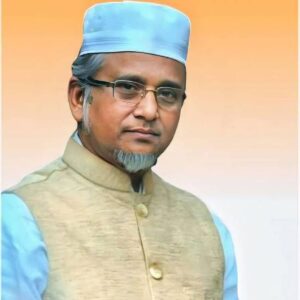
Photo Collected
Bangladesh’s healthcare sector is facing a critical dependency crisis, as the nation continues to rely heavily on expensive imports for nearly all medical equipment, from basic surgical tools to complex diagnostic machinery. Experts speaking at an international conference on “Appropriate Health Care Technology for Low- and Middle-Income Countries,” held Saturday at Dhaka University, emphasized that achieving self-sufficiency in medical manufacturing is essential to bridge the vast gap in healthcare access for millions of citizens.
Inaugurating the two-day summit at the Nawab Nawab Ali Chowdhury Senate Bhaban, Health Minister Sardar Md. Shakhawat Hossain expressed concern that even 53 years after independence, the country remains almost entirely dependent on foreign imports for medical supplies. He urged domestic scientists, physicians, and innovators to prioritize local development, noting that the government is prepared to provide significant incentives and support for breakthrough domestic inventions. He invited researchers to collaborate directly with his office to streamline the path toward local production and reduce the drain on foreign currency reserves.
বিজ্ঞাপন
The conference, organized by a coalition of academic and professional bodies including the University of Dhaka, BUET, and the Bangladesh Medical University, highlighted that while Bangladesh has seen remarkable success in the pharmaceutical sector, it lags significantly behind in the manufacturing of medical devices. Professor Khondkar Siddique-i Rabbani of Dhaka University’s Biomedical Physics and Technology department stressed that for innovation to be effective, inventors must also transition into the role of entrepreneurs. He warned that current administrative hurdles, particularly the harassment of small-scale entrepreneurs by tax and regulatory authorities, act as significant barriers to progress, calling for a protected environment where startups can thrive without bureaucratic intimidation.
Echoing these sentiments, National Professor A.K. Azad Khan, president of the Diabetic Association of Bangladesh, noted that the country’s triumph in drug manufacturing provides a roadmap that should now be applied to medical hardware. Other experts, including WHO representative Dr. Ahmed Jamsheed Mohamed, underscored the transformative potential of digital health and artificial intelligence. They argued that these technologies could accelerate universal health coverage in Bangladesh if integrated into national policy.
বিজ্ঞাপন
University of Dhaka Vice-Chancellor Professor A.B.M. Obayedul Islam stated that academic innovation only translates into social impact when it is adopted by state policy. He pointed to advancements in telemedicine technology developed by his university, suggesting that state-level integration of these local tools could revolutionize healthcare delivery in rural areas.
The consensus among the participants was clear: the solution to the nation’s healthcare limitations does not lie solely in importing high-end foreign equipment. Instead, a paradigm shift is required, characterized by a collaborative ecosystem where doctors, engineers, and policymakers work together to create affordable, sustainable, and locally relevant medical technologies.
0%
0%
0%
0%


