
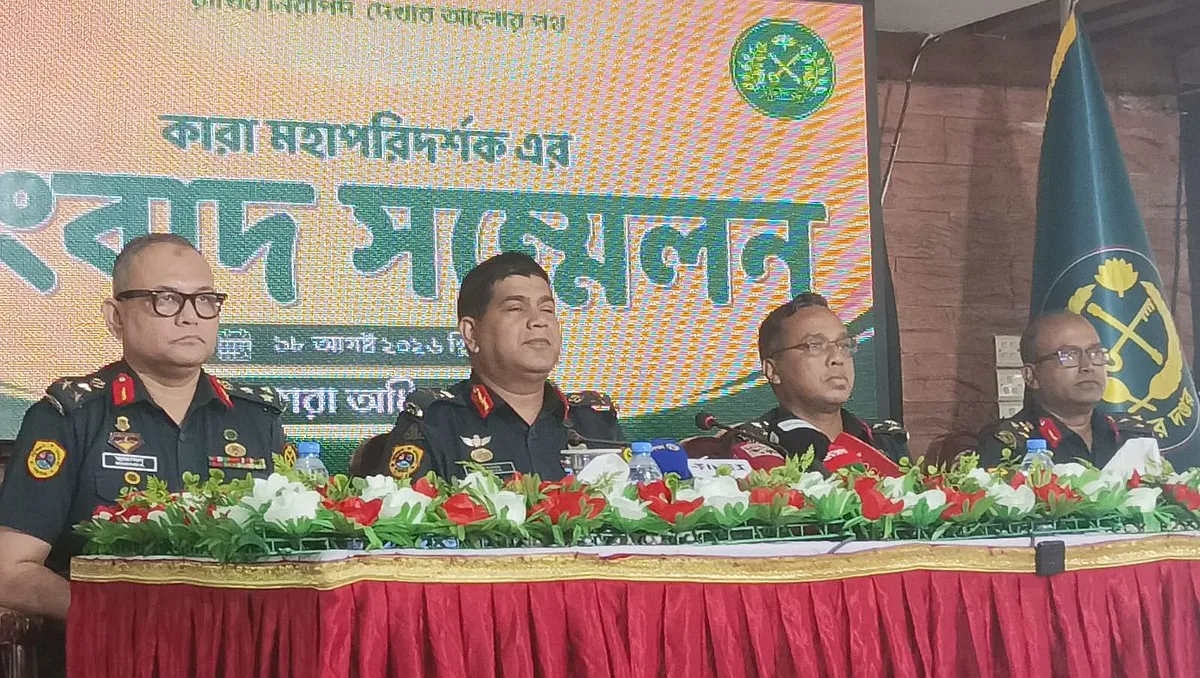
Inspector General of Prisons Brigadier General Syed Mohammad Motahar Hossain stated on Tuesday that 690 prisoners remain at large out of the 2,247 who escaped from various jails during the July 2024 mass uprising. Among the fugitives, the identities of 166 individuals who escaped from Narsingdi District Jail remain unknown due to the destruction of prison servers and digital records during the unrest.
Addressing a press conference at the Prison Directorate in Bakshibazar, Dhaka, the Inspector General (IG) confirmed that authorities are now retrieving data from court records to track the remaining escapees. He added that cases have been filed against those whose identities have been confirmed.
Regarding security measures and internal discipline, the IG noted that over 3,000 illicit mobile phones have been confiscated from prisons across the country in the past year. Furthermore, disciplinary action has been taken against more than 1,000 prison guards accused of various irregularities, including facilitating the entry of prohibited items. He emphasized that the use of unauthorized phones has declined as oversight has intensified.
The prison chief reported that the national prison population has risen to approximately 98,000, exceeding the average capacity. He attributed part of this surge to the high number of short-term convictions handed down by mobile courts between June 1 and July 31, during which over 26,000 individuals were incarcerated. To manage the influx, authorities are seeking government assistance to increase budgetary allocations for food and infrastructure.
Regarding prison health and welfare, Brigadier General Hossain highlighted a severe shortage of medical professionals, with only two permanent doctors currently posted against 151 sanctioned positions. While 101 doctors are working on a temporary basis, the department is relying heavily on nurses and pharmacists. He reported that 122 prisoners died in 2025, and 122 are currently receiving treatment at hospitals outside of prison facilities. Every death is subject to a formal investigation, including forensic analysis when necessary.

The IG also outlined ongoing reforms, including the implementation of a cashless transaction system for prison canteens, which uses RFID technology and fingerprint authentication to prevent mismanagement. This system is already operational in Munshiganj and is slated for expansion to the Dhaka Central Jail. Additionally, special facilities for drug-related offenders have been established in Feni-2, Kishoreganj, and Kashimpur to provide dedicated counseling and rehabilitation routines.
Addressing infrastructure and rehabilitation, the IG mentioned that efforts are underway to restore sewage treatment plants in older facilities. He also underscored the success of vocational training programs, noting that approximately 250,000 inmates have been trained in 39 different trades over the past five years. The department is currently exploring a government proposal to utilize prison garment production lines to manufacture uniforms for school students.
Concluding his address, the Inspector General stated that over 300 policy papers have been drafted in the last two years to standardize prison management, covering health, prisoner rights, and security protocols. He expressed confidence that these structural reforms would modernize the Bangladeshi prison system and prevent future administrative lapses.




