
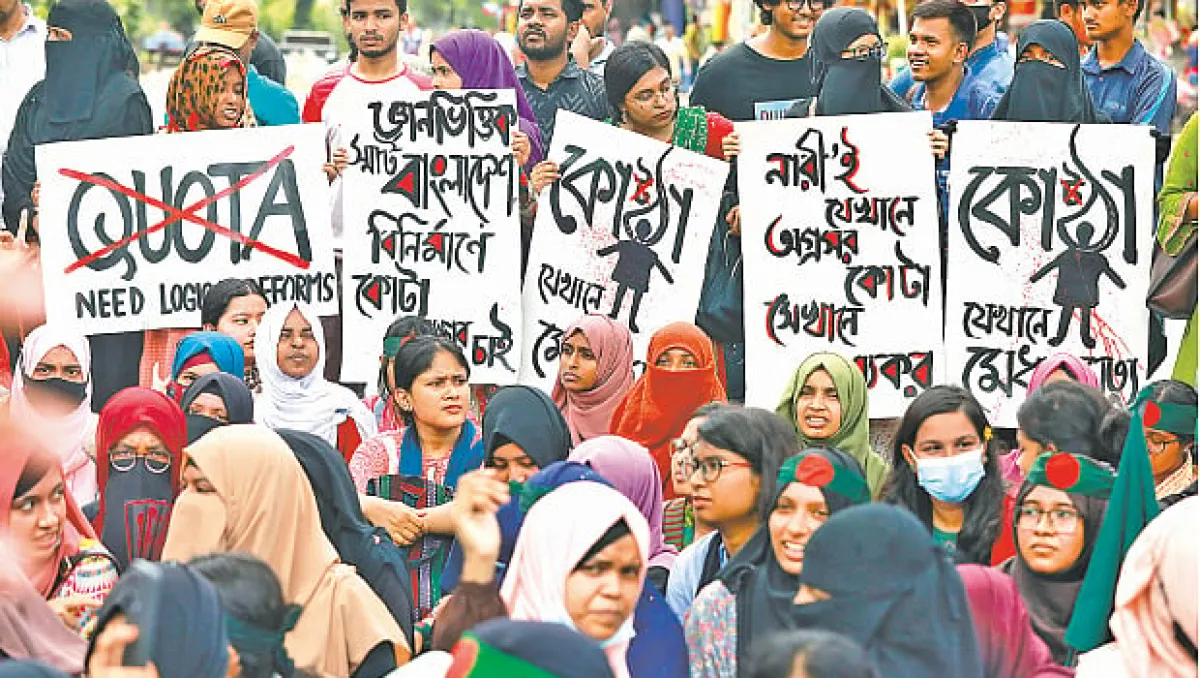
The ousting of Prime Minister Sheikh Hasina on August 5, 2024, signaled a pivotal shift in Bangladesh’s political trajectory, drawing thousands to Shahbag Square in a collective display of relief and anticipation. Yet, as the initial euphoria of the revolution settles, the nation faces the enduring challenge that has defined its modern history: the transition from successful grassroots mobilization to the sustainable reform of state institutions.
History offers a sobering template for this transition. The 1990 uprising, which brought an end to nine years of military rule, remains the most significant benchmark. At that time, a broad coalition of students, labor groups, and political parties forged an unprecedented consensus centered on democratic principles, such as free elections and judicial independence. However, the subsequent years revealed that while the movement successfully toppled a dictator, it failed to solidify its gains. The resulting political culture prioritized partisan conflict over institutional integrity, causing the hard-won democratic framework to erode as political actors reverted to power struggles.
The current post-revolutionary landscape reflects a growing consensus that regime change is insufficient without deep-rooted systemic reform. Analysts point to the "July uprising" of 2024 as a turning point where the discourse shifted toward state reconstruction. The focus has moved beyond the removal of an individual leader to the structural necessity of insulating the judiciary, administration, and electoral systems from political capture. Without these institutional safeguards, the nation remains trapped in a cycle where the same grievances trigger repeat protests every generation.

The recurring patterns in Bangladesh’s political timeline—from 1952 and 1971 to 1990 and now 2024—illustrate a consistent ability to organize effective protests, yet a persistent failure to institutionalize the resulting democratic aspirations. This cyclical history suggests a form of "collective amnesia," where the urgency of the streets dissipates once transferred to the corridors of power. To break this cycle, the prevailing political wisdom suggests that democratic stability depends on a mutual agreement that certain pillars—such as the rule of law and freedom of expression—must remain beyond the reach of partisan maneuvering.
Ultimately, the success of the 2024 movement will not be measured by the collapse of the previous regime, but by the ability of the state to formalize its achievements within the constitution and its political culture. As Bangladesh stands at a crossroads, it must choose between the repetitive frustration of past cycles and the rigorous task of institution-building. History serves as a reminder that while the battle for change is won on the streets, the struggle for a lasting, functional democracy begins the day after.




