
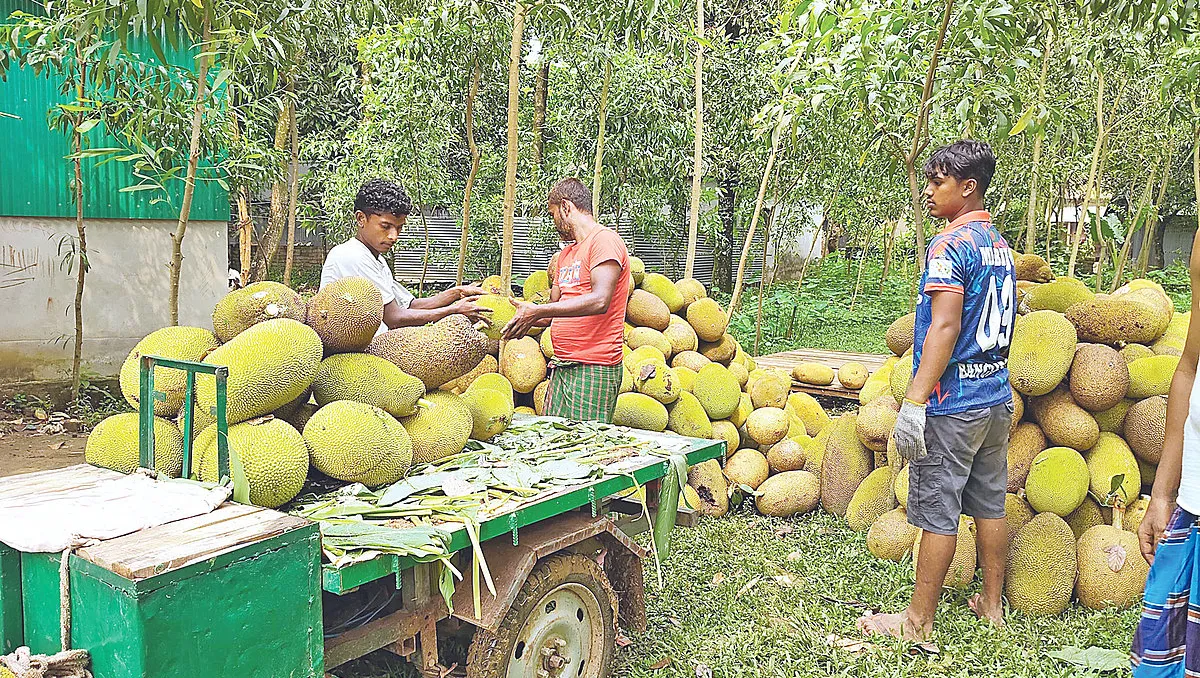
As dawn breaks over the rural landscape of Sreepur in Gazipur, the air grows heavy with the sweet, unmistakable fragrance of ripening jackfruit. For the farmers of this region—long considered the nation’s jackfruit capital—the harvest season marks a period of intense economic activity that transcends the traditional marketplace. Wholesalers now traverse the orchards themselves, negotiating prices directly beneath the trees and bypassing the need for farmers to transport their yields to distant stalls. This bustling trade has cemented Sreepur’s status as a pivotal production hub, a reputation recently solidified by the government’s 2025 designation of Gazipur jackfruit as a Geographical Indication (GI) product.
According to data from the Sreepur Upazila Agriculture Office, the region produces an average of 78,000 tons of jackfruit annually. The harvest is dominated by three primary varieties—Khaja, Gala, and Dursa—each prized for its distinctive sweetness, aroma, and vibrant color. The quality of the local crop is bolstered by favorable soil and climate conditions, alongside the introduction of high-yield varieties developed by the Bangladesh Agricultural Research Institute, such as the BARI-1 through BARI-5 strains.
The local economy relies heavily on major trade centers, with Jaina Bazar serving as the largest wholesale hub, supported by active trading points in Nagorhaola, Chakpara, and Rajabari. Wholesale prices currently reflect robust demand, with lots of 100 medium-sized jackfruits selling between 5,000 and 6,000 taka, while larger specimens can command up to 8,000 taka. Traders from across the country congregate at these sites, eager to secure supplies of the highly sought-after fruit.

Beyond domestic consumption, there is a strategic shift toward international expansion. Agriculture officials have signaled plans to export high-quality Khaja jackfruit to markets in Europe and the Middle East. District Administrator Md. Nurul Karim Bhuiyan noted that while the current market value of Gazipur’s jackfruit industry stands at approximately 5 billion taka, aggressive initiatives to promote exports and local processing could potentially quadruple that figure to 20 billion taka.
To realize this potential, local officials are focusing on value-added production, such as processing jackfruit into pickles and “ready-to-cook” goods, which would help mitigate post-harvest losses and extend the shelf life of the fruit. However, the industry faces long-term challenges, particularly regarding land use. Residents and local producers have expressed concerns over a gradual decline in the number of jackfruit trees, warning that without active government programs to incentivize new planting, the region risks losing the very heritage that sustains its agricultural identity.




