
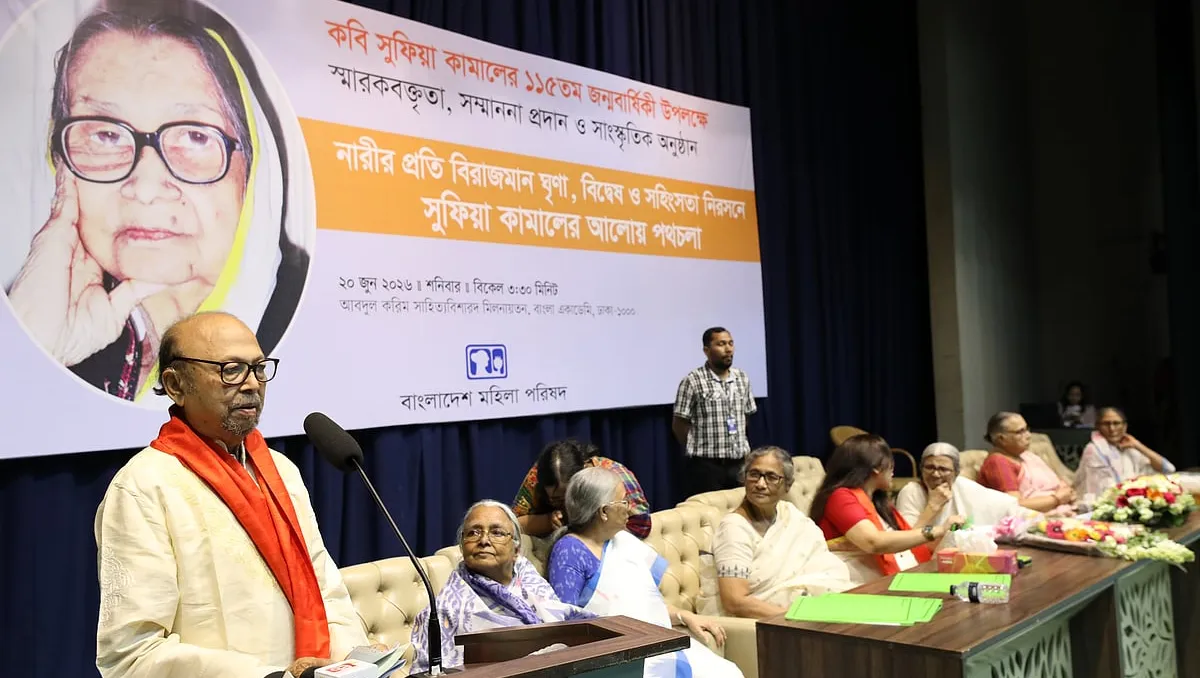
Prominent activists, scholars, and cultural figures gathered at the Bangla Academy in Dhaka on Saturday to demand an end to the systemic hatred and digital harassment directed toward women. The event, hosted by the Bangladesh Mahila Parishad to mark the 115th birth anniversary of the legendary poet and activist Begum Sufia Kamal, highlighted a concerning rise in organized online smear campaigns intended to silence women and push them out of the public sphere.
Delivering the commemorative lecture, Professor Rezwana Karim Snigdha of Jahangirnagar University’s Department of Anthropology argued that Begum Kamal’s legacy is often misunderstood if reduced merely to rights-based activism. Instead, Professor Snigdha emphasized that Kamal’s philosophy was rooted in "moral citizenship"—a framework where political and social standing is defined by mutual respect, empathy, and collective humanitarian responsibility. According to the lecture, Kamal did not seek sympathy or mere legal protection for women; rather, she fought for the fundamental recognition of women as complete moral and political entities whose voices and presence must be treated as inherently legitimate.
The event featured the presentation of the Sufia Kamal Award to renowned painter Mohammad Abul Hashem Khan. In his acceptance speech, Khan expressed profound frustration over the persistent misogyny in modern society. He noted that despite significant strides in women’s education and professional achievement, women continue to face reactionary calls to withdraw from the public domain. Khan questioned the trajectory of a nation that, despite having long periods of female political leadership, still grapples with deep-seated animosity toward women.

Fowzia Moslem, president of the Bangladesh Mahila Parishad, presided over the ceremony and warned that the vitriol directed at women has intensified following the political shifts of July. She asserted that this atmosphere of hostility is a deliberate tactic meant to intimidate women and undermine the gender equality movement. Moslem called for a unified front, urging both men and women to stand together against these regressive trends to safeguard the progress made in human rights.
The commemoration began with a floral tribute to a portrait of Sufia Kamal, followed by the screening of a documentary titled "Eki Labonye Purno Prane Jononi Sahosika Kobi Sufia Kamal," directed by Shamim Akhtar. The program concluded with musical performances by Rabindra Sangeet artist Iffat Ara Dewan and members of Chhayanaut, serving as a cultural reaffirmation of the values of dignity and resilience that defined Sufia Kamal’s life and work.




