
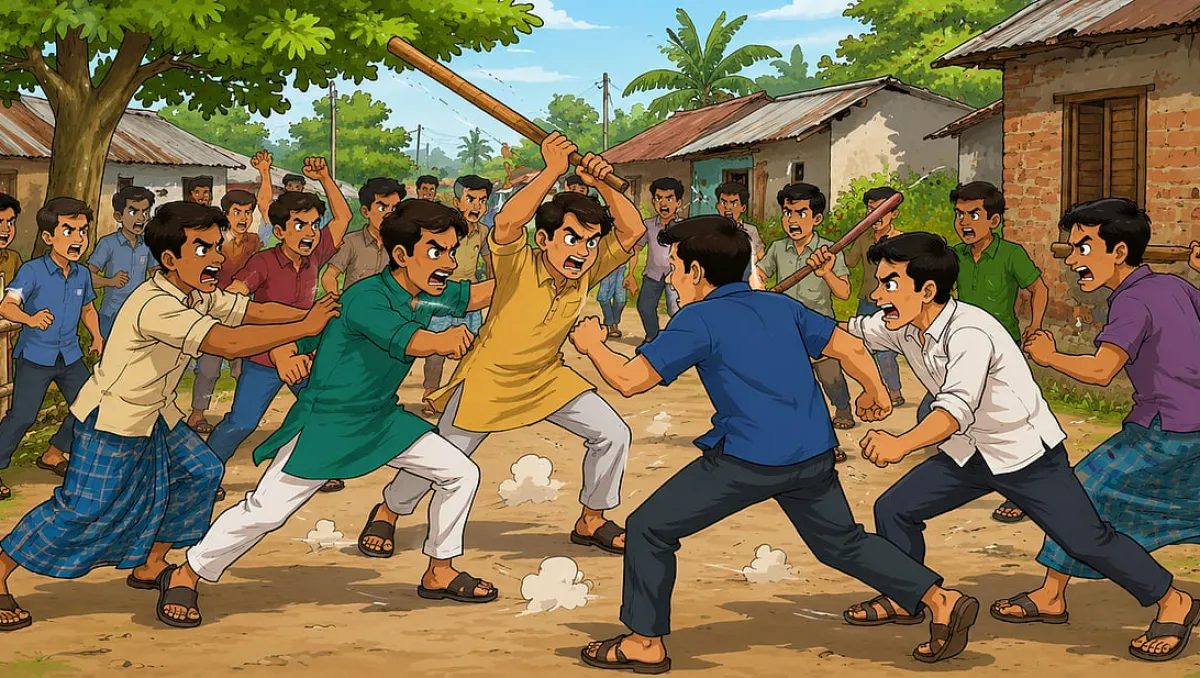
Public holidays in Bangladesh, intended for celebration and communal harmony, are increasingly being marred by outbreaks of violence. A disturbing rise in intolerance has transformed festive periods into times of conflict, as trivial disputes escalate into brawls, property damage, and, in some instances, fatalities.
Sociologists and mental health experts observe that a growing trend of individualism and diminishing patience is eroding the social fabric. During the recent Eid-ul-Fitr and Eid-ul-Adha holidays, media reports documented 46 separate incidents of violence, leading to at least 11 deaths and hundreds of injuries across various districts. These clashes were often sparked by mundane grievances, ranging from disagreements over the location of Eid prayers or the distribution of sacrificial meat to arguments over mundane matters like fuel queues, motorcycle traffic, or even the ordering of snacks.
In one instance on Eid-ul-Fitr, a dispute over whether prayers should be held in a mosque or an open field escalated into a physical confrontation involving bamboo staves, leaving 13 people injured and resulting in the looting of several homes. Similar patterns emerged during Eid-ul-Adha, where conflicts over the division of sacrificial meat left dozens injured and shops destroyed. These events were not isolated; they spanned 18 districts, with Brahmanbaria reporting the highest frequency of such clashes.
Experts suggest these incidents reflect deeper societal issues. Professor Fatema Rezina Iqbal of the University of Dhaka’s Sociology Department noted that individuals are becoming increasingly self-centered, showing little regard for the opinions or needs of others. This decline in empathy, coupled with economic pressures and unresolved property disputes—which constitute a vast majority of the country’s legal cases—creates a volatile environment where minor frictions quickly turn violent.

This assessment is supported by data from the Association for Land Reform and Development (ALRD). Executive Director Shamsul Huda pointed out that approximately 75% to 77% of civil and criminal cases currently before the courts involve land and property disputes. These underlying tensions often serve as a catalyst, with festive gatherings providing an opportunity for long-standing animosities to erupt under the guise of trivial arguments.
Clinical psychologist Professor Kamal Chowdhury attributes this volatility to a collective loss of tolerance and the accumulation of societal frustrations. He argues that the absence of formal moral education at the family and school levels—where the focus has shifted heavily toward competitive academic success rather than character building—has left younger generations ill-equipped to manage anger or engage in conflict resolution.
To reverse this trend, experts advocate for a systematic return to teaching tolerance and social responsibility from a young age. Proposals include integrating mindfulness and sports into school curricula to help youth cope with disappointment and navigate social setbacks constructively. Furthermore, strengthening familial bonds through shared responsibilities and communal cooperation is seen as essential for fostering a culture of mutual respect. As these instances of festive violence continue to make headlines, the consensus remains that without a concerted effort to cultivate patience and empathy, the "twin enemies" of anger and intolerance will continue to undermine the stability of the community.




