
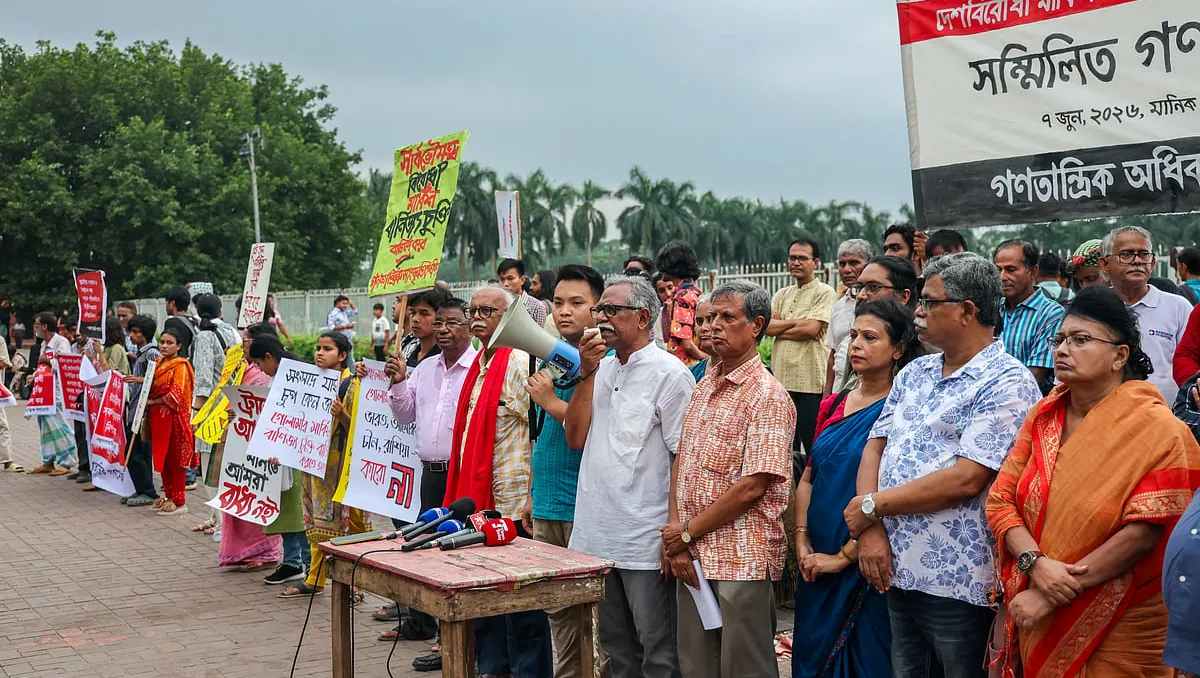
Prominent economist and academic Anu Muhammad has called for the immediate cancellation of a controversial trade agreement between Bangladesh and the United States, labeling the pact a threat to the nation’s sovereignty and long-term security. Speaking at a protest rally organized by the Committee for Democratic Rights at Manik Mia Avenue in Dhaka, the professor asserted that the current government must be held accountable for its role in endorsing what he described as an "order form" dictated by foreign interests.
Professor Muhammad criticized the administration’s adherence to the deal, arguing that it compromises Bangladesh’s independence by granting the United States excessive authority to impose punitive measures if specific provisions are not strictly implemented. He went on to demand a formal investigation into the officials involved in negotiating and signing the agreement, including Foreign Minister Khalilur Rahman and members of the interim administration previously led by Muhammad Yunus. He characterized the signatories as lacking national accountability and acting against the country's core interests.
The protest drew a coalition of leftist political, social, and cultural organizations, with speakers highlighting the potentially devastating impact the trade deal could have on Bangladesh’s vital garment, pharmaceutical, and energy sectors. Harun ur Rashid, a member of the Committee for Democratic Rights, dismissed the agreement as a "pact of servitude," urging citizens to set aside political differences to challenge what he termed a catastrophic threat to national welfare.

During the event, participants articulated deep concern over the government’s perceived subservience to international powers. Demonstrators pointed to a perceived lack of transparency from elected representatives, who have remained largely silent regarding the details and implications of the agreement. A formal open letter, addressed to the Prime Minister, the Speaker of the National Parliament, and all members of parliament, was read aloud by Dhaka University faculty member Mosahida Sultana.
The letter challenged lawmakers to break their silence and address the long-term ramifications of the deal, which the signatories argue will shackle the nation’s economic future. The communication demanded that the current parliamentary session be utilized to conduct a comprehensive debate on the agreement with the ultimate goal of repealing it to protect Bangladesh from what activists describe as a diplomatic and economic trap. Other notable attendees included academic Tanzeemuddin Khan, public health expert Mushtaq Hossain, and several prominent researchers and advocates.




