
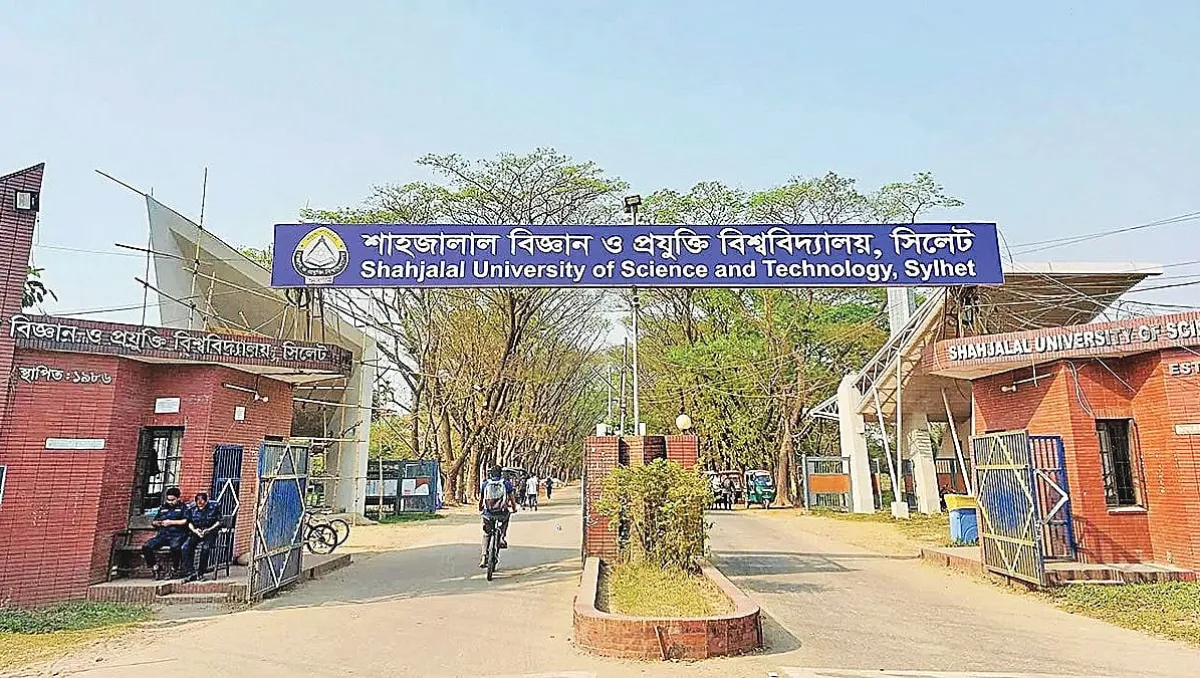
Life at Shahjalal University of Science and Technology (SUST) has undergone a significant transformation in the wake of the 2024 student-led uprising, shedding years of systemic political interference, intimidation, and unauthorized control of residential halls. While students report a newfound sense of safety and transparency in administration, the campus continues to struggle with structural service deficits and a noticeable decline in cultural vitality.
Before the uprising, access to residential halls was strictly controlled by the now-banned Bangladesh Chhatra League. Students were often forced to participate in political programs or endure harassment in "guest rooms" if they refused to align with senior student leaders. Hall seats were treated as spoils of political patronage, often resulting in overcrowded "ganarooms" where up to 12 students were crammed into spaces designed for four.
Following the political shift, the university authorities implemented a merit-based seat allocation policy. Under this new system, 60 percent of seats are assigned based on academic performance, while the remaining 40 percent are reserved for students facing financial hardship, those from distant locations, and other specific quotas. According to Mohammad Saiful Islam, the university’s director of student advising, the process is now managed by a committee that verifies departmental recommendations, effectively eliminating the influence of non-students and external political agitators.
For the nearly 3,000 residents across the university’s six dormitories, the change has been stark. Students report an end to midnight rallies, forced political meetings, and physical abuse. The environment is described as quiet and conducive to academic pursuits, with students spending their time in reading rooms or engaged in personal study without fear of retribution.
However, the university’s administrative and social landscape remains complex. While automation has streamlined essential services such as registration, fee payments, and certification through the "My SUST" portal, other areas have seen little progress. Students continue to face chronic issues with food quality in canteens, where costs have risen without a corresponding improvement in nutritional value or variety. Furthermore, the campus medical center remains a source of frustration, with persistent shortages of medicine and a tendency to refer patients to external hospitals for even minor ailments.

The cultural vibrancy of the campus has also diminished. Student organizations, which previously fueled the university’s social life, have scaled back activities due to increased pressure to complete academic semesters, a lack of sponsorship, and lingering insecurity. Psychologists warn that this decline in extracurricular engagement is contributing to feelings of isolation and mental health challenges among the student body.
At the administrative level, the transition has seen a shift in political representation rather than a complete departure from partisan influence. While the university claims that appointments for departmental and hall leadership positions are based on merit, many of these roles have been filled by faculty members affiliated with the Bangladesh Nationalist Party (BNP) or, in some instances, Jamaat-e-Islami.
Despite these challenges, the physical infrastructure has seen modest improvements, with the opening of new academic buildings easing classroom shortages for several departments. Yet, for newer faculties such as oceanography and mechanical engineering, overcrowding remains a hurdle to effective instruction.
Ultimately, while the atmosphere at SUST is markedly more democratic and secure than in the previous decade, both students and faculty remain cautious. As professors and administrators navigate the post-uprising landscape, the consensus among the university community is that while the fear of political repression has faded, the deeper structural reforms necessary to revitalize campus life and provide top-tier student services remain a work in progress.




