
BERC proposes 6.48 taka per unit for renewable electricity amid expert concerns over cost transparency
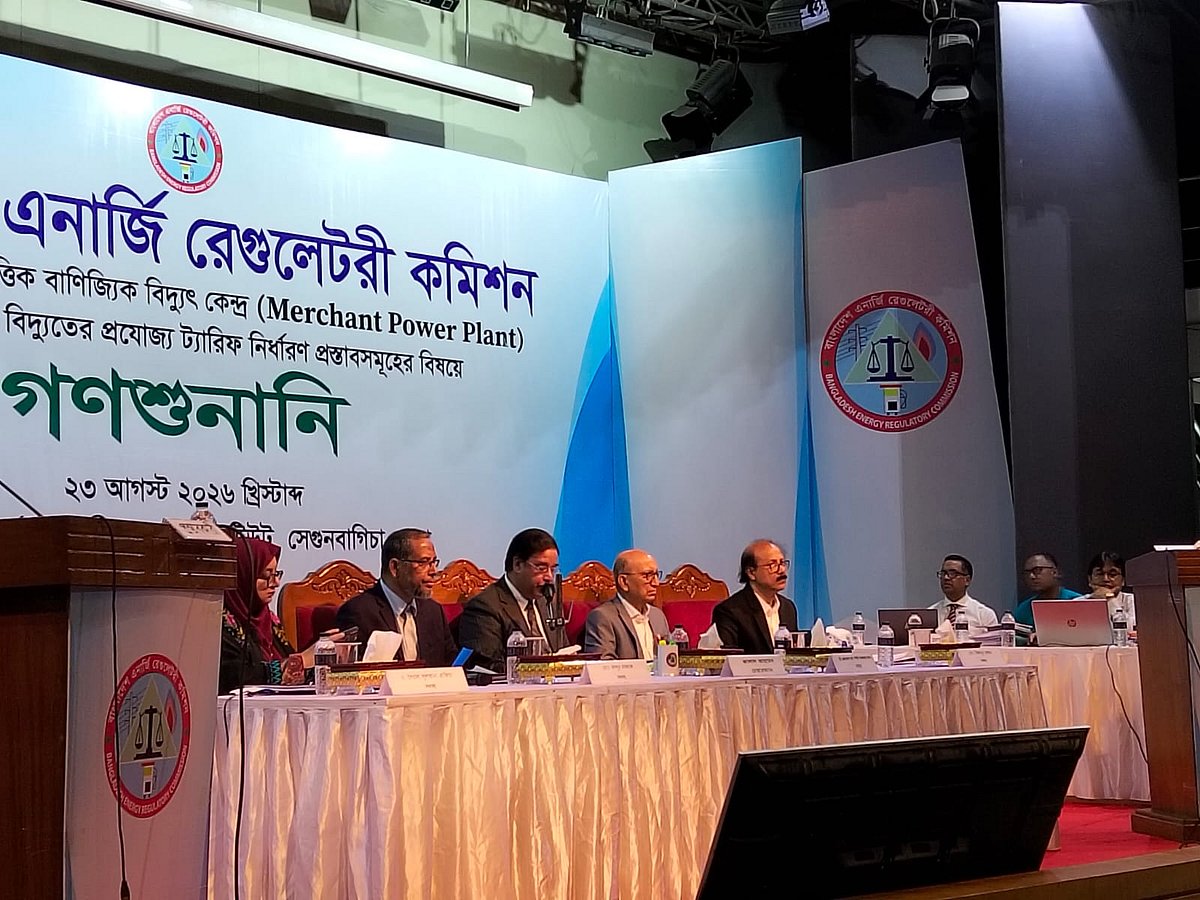
Photo Collected
The Bangladesh Energy Regulatory Commission (BERC) technical evaluation committee has proposed a tariff of 6.48 BDT per unit for electricity generated from grid-connected renewable energy power plants. The proposal, unveiled Sunday during a public hearing at the International Mother Language Institute in Dhaka, incorporates operational costs, labor and administrative expenses, maintenance, depreciation, and investment returns.
The technical committee’s valuation accounts for additional expenses, including smart meters, Automated Meter Reading (AMR) systems, metering testing, billing, collection, distribution losses, and overall energy management. Based on an estimated annual production of 91.84 million units, the total projected revenue is approximately 5.94 billion BDT.
Didarul Alam, president of the BERC technical evaluation committee, stated that the proposed price was calculated based on a 50-megawatt solar power plant model. To ensure grid stability, the proposal mandates a battery storage capacity equivalent to 10 to 20 percent of the plant’s total output.
During the hearing, energy expert and Consumers Association of Bangladesh (CAB) adviser Shamsul Alam challenged the proposed rate, labeling it significantly higher than tariffs in neighboring India and Pakistan. He questioned the justification for the price and urged the BERC to establish a competitive benchmark price rather than relying on current calculations. Alam criticized past high-cost power procurement as predatory and demanded that the commission foster an environment where private entrepreneurs can compete regionally by streamlining licensing through a one-stop service.
Responding to the criticism, BERC officials stated that the tariff was derived from specific financial parameters, noting that the final rate remains subject to change if those variables are adjusted.
Stakeholders and academics also raised concerns regarding transparency. Professor Jebunnesa of Jahangirnagar University called for an independent audit of production costs and a comprehensive cost-benefit analysis before any tariff is finalized. She emphasized that the burden of inefficiency should not be transferred to consumers and advocated for a digital, transparent billing system.
Mustafa Azim Kasem Khan, founder and managing director of FloSolar, warned that excessive operational charges could stifle investment. He argued for a rationalized structure for transmission and distribution fees to ensure the sector remains business-friendly. Meanwhile, Bangladesh University of Engineering and Technology (BUET) professor Abdul Hasib Chowdhury stressed the need for neutral, verified benchmarks in calculating ancillary charges.
Concluding the hearing, BERC Chairman Jalal Ahmed acknowledged the need for further scrutiny, particularly regarding battery storage costs and regional comparisons with Pakistan’s energy model. He confirmed that the commission is carefully reviewing all feedback and invited stakeholders to submit further opinions or objections in writing by Thursday before a final decision is reached.
0%
0%
0%
0%