Legal Experts and Human Rights Activists Demand Immediate Prosecution of Enforced Disappearance Perpetrators
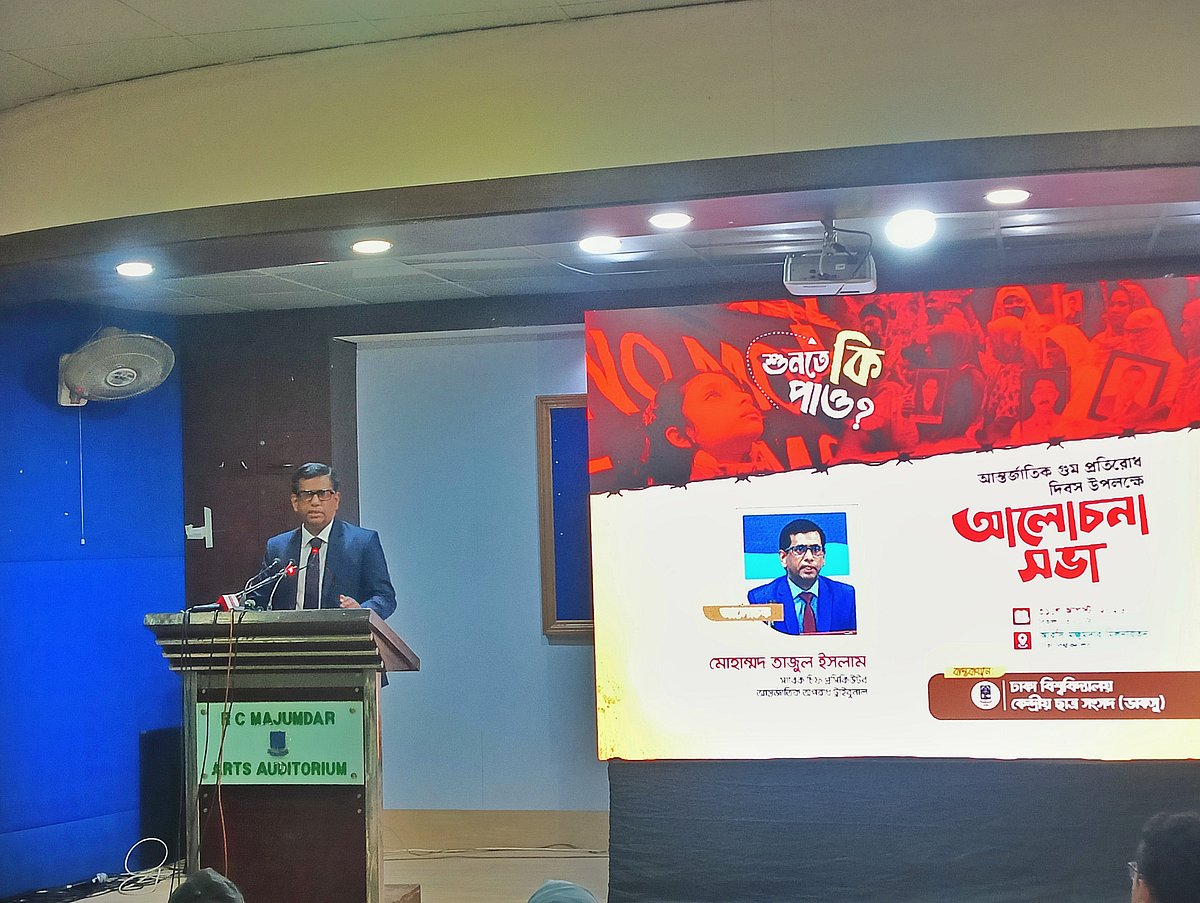
Photo Collected
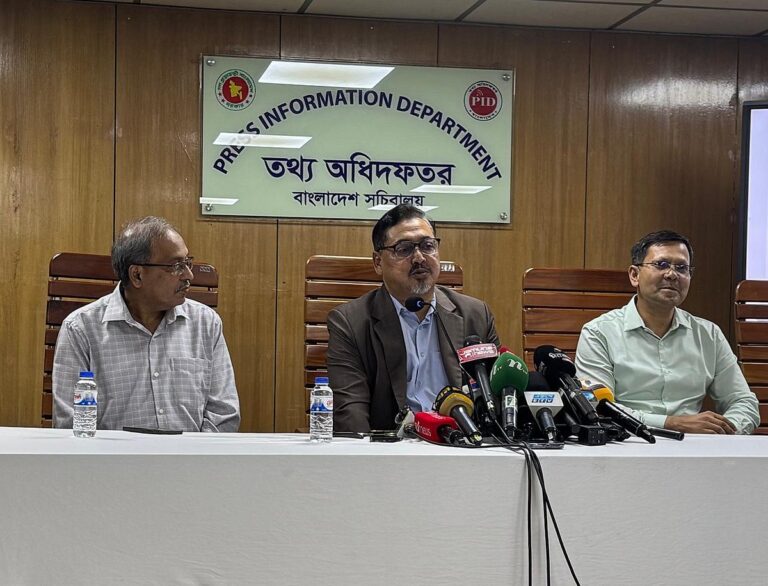
Human rights activists, legal experts, and families of the disappeared have called for the immediate repeal of legislation they fear may protect perpetrators of enforced disappearances rather than ensure justice. The demand was raised during a discussion titled “Shunte Ki Pao?” (Do You Hear?), organized by the Dhaka University Central Students’ Union (DUCSU) at the university’s R.C. Majumdar Auditorium on Monday to mark the International Day of the Victims of Enforced Disappearances.
Former Chief Prosecutor of the International Crimes Tribunal, Mohammad Tajul Islam, expressed concern that the current legislative initiatives following the July mass uprising could inadvertently shield those responsible for systemic human rights abuses. He specifically criticized Section 14 of the proposed anti-disappearance law, which mandates that investigations be conducted by a force other than the one accused of the crime. Tajul Islam argued that this provision is fundamentally flawed, as security agencies frequently operated in collusion, using each other’s identities and transferring detainees between departments, making it nearly impossible to isolate responsibility to a single entity.
Tajul Islam warned that if the government fails to implement robust legal frameworks to hold perpetrators accountable, it risks facing the same level of public accountability that led to the July uprising. He urged both ruling and opposition political factions to act with transparency, emphasizing that the populace is fully capable of demanding institutional accountability.
Human rights activist and former head of Ain o Salish Kendra (ASK), Nur Khan Liton, highlighted the enduring anguish of families, noting that while a commission on enforced disappearances has been established, there has been no tangible progress in securing justice. He described the disappearances as highly coordinated operations conducted by agencies such as the Detective Branch (DB), Rapid Action Battalion (RAB), and the Directorate General of Forces Intelligence (DGFI). Liton warned that the proposed ordinances regarding the commission contain severe procedural loopholes, particularly concerning inter-agency investigations, which he described as an impediment to impartial justice.
Mir Ahmed Bin Quasem, a Member of Parliament for Dhaka-14, questioned the efficacy of state institutions, noting that 54 years after independence, the country lacks a reliable mechanism to protect citizens from state-sponsored abduction. He stated that commissions existing only on paper serve little purpose and do little to restore public trust in the state’s judicial architecture.
The emotional toll of these systemic failures was underscored by Motiur Rahman, who has been searching for his brother, Hafez Zakir Hossain, since he was allegedly abducted by personnel identifying as RAB-2 in April 2013. Despite filing numerous memoranda with various departments, the family remains without answers. Rahman issued a final appeal to the government: if his brother is alive, he should be returned; if he was killed, his remains must be handed over for a proper burial.
The event concluded with a screening of the film “Joar,” which has received official selection for the 2025 Northwest International Film Festival in the United States and was previously awarded Best National Short Film at the 2026 Bogura International Film Festival. Other speakers at the event included photographer Shahidul Alam, researcher Nausheen Sharmila, DUCSU Vice President Sadik Kayem, and executive member Md. Shahinur Rahman.
0%
0%
0%
0%