
Experts Call for Ending Legal Misuse and Ensuring Accountability to Protect Digital Rights in Bangladesh
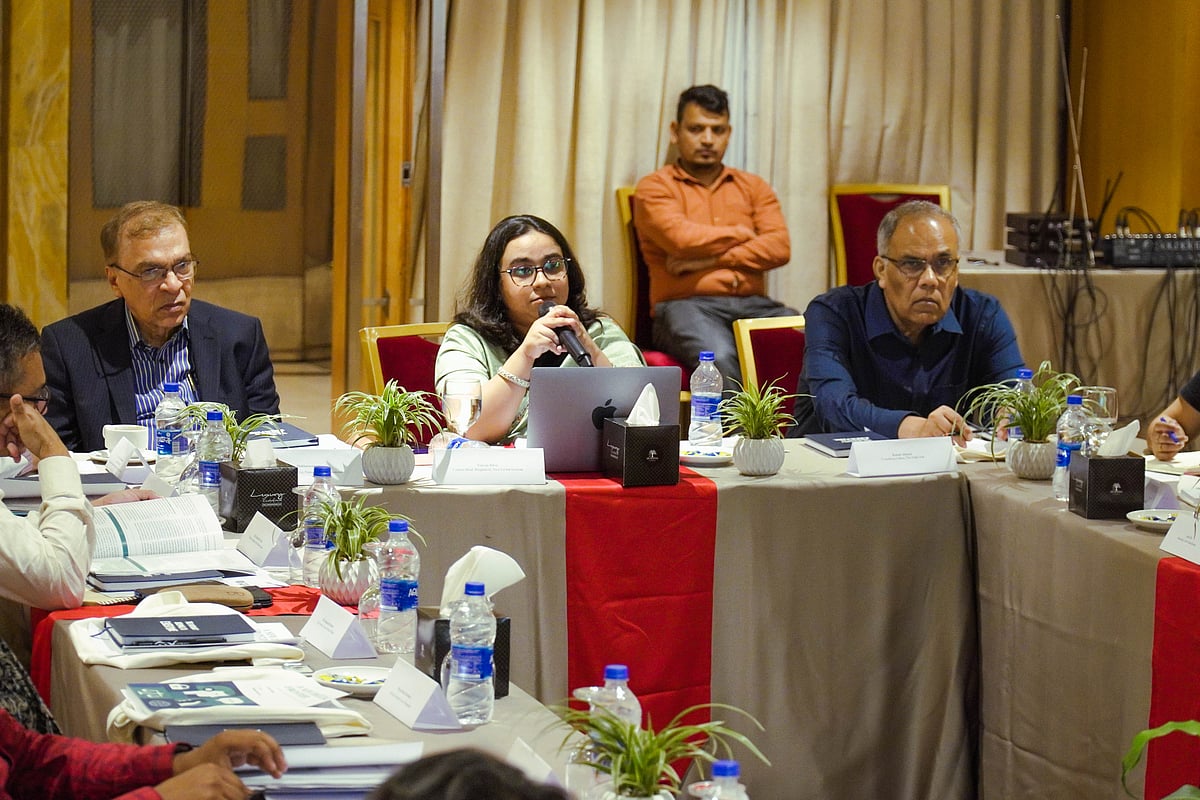
Photo Collected
Legal experts and civil society members argued on Sunday that simply enacting new digital laws or amending existing ones is insufficient to protect citizen rights in Bangladesh. During a roundtable discussion titled “Digital Policies and Rights in Bangladesh,” hosted by the TechGlobal Institute in Dhaka, speakers emphasized that the misuse of laws, the protection of personal data, and the accountability of global technology platforms remain critical, unresolved issues.
Participants identified the disparity in how laws are applied to the powerful versus ordinary citizens as a primary concern. Kamal Ahmed, consulting editor at The Daily Star, stressed that stopping the systemic abuse of existing laws is more urgent than drafting new legislation. Regarding the role of global technology companies, Ahmed criticized the lack of clarity in government policy, noting that platforms must be held accountable if they fail to remove harmful content promptly. He added that when platforms violate their own community standards, they should be held responsible not only to the government but also to the affected citizens.
Iftekharuzzaman, executive director of Transparency International Bangladesh (TIB), attributed the crisis in digital accountability to the roles of the bureaucracy, political entities, and technology platforms. He noted that while bureaucrats often draft initial legislative frameworks in many nations, the process in Bangladesh is entirely controlled by the bureaucracy in collusion with political forces. Furthermore, he raised concerns over the proposed Human Rights Commission Bill, arguing that effective accountability is impossible when the authority to investigate sensitive human rights violations—such as enforced disappearances—remains within the same institutional framework accused of the abuses.
A presentation delivered by the TechGlobal Institute during the event highlighted various vulnerabilities within the current legal landscape, including the Cyber Security Act, the Bangladesh Telecommunication Act, the Personal Data Protection Act, and the National Data Management Act.
In her concluding remarks, Fouzia Afroz, country head of TechGlobal Institute, urged the government to adopt an inclusive approach to policy-making. She stated that it is essential to incorporate the perspectives of civil society, researchers, journalists, academics, and marginalized communities to ensure that policies reflect the needs of all segments of society rather than just institutional stakeholders.
The roundtable featured a diverse panel of speakers, including Professor Mohammad Rizwanul Islam of North South University, BTRC Deputy Director S.M. Taifur Rahman, National Cyber Security Agency Director Hossain Bin Amin, lawyer Priya Ahsan Chowdhury, and cartoonist Mehedi Haque.
0%
0%
0%
0%