
Brahmanbaria drug rehabilitation centers under scrutiny following patient death and severe regulatory noncompliance
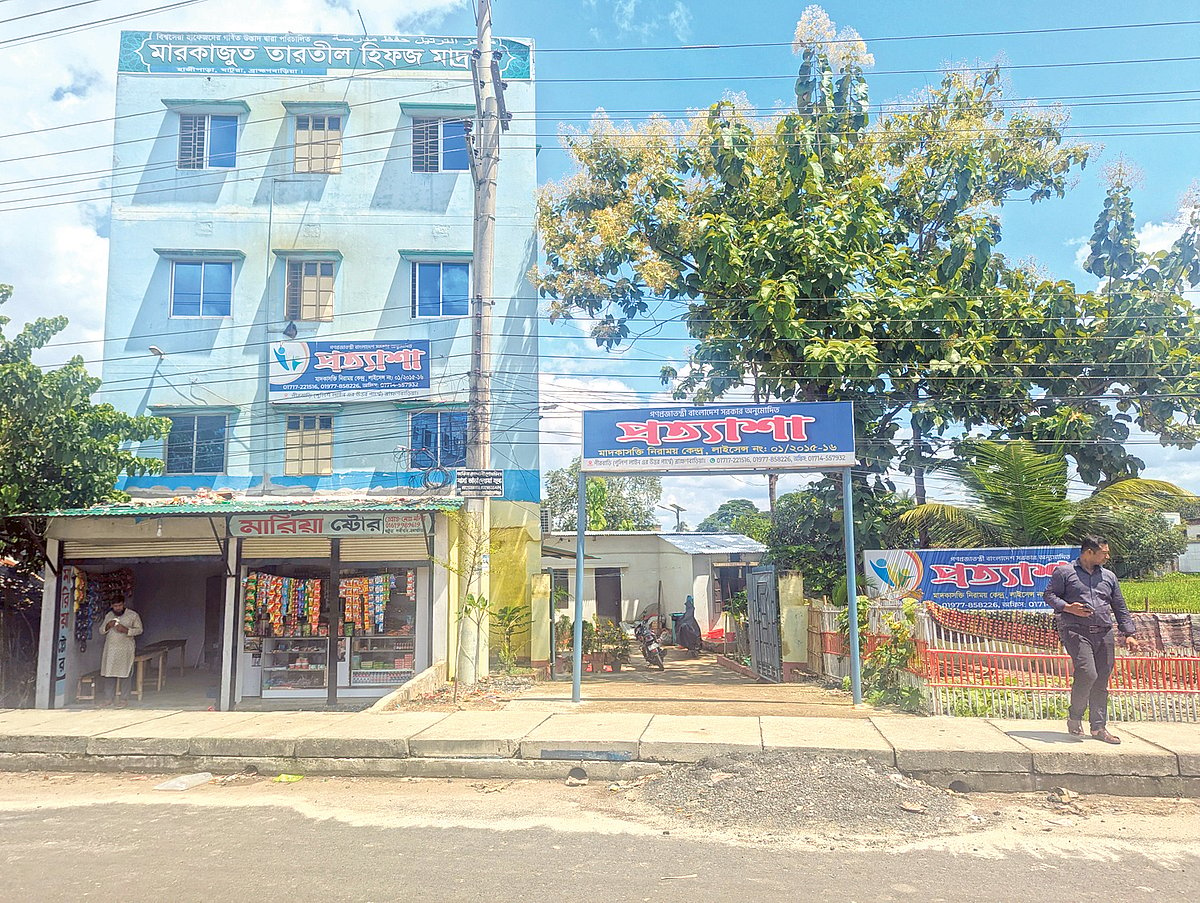
Photo Collected
Brahmanbaria authorities are under fire as investigations reveal that drug rehabilitation centers in the district are operating in violation of safety and medical standards, with facilities housing significantly more patients than their licensed capacity. The scrutiny follows the death of a patient allegedly beaten at one of the centers, leading to its subsequent closure.
There are currently six authorized drug rehabilitation centers in the district. Official records from the Department of Narcotics Control indicate that four of these facilities are licensed for 20 beds each, while two are licensed for 10 beds. The 20-bed facilities include Proyash, Ashirbad, Prottoy, and Oshru, while the 10-bed facilities are Prottasha and Barta.
Operations at the Proyash center were suspended following the death of a patient named Mohammad Forkan on August 18. Allegations surfaced that center staff beat him to death, prompting local residents to storm the facility the following day. During the incident, 40 patients escaped the premises. District administration officials later inspected the facility and confirmed it had been operating without a qualified physician.
An on-site inspection of the remaining five centers revealed severe overcrowding and a lack of medical oversight. The facilities, all located in rented buildings, were found to be housing far more patients than their licensed capacity. For instance, the Oshru center was found with 61 patients, Prottoy with 43, Barta with 45, and Prottasha with 26. These figures do not account for the additional 20 to 25 individuals per center who remained for post-treatment observation.
None of the five active centers employed full-time physicians, psychiatrists, trained nurses, or ward boys. Furthermore, the facilities lacked basic amenities such as indoor recreation areas, reading materials, dedicated classrooms, and appropriate housing or dining arrangements, leaving patients effectively confined in sub-standard environments.
While center operators claim to have medical staff on rotation, none were present during inspections. The individuals listed as doctors—such as Mohammad Mahmudul Hasan, Injamamul Haque, and Shakil Ahmed—work only on a part-time basis. Mahmudul Hasan, a medical officer at the Civil Surgeon’s office, stated that he visits the centers for only a few hours per week due to a lack of professional psychiatrists in the district.
Center directors defended the overcrowding by citing pressure from desperate parents. Regarding the lack of full-time medical staff, Mozammel Haque, executive director of the Oshru center, noted that the financial structure makes it impossible to hire permanent doctors, as the high cost of a full-time salary cannot be sustained by the fees collected from patients.
Sajedul Hasan, deputy director of the District Department of Narcotics Control, acknowledged the overcrowding and confirmed that the facilities are largely relying on part-time staff. He stated that the department intends to intensify inspections and will take legal action if further evidence of physical abuse or regulatory non-compliance is uncovered.
0%
0%
0%
0%