Crocodile relocated from Bagerhat shrine pond refuses food at Dulahazara Safari Park
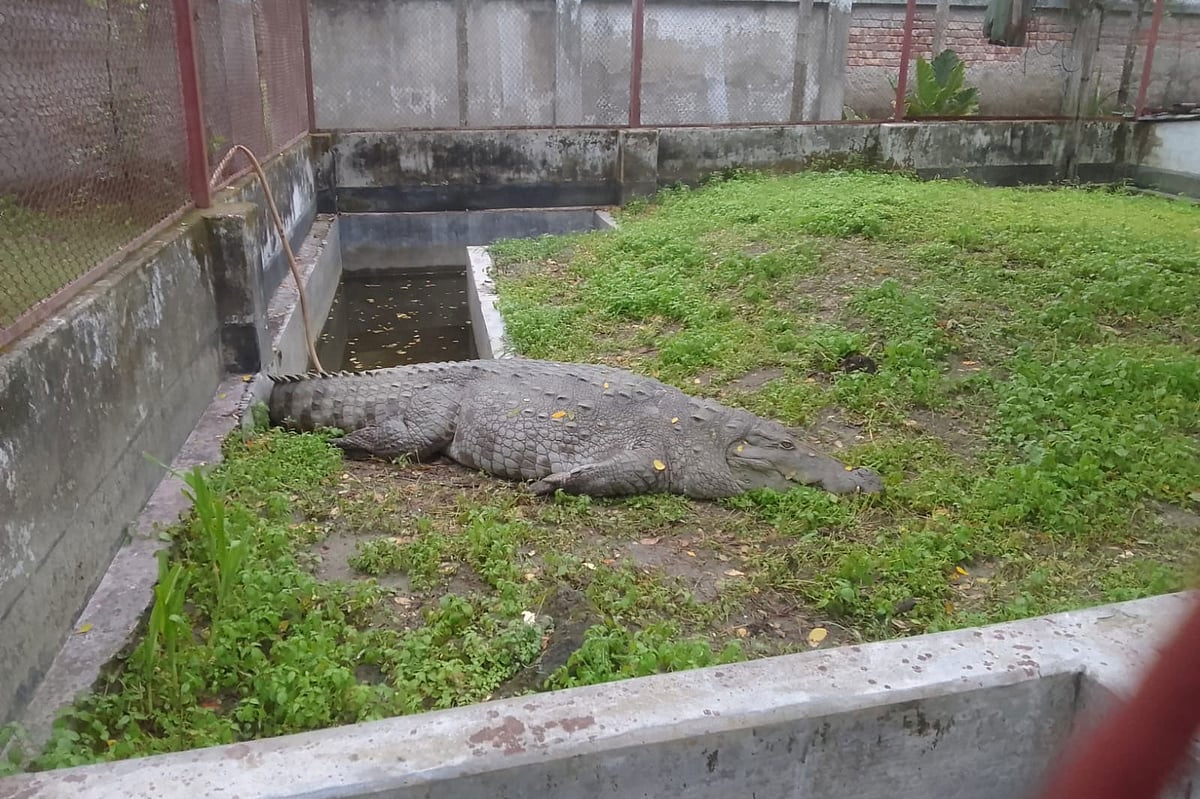
Photo Collected
A crocodile relocated from the Khan Jahan Ali Shrine pond in Bagerhat has refused food since arriving at the Bangabandhu Sheikh Mujib Safari Park in Dulahazara, Cox’s Bazar, on August 13. Despite the hunger strike, wildlife officials report that the reptile remains in good physical health.
The crocodile was removed from the shrine’s pond following a fatal attack on a seven-year-old child on June 1. Amid mounting safety concerns, the district administration and the forest department moved the animal to the Wildlife Rescue and Rehabilitation Centre in Khulna on June 3. After more than two months in Khulna, it was transferred to the safari park in Dulahazara.
Park officials have placed the crocodile in a separate freshwater enclosure. Due to strict security protocols, visitors are prohibited from approaching the perimeter, and the animal often remains hidden from view. Mohammad Mamun, a staff member overseeing the enclosure, confirmed that the crocodile has consistently rejected food during scheduled feeding sessions, including the most recent one on Monday. The park currently houses 13 crocodiles, eight of which are in saltwater enclosures and five, including the new arrival, in freshwater areas.
Acting Officer of the Safari Park, Monjur Alam, stated that access to the enclosure is restricted to a designated veterinarian and an assistant. The crocodile has been kept in isolation since its arrival to ensure it acclimatizes to the new environment. Although the animal is frequently submerged or hidden, officials noted that it occasionally emerges for short periods.
Veterinary Surgeon Mustafizur Rahman noted that the crocodile appears to be adapting well to its new surroundings, exhibiting normal behavior such as basking in the sun and swimming. The reptile, which measures approximately seven to eight feet in length and weighs between 300 and 350 kilograms, is a cold-blooded animal capable of surviving for three to five months on stored body fat.
Nirmal Kumar Pal, Divisional Forest Officer for the Wildlife Management and Nature Conservation Division in Khulna, confirmed that the crocodile also refused food during its two-month stay in Khulna. Officials believe the refusal to eat is a stress response to being moved from its long-term habitat into a captive environment. Staff at the Dulahazara Safari Park remain optimistic that the crocodile will resume normal feeding habits, typically around two to three kilograms per week, as it continues to adjust to the new enclosure.
0%
0%
0%
0%
More News from Science