Chalk marks on concrete posts keep tab for tea vendor in Chapainawabganj landmark known as Mannur Mor
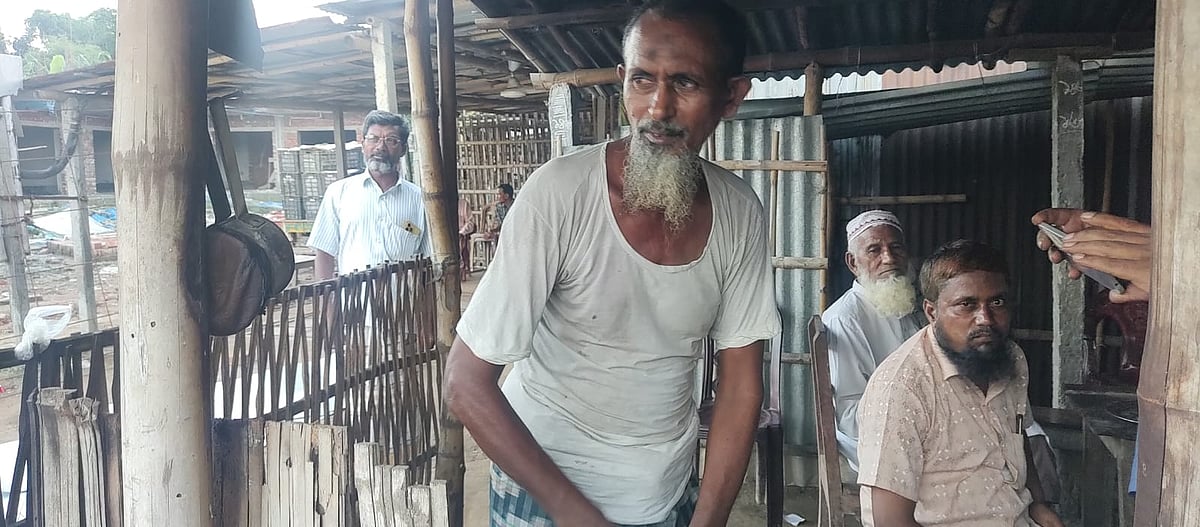
Photo Collected
In a remote corner of Kashiabari Mirpur village in Chapainawabganj, a 68-year-old tea seller named Mannu has turned a simple cement pillar into a ledger of trust. For over three decades, Mannu has operated a modest tea stall along the Bholahat-Shivganj road, managing his credit accounts not with paper or digital records, but by drawing chalk marks on the structure of his shop.
Mannu, who never received a formal education, records every unpaid cup of tea with a single chalk stroke on the pillar. When a customer pays their debt, he simply erases the mark. Despite the informal nature of this accounting system, Mannu reports that he has never had a significant dispute with his clientele. This dedication to his craft and his community has been so enduring that the intersection where his shop stands is now locally known as “Mannur Mor” (Mannu’s Corner), a name that has persisted for over 30 years.
The stall serves as more than just a business; it has become a vital social hub for the elderly residents of the area. Men ranging from 40 to 75 years old—including retired schoolteachers, local imams, and community leaders—gather daily to discuss everything from village concerns to national and international events. For many, the daily ritual of meeting at Mannu’s shop is an essential part of their routine.
Abdul Majid, a 75-year-old retired schoolteacher who travels three kilometers from Bargachi village to visit the stall, describes Mannu as a person of great integrity. Majid notes that despite Mannu’s lack of literacy, his ingenuity in managing his business allowed him to support his four sons, two of whom are successful mango traders while the others operate power tillers.
Local community leader Rakibul Islam highlights that the conversations held at the shop often extend beyond idle chatter, serving as a platform where local issues and development challenges are voiced. The atmosphere, built on decades of companionship and Mannu’s consistent service, has created a lasting legacy. While the chalk marks on the cement pillar account for the tea consumed, they fail to capture the deeper, intangible value of the social bonds and trust that Mannu has fostered within his village over the past 30 years.
0%
0%
0%
0%
More News from Local