Displaced Rakhine Community Faces Cultural Erasure Following Payra Port Expansion
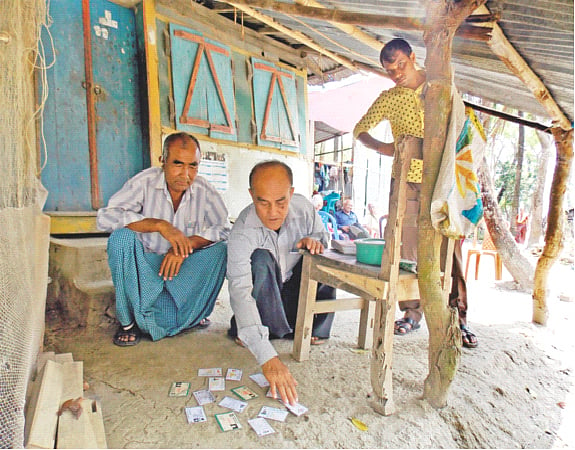
Photo Collected
The ancient Rakhine village of Chayanipara, known historically as Khraoradan, has been razed to make way for the expansion of the Payra seaport in Patuakhali, leaving its displaced residents in a state of precarious uncertainty. Once a thriving settlement established around 1760 by community leaders Fruwan and Poum Matobor, the village stood as a cultural bastion for 65 families at its peak. By March 2017, only ten families remained, living under the looming shadow of government land acquisition. By June 2024, the site had been leveled, erasing centuries of history.
The formal displacement process began in November 2021, when the final residents were forced to vacate during a harsh winter amidst the COVID-19 pandemic. Under the provisions of the 2017 Acquisition and Requisition of Immovable Property Act, six families received a combined compensation of 9.6 million taka for their homes, infrastructure, and agricultural assets. However, displaced residents, including Chingdamo Rakhine, report that promised monthly rent subsidies of 5,000 taka were abruptly halted after just six months.
The promised resettlement in Nayapara has yet to materialize into a livable reality. Port authorities acquired low-lying, waterlogged agricultural land for the families, allocating approximately 7.5 decimals per household. As of June, the site remained unsuitable for construction, forcing families to scatter into rented housing in Kalapara. For some, the transition has proved fatal; displaced resident Neshai Mong passed away in December, eventually laid to rest in a communal dumping ground because the village’s ancestral crematorium, where his forebears were honored, had been destroyed by port operations.
The loss extends beyond land and shelter; it represents the systematic dismantling of Rakhine cultural and spiritual life. The village’s sacred “Choansaba”—a three-century-old site featuring ancient Karanja and date palm trees—was demolished despite legal protections afforded under the Wildlife (Conservation and Security) Act and constitutional mandates regarding the preservation of heritage sites. Rituals such as the ringing of the “Chanje” brass bells, traditionally used to commune with spirits during festivals, have effectively ceased, as displaced residents find themselves unable to maintain their customs in cramped, alien environments.
The human cost of this development is perhaps best reflected in the small tokens of heritage salvaged by those forced to flee. Uenu, widow of the late Neshai Mong, clings to a collection of heirloom “Saibongchi” seeds passed down through generations—a final, fragile link to the village that no longer exists. While the Payra port project promises national economic growth, the displaced villagers of Chayanipara remain caught in a cycle of broken promises, struggling to survive on the periphery of a project that has prioritized industrial expansion over the preservation of an indigenous community’s ancestral legacy.
0%
0%
0%
0%