


July Uprising: How Bangladesh Youth Shattered a Decade of Autocratic Rule
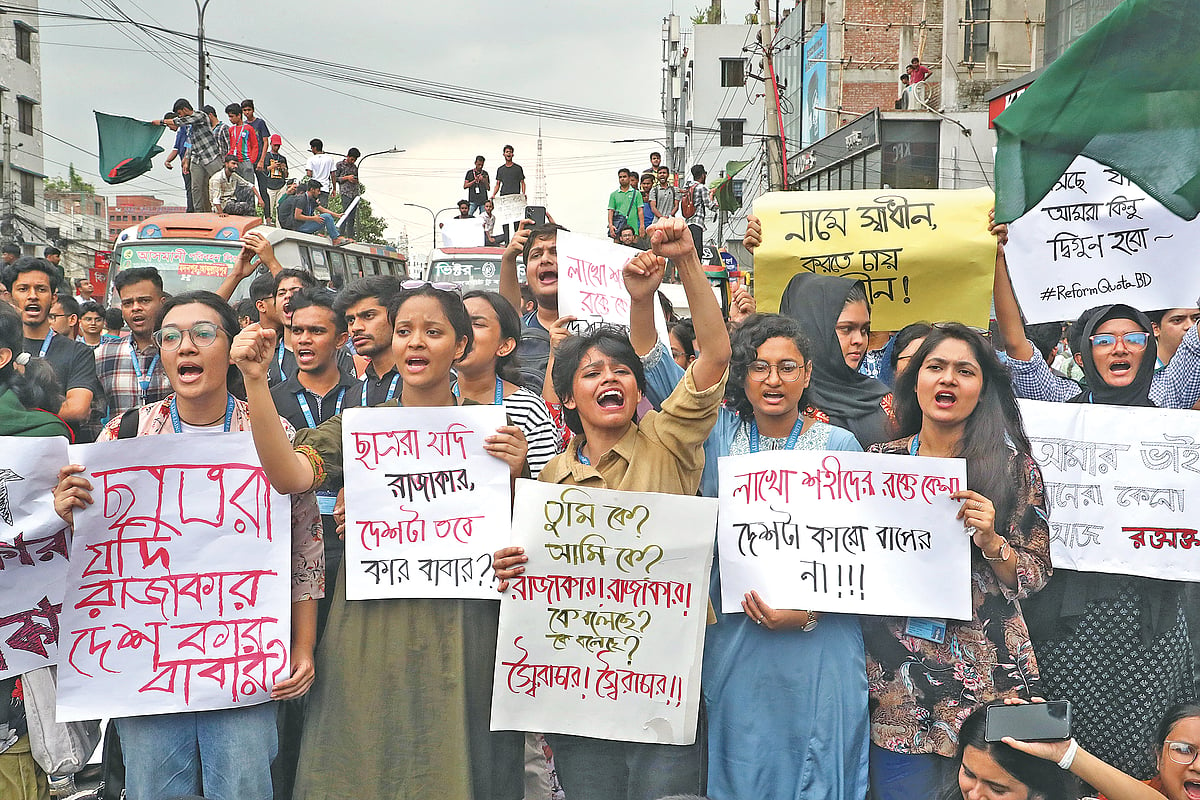
Photo Collected
The July 2024 uprising in Bangladesh was not merely a political tremor but a profound, rhythmic reclamation of national identity, captured most poignantly through the raw, unfiltered medium of rap music. As the movement intensified following the death of student protester Abu Sayed in Rangpur and the brutal suppression of demonstrators at Dhaka University, artists such as Sejan, Hannan, and the collective “Chobbisher Guerilla” became the sonic pulse of the nation. Their lyrics, which drew searing parallels between the 1952 Language Movement and the 2024 struggle, echoed the mounting frustration of a generation witnessing their peers fall to state-sanctioned violence.
By mid-July, as the internet was severed and a nationwide curfew imposed, the rap tracks became a clandestine form of communication. Songs like “Awaj Utha Bangladesh” and “Bhai-Boin More Rastay” served as defiant testimonies to a struggle that refused to be silenced by the barrel of a gun. According to sociological analysis, these creative outpourings represent what Émile Durkheim termed “collective effervescence”—a moment where individual identities dissolve into a shared, surging social consciousness. This phenomenon was not limited to the digital sphere; it manifested in the thousands of students who reclaimed the streets of Dhaka daily, braving tear gas and live ammunition with an unwavering resolve that eventually culminated in the fall of Sheikh Hasina’s government on August 5, colloquially dubbed “36 July.”
বিজ্ঞাপন
The frequent invocations of 1952 within these protests were not accidental; they reflected a sophisticated political awareness. Just as the Language Movement was fundamentally a fight for political and economic agency against a discriminatory state, the 2024 uprising sought to dismantle a system that had reduced the populace to subjects under a modern-day autocracy. For fifteen years, the Awami League administration had tightened its grip through the tactical deployment of fear, institutional capture, and the cynical exploitation of historical and religious divisions. By systematically eroding democratic safeguards and branding all dissent as anti-state conspiracy, the regime alienated the very youth it purported to lead.
The significance of this uprising lies in the refusal of the “July generation” to accept the “no alternative” narrative that had paralyzed the nation’s political landscape for over a decade. Driven by the demand for meritocracy—epitomized by the movement against the quota system—the protesters rejected both the familial inheritance of political power and the corruption that had become entrenched in state institutions. Unlike past movements that were often co-opted or led by traditional political parties, this uprising was powered by a collective, cross-generational frustration.
বিজ্ঞাপন
History warns that revolutions are fragile and prone to being hijacked by those seeking to consolidate power for themselves. Yet, the 2024 uprising has irrevocably altered the social contract in Bangladesh. As seen in the aftermath of previous movements, such as the 2018 Road Safety protests, the seeds of resistance sown today often yield harvests in the future. The youth of 2024 have demonstrated that they are not merely passive observers but active architects of their own political future. Their presence in the streets, and their subsequent return to classrooms and public life, serves as a permanent, latent pressure on any future government, ensuring that the dream of a meritocratic, equitable, and just Bangladesh remains a benchmark by which all future authority will be judged.
0%
0%
0%
0%


