
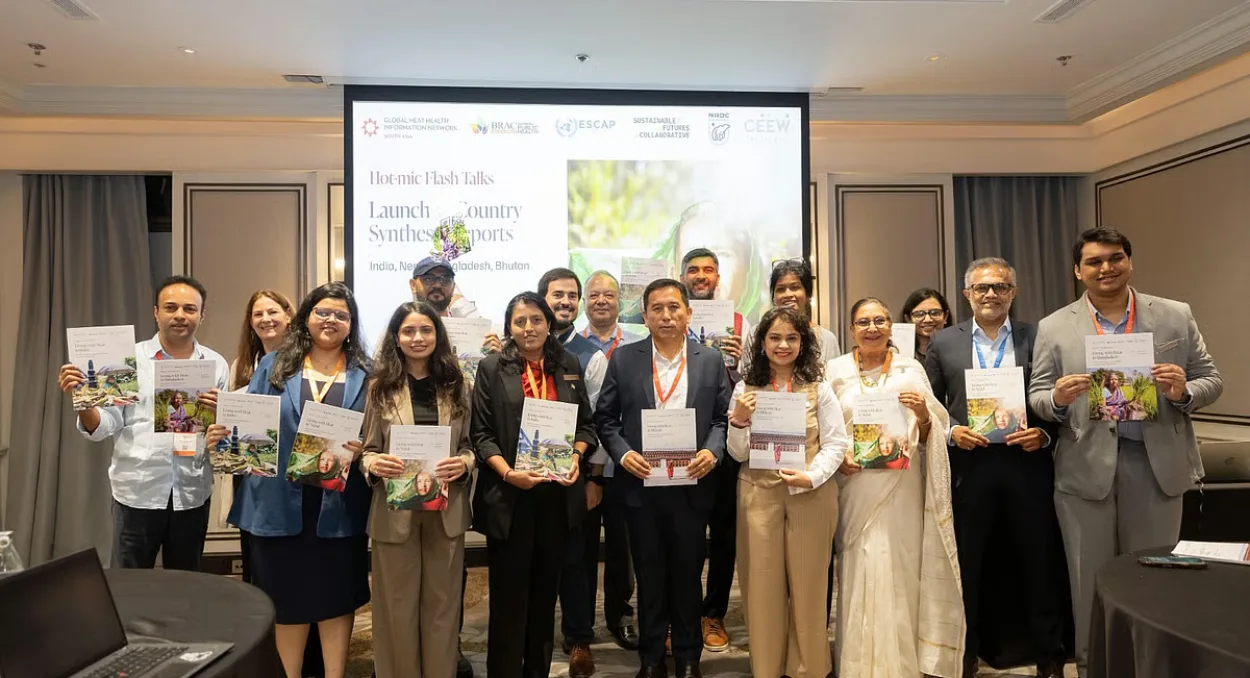
As intensifying El Nino conditions across the Pacific Ocean heighten the threat of another severe heatwave season in South Asia, Bangladesh, India, Nepal, and Bhutan have initiated collaborative efforts to confront extreme temperatures and safeguard public health. The regional cooperation framework was officially unveiled on Thursday at the Global Heat Forum in Thailand's capital, Bangkok, where four dedicated country briefs evaluating national preparedness, existing frameworks, and critical systemic gaps were published.
The comprehensive assessments were spearheaded by the South Asia Hub of the Global Heat Health Information Network (GHHIN). Operating from New Delhi under the management of the Council on Energy, Environment and Water (CEEW), the hub collaborates closely with institutional partners including Sustainable Futures Collaborative, the Natural Resources Defense Council, the BRAC James P. Grant School of Public Health, and the United Nations Economic and Social Commission for Asia and the Pacific (UNESCAP). Furthermore, the initiative is fully integrated into the joint climate and health program administered by the World Health Organization (WHO) and the World Meteorological Organization (WMO).
Recent years have witnessed a sharp escalation in both the severity and duration of heatwaves across South Asia, posing severe health hazards—particularly for children, the elderly, pregnant women, and outdoor laborers. Excessive ambient heat exacerbates cardiovascular and respiratory ailments alongside heat-related morbidity and mortality. Experts at the Bangkok forum emphasized that extreme heat must be addressed as a critical public health emergency rather than a mere meteorological anomaly, warning that climate change will likely aggravate these thermal risks in the future.

According to the new evaluation concerning Bangladesh, the country's felt air temperature, combining heat and humidity, has surged by nearly 4.5 degrees Celsius since 1980, with roughly one-third of the year now characterized by perilous humid heat conditions. Although Bangladesh's National Adaptation Plan formally recognizes heat as a distinct hazard—spurring the formulation of the nation's inaugural urban heat action plan for Narayanganj, national clinical guidelines for heat-related illnesses, and the public awareness campaign titled 'Beat the Heat'—significant operational deficits persist. The assessment underscored a distinct lack of localized heat action plans at both national and municipal levels, while recommending the urgent integration of meteorological forecasting systems with hospitals to establish robust thermal illness surveillance.
Across the four participating nations, the evaluations revealed that regional progress has been swiftest within overarching strategic planning, meteorological forecasting, and early warning systems, with all member countries having instituted some form of heat preparedness framework. However, experts cautioned that translating these policy measures and warnings into grassroots protection has lagged considerably. Critical systemic gaps remain in local-level financing, formal heat-related morbidity surveillance, and the systematic incorporation of thermal risk management into labor regulations, urban planning, and public health infrastructure.