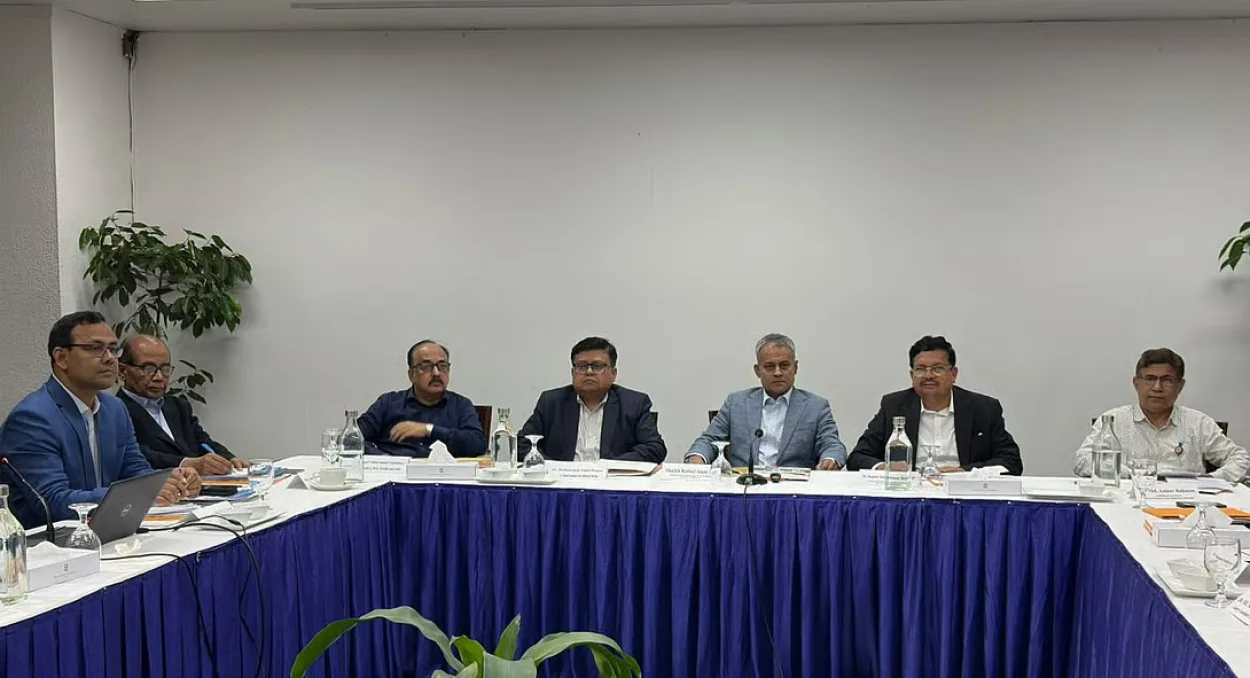
The government is firmly committed to enacting a comprehensive road safety law by 2027 as part of sweeping initiatives to curb fatalities and modernize transit management across the country. Addressing a roundtable discussion on Wednesday (marking National Road Safety Day 2026) at a hotel in Dhaka, Minister for Road Transport, Railways, and Shipping Sheikh Rabiul Alam emphasized that updating helmet standards, enforcing strict speed limits, strengthening post-crash emergency medical care, and constructing safer highway infrastructure are among the administration's top priorities. The high-profile event, titled "Government's Commitment to Improving Road Safety in Bangladesh," was jointly organized by BRAC's Road Safety Program and the Road Safety Coalition Bangladesh.
Highlighting the persistent challenges in the sector, Minister Sheikh Rabiul Alam pointed out that despite ongoing efforts by the government, the World Bank, and various development partners, the desired progress in highway safety has not yet been achieved. He underscored that ensuring commuter safety requires a year-round, collaborative approach rather than isolated observances on specific commemorative days. The minister further reiterated the national target to cut road traffic fatalities by half by 2030, calling for a unified front comprising state agencies, non-governmental organizations, development partners, transport owners, and labor unions.
Speaking as the special guest, Shamsur Rahman Shimul Biswas, chairman of the parliamentary standing committee on the Ministry of Labour and Employment, stressed that a profound overhaul of the prevailing road management system is urgently required. He noted that systemic vulnerabilities continue to inflict widespread suffering, frequently leading to mutual blame-shifting among stakeholders. Affirming that the Prime Minister has taken proactive initiatives to transform the transport sector, Mr. Biswas asserted that the entrenched dominance of influential vested groups must be dismantled. He expressed strong optimism that rapid reforms can be attained if transport operators, workers, law enforcement personnel, and journalists synchronize their efforts.

Elaborating on institutional strategies, Road Transport and Highways Division Secretary Mohammad Ziaul Huq stated that road safety has been accorded prominent significance in the government's electoral manifesto. He affirmed that safety measures are now systematically integrated into every infrastructural project, alongside targeted enhancements in driver training, occupational health security, and standardized remuneration packages. The discussions also featured technical presentations by BRAC Road Safety Program Director Ahmed Najmul Hussain and Program Manager M. Khalid Mahmud, who outlined prevailing accident trends, policy imperatives, and the urgent necessity for a unified legislative framework.
The roundtable convened a broad spectrum of stakeholders, including senior government officials, representatives from the World Bank and the World Health Organization, academic researchers, traffic safety experts, media personnel, and members of the Road Safety Coalition Bangladesh under the theme "Safe Roads, Prosperous Country, Bangladesh First." Participants extensively deliberated on the implementation of the "Safe System Approach," which dictates that traffic fatalities and severe injuries are preventable. Experts concluded that safeguarding roadways is not merely the individual responsibility of commuters, but a collective obligation incumbent upon policymakers, highway authorities, transport operators, law enforcement agencies, and the public health sector alike.