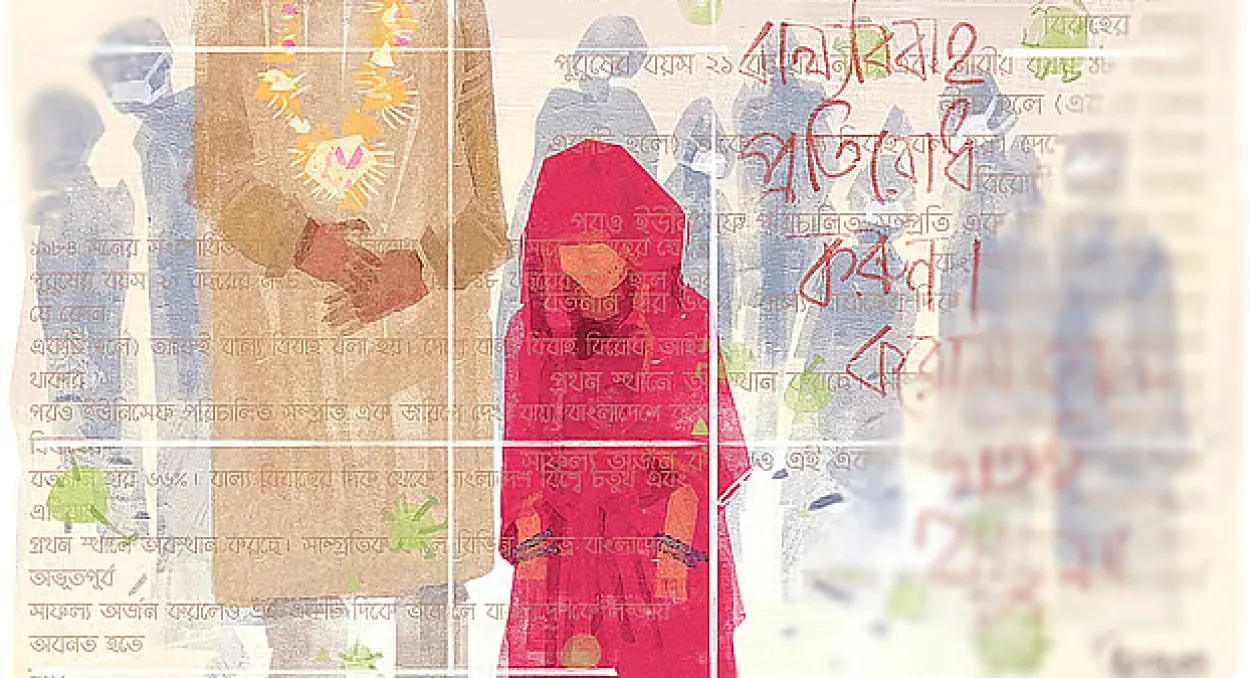
As the nation observed International Girl Child Day on Sunday, focusing on the global theme to end child marriage and invest in girls' rights, the remarkable resilience of 17-year-old Mosammat Tania Khatun from Satkhira has emerged as a powerful beacon of hope against a grim nationwide backdrop. While preparing for her Secondary School Certificate (SSC) examinations, Tania successfully fought off an impending child marriage orchestrated by her family, going on to achieve a brilliant GPA-5 with letter marks in all subjects, including a perfect 100 in chemistry and 99 in physics.
Tania's ordeal began just moments before her board exams when she discovered her family had arranged her marriage, citing persistent financial hardship and growing social insecurity as justifications. Despite intense pressure from relatives, Tania bravely stipulated that she would only consent if allowed to continue her education, a condition the prospective groom's family flatly rejected. The trajectory of her life shifted when she and her mother sought the intervention of her school ICT teacher, Aklima Khatun, who firmly asserted the institution's stake in the bright student's future. Mobilizing swiftly, teacher Aklima Khatun, along with fellow educator Foyzul Haque and local human rights activist Shakibur Rahman, intervened by engaging Tania's family and subsequently briefing the local Upazila Nirbahi Officer (UNO). Faced with firm administrative intervention and counsel, the family ultimately dismantled the marriage plans, allowing Tania to enroll in the science stream at Satkhira Government College for her Higher Secondary Certificate (HSC) studies, where she has also secured tuition-free coaching.
Activists note that Tania's formidable defense was heavily anchored by her postgraduate mother, who staunchly opposed the union from its inception, proving that maternal education remains a vital shield against early marriage. However, this inspiring triumph stands in stark contrast to broader national indicators highlighting the persistence of the deep-rooted crisis. According to the latest Multiple Indicator Cluster Survey (MICS) 2025, jointly conducted by the Bangladesh Bureau of Statistics (BBS) and UNICEF, the national prevalence of child marriage has declined from 51.4 percent in 2019 to 47.2 percent. Despite this marginal decrease, the data reveals that 47.2 percent of women aged 20 to 24 were married before turning 18, while 13.4 percent were wed before reaching 15. Furthermore, among married females aged 19, the rate climbed from 32.9 percent in 2019 to 38.9 percent over a seven-year span, alongside an increase in adolescent fertility from 83 births per thousand adolescents in 2019 to 92 in 2025.

Experts point out that systemic drivers such as institutional dropouts, household economic vulnerabilities, entrenched social norms, and lax legal enforcement continue to fuel the practice, compounded by administrative hurdles like birth registration deficits, where only 59.2 percent of children under five are registered as of 2025. Under the Child Marriage Restraint Act, 2017, the legal age of marriage is fixed at 18 for females and 21 for males, though the legislation contains special provisions allowing exceptions under judicial directives and parental consent if deemed to be in the best interest of the minor. As advocacy groups continue to push for uncompromising legal implementation, Tania's journey from the brink of a forced childhood union to the classrooms of Satkhira Government College underscores how academic excellence and community vigilance can decisively rewrite a vulnerable girl's destiny.