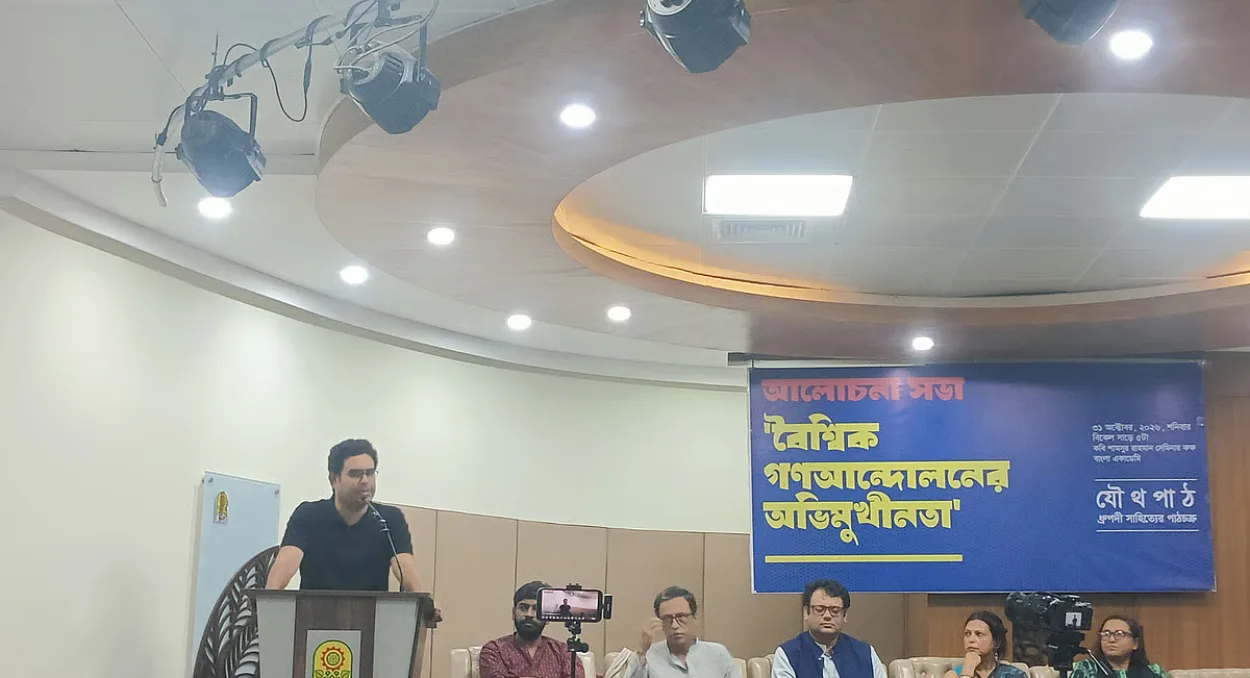
Political and social organisations in Bangladesh must draw vital lessons from ongoing mass movements across Europe and other parts of the world, as merely changing governments or staging mass uprisings does not automatically resolve the fundamental grievances of citizens. Speakers made these observations on Saturday evening (Nov 15) while addressing a discussion titled The Orientation of Global Mass Movements, held at the Poet Shamsur Rahman Seminar Room of the Bangla Academy in Dhaka. The event was organised by the reading circle Joint Reading of Classical Literature.
Presided over by Garments Sramik Trade Union Centre General Secretary Jolly Talukdar, the discussion featured prominent writers, researchers, and political analysts, including Altaf Parvez, Moshahida Sultana and Syed Nizar, teachers and researchers at Dhaka University and Jahangir University respectively, and Arka Bhaduri, a journalist and political analyst from India's West Bengal.
Speaking at the event, researcher Altaf Parvez asserted that contemporary movements sweeping across various European nations cannot be dismissed as mere youth rebellions, noting that they are rooted in long-standing political and economic discontent. He pointed out that governments often prioritise corporate interests, banking sectors, and military equipment production over crucial public welfare areas such as public education, healthcare, housing, and mass transport, severely impacting working-class people, tenants, students, teachers, and the middle class.
Critiquing the domestic political landscape, Parvez observed that despite Bangladesh witnessing a mass uprising and the establishment of a new administration, pressing structural issues concerning the working class remain sidelined. He attributed this inertia to the deeply entrenched top-down organisational approach of most political and social bodies in Bangladesh, where central leadership dictates decisions rather than reflecting grassroots realities, contrasting it with Europe where community-led local participation drives civic movements.
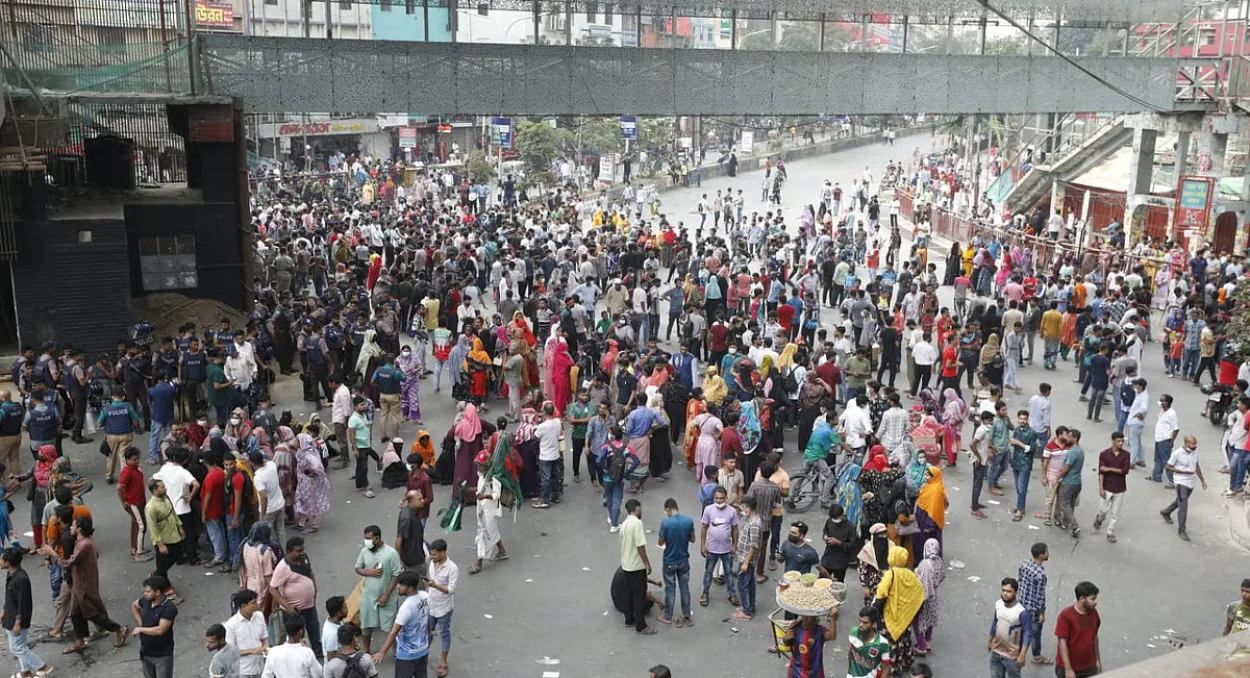
Echoing similar concerns, Dhaka University researcher Moshahida Sultana attributed global protests to neoliberal economic policies, soaring military expenditures, and severe austerity measures in public welfare sectors. She emphasised that working people and students bear the brunt of these policies, noting that in Bangladesh, low-income citizens spend a disproportionate share of their earnings on housing alone, yet systemic urban and livelihood crises fail to generate cohesive grassroots resistance.
Indian journalist and political analyst Arka Bhaduri, speaking from New Delhi's perspective on regional affairs, noted that recent uprisings in Bangladesh, Nepal, and Sri Lanka have significantly amplified South Asia's collective yearning for systemic change. He cautioned that if political forces fail to fulfill public aspirations following a mass revolt, regressive or older systems risk resurfacing, underscoring the urgent necessity for political entities to critically review their strategies, shun past mistakes, and foster inclusive participation across all strata of a pluralistic society.