
Pressure on owners by showing ‘unseen costs’, how much rent can increase

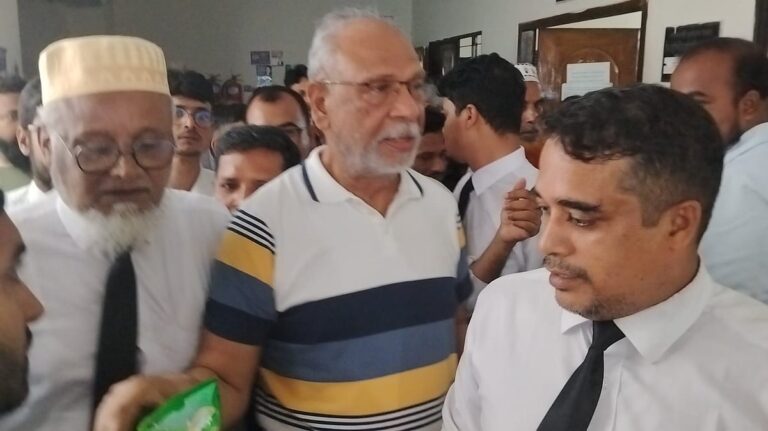
Photo Collected
Owners are pressuring the government not only to increase the price of diesel, but also to add various costs to the government to determine the additional rent. The Bangladesh Road Transport Authority (BRTA)-led Bus Rescheduling Committee is also accepting it. They have proposed to fix rents on various costs other than oil. Some costs are actually ‘invisible’, which do not exist.
The committee has proposed an increase of 22 paise per kilometer on bus transport. However, if we consider only the increase in diesel prices, the fare will increase by 15 paise per kilometer. Owners are talking about price hikes for spare parts, engine oil, tyres, tubes, lubricants and bus chassis (structure including the engine). It has proposed to fix the rent accordingly.
বিজ্ঞাপন
The concerned people say that if the government did not increase the price of fuel oil, the discussion of increasing the rent would not have come now. Owners are basically taking this opportunity. Even in 2022, after increasing the price of fuel, they decided to increase the rent with the same strategy. Later he started collecting more than that in Dhaka city.
At present, bus and minibus fares in Dhaka and Chittagong cities are 2 taka 42 paisa per kilometer. If the new fare is effective, the fare will be 2 taka 64 paisa per kilometer. On the other hand, the current fare for long-distance routes is 2 taka 12 paisa per kilometer; It has been proposed to increase it by 2 taka 34 paisa.
বিজ্ঞাপন
In the past, separate fares were fixed for minibuses in Dhaka and Chittagong. This time it was not proposed. Usually minibus fares are a bit less.
Sources in the Ministry of Road Transport said that after the increase in the price of diesel, the BRTA-led fare revision committee held a meeting last Sunday. The committee has sent the proposal to the Ministry of Road Transport on Monday to revise the fare. But as the minister of the ministry Sheikh Rabiul Alam and secretary Mohammad Ziaul Haque were out of Dhaka, no decision was made. The minister held a meeting at the secretariat on Wednesday afternoon and the leaders of the transport sector employers’ organizations were also present. However, the additional fare has not been announced.
Related sources say that the road minister wants to talk about the issue at the highest level of the government. Then the final decision can be communicated. At the end of the meeting, Roads Minister Sheikh Rabiul Alam told reporters that the fare determination has been discussed, but no final decision has been made yet. In the context of increasing fuel prices, the final decision on the price adjustment may be made on Thursday.
There are 11 members of Basvara Redesignation Committee. Among them, three from BRTA and one from the Ministry of Roads, one from government agency Dhaka Transport Coordination Authority (DTCA), one from Converted Natural Gas Company (RPGCL).
There are actually four people on the ownership side—JR Shahid, Chairman of Bangladesh Bus Truck Owners Association, Saiful Alam, Secretary General of Bangladesh Road Transport Owners Association, MA Baten, President of Dhaka Road Transport Owners Association and Shukdev Dhali, Deputy General Manager of the government transport agency BRTC. There is only one passenger representative. He is Bahadur Sajeda Akhter, a representative of consumer rights organization Consumers Association of Bangladesh (CAB).
The Cost Analysis Committee was headed by BRTA Chairman (Additional Charge) Mir Ahmed Tariqul Omar. Apart from the committee members, some of the transport leaders were also involved in the online meeting.
According to the sources of the meeting, the representative of the converted natural gas company Limited, Monowarul Islam, opined that the analysis of fuel prices and other expenses is not consistent. Request to fix the fare by making it more affordable.
Dhaka Transport Coordinating Authority (DTCA) representative KM Toufiqul Hasan said that fares should be rescheduled only on the basis of diesel price increase without considering other expenses.
Almost all of the other members were in favor of fare hikes for other expenses other than fuel. BRTA accordingly prepared the proposal and sent it to the Ministry.
In the meeting, BRTA Chairman (Additional Duty) Mir Ahmed Tariqul Omar said that the rent will not be increased in such a way that the owners are affected. Again, if it is imposed on the people by fixing additional fares, it can create adverse reactions.
The rationality of the additional fare proposed by the BRTA committee has been questioned. Because, the cost analysis done by the committee in determining bus-minibus fares, many ‘hidden’ costs are added. The same complaint has been received this time too.
Cost analysis committee considers 12 aspects and investment of bus-minibus in determining the fare. While buying the bus, its lifespan, passenger seating and seat-wise passenger occupancy rate are taken into consideration. Apart from this, about 20 issues are taken into consideration in the operational expenditure sector including fuel. An analysis of this system of fare determination has shown that some of the expenses shown for running the bus are non-existent.
BRTA’s latest bus fare costing analysis showed that a new bus operating in the metropolis costs Tk 35 lakh. Bank loan interest for five years is 10 lakh 50 thousand taka. In all, the investment in a bus is about 46 lakhs. It is assumed to last for 10 years. These buses will be renovated once every five years. It costs six and a half lakh taka. Based on these, the bus fare has been proposed.
But in Dhaka, new buses costing Tk 35 lakh are hardly seen. Bus-minibus means discolored, rickety, dirt-torn seats. The government has made a law, a bus-minibus can run in Dhaka for up to 20 years. But the rent is fixed for 10 years. In other words, 11 to 20 years old bus can be charged the same fare as a new one.
The busses will be serviced every 25 days and every 3 months as per the fare schedule. It will cost about 61 thousand rupees. There is no such information available on the expenses being spent on the buses of Dhaka.
A separate cost of Tk 50,000 has been estimated for keeping city transport buses in garages and terminals. But Dhaka does not have a separate garage for any bus. These buses stay next to the road. An annual engine overhauling (major repair) is estimated to cost about three lakh rupees.
The monthly salary of the transport driver, two driver’s assistants and twice the bonus on festivals have been taken into account in the cost analysis of bus fare determination. However, no such information was available to the transport workers that they get such a bonus. And monthly salary is not in vogue.
Acting President of Bangladesh Road Transport Workers Federation Abdur Rahim Baks told Prothom Alo that many things are written during the determination of bus fares. But workers don’t get it. If the workers drive the bus, they get paid, otherwise they don’t. There are also such hidden costs in long-distance bus fares.
In August 2022, diesel prices were increased by 42 percent to Tk 114. Then the government increased the bus fare by 40 paisa per kilometer or 22 percent. Last Saturday, the price of diesel was increased to Tk 115 per liter. That is, after the cost analysis of 2022, the price of diesel has increased by one taka per liter.
Most of the country’s goods and passenger transport runs on diesel. Among them, the government does not fix the fares of goods vehicles including trucks, covered vans. BRTA fixes the fares for buses and minibuses that are not only air-conditioned (non-AC).
After 25 days of increasing diesel prices in August 2022, the government reduced them again. The price was reduced by Rs 5 to Rs 109 per liter on August 29. Then on September 1, the government decided to reduce the fare of diesel buses and minibuses by 5 paise. But the transport owners and workers did not accept it.
Two years later, on April 1, 2024, the price of diesel was further reduced by Rs 3 to Rs 106 per liter. On that day, it was decided to reduce the transport fare by 3 paisa, but it was not implemented. Before that, bus fare was reduced by 3 paisa in 2016 and 2 paisa in 2011. But the transport owners did not accept that either.
People concerned say that the new government should analyze the entire situation. Checking whether past expenditure list is correct or not. Then meet the experts to determine the reasonable cost.
Bahadur Sajeda Akhtar, a member of the Fare Redetermination Committee and a representative of Cab, told Prothom Alo that people are already in trouble. The additional cost of living will be a ‘wound on the back’ for them. He said, “We said not to increase the rent. If absolutely necessary, I asked to take into consideration only the increase in the price of diesel. But additional charges have been proposed by adding other expenses.
Source: Prothom Alo Bangla
0%
0%
0%
0%