
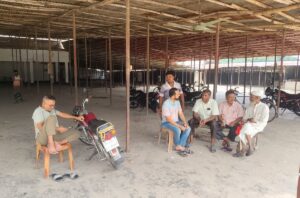


Potato farmers demand storage fee cap amid soaring cold storage costs

Photo Collected
Potato farmers and industry stakeholders are demanding an immediate reduction in cold storage fees, alleging that owners have more than doubled rates over the past three years without justification. Representatives from the “Value Chain Promotional Body,” established under the Ministry of Agriculture’s PARTER project, issued the ultimatum during a press conference at the Bogura Press Club, warning of widespread protests if costs are not reined in within seven days.
Industry advocates argue that while potato yields have been robust, farmers remain trapped in a cycle of financial instability. They contend that cold storage owners are exploiting the perishable nature of the crop to inflate storage fees, which have surged from 300 taka per 65-kilogram bag in 2024 to as much as 520 taka in 2025. Although some storage facilities have offered to lower the rate to 360 taka following local pressure, stakeholders are pushing for a standardized government-mandated price of five taka per kilogram to ensure the long-term viability of the sector.
বিজ্ঞাপন
The controversy highlights a deepening disconnect between regulatory efforts and market practices. Although the Department of Agricultural Marketing set a rate of 6.75 taka per kilogram on March 2, 2025—based on a 50-kilogram bag standard—storage operators have reportedly leveraged the common practice of storing 65-kilogram bags to justify higher, non-compliant fees. Farmers argue that this practice effectively bypasses government oversight and erodes their profit margins.
The economic strain on growers is significant, with production costs currently hovering around 25 taka per kilogram when factoring in labor, packaging, transportation, and storage fees. Despite these high overheads, farmers are frequently forced to sell their produce at prices significantly lower than their break-even point. With potato cultivation serving as a vital economic pillar across 42 districts, including key hubs like Bogura, Munshiganj, and Rangpur, organizers warn that the government must intervene to protect small-scale farmers, asserting that the country’s food security depends on the financial sustainability of its agricultural workforce.
বিজ্ঞাপন
0%
0%
0%
0%


