There are people-friendly initiatives, lack of integrated thinking
There are people-friendly initiatives, lack of integrated thinking
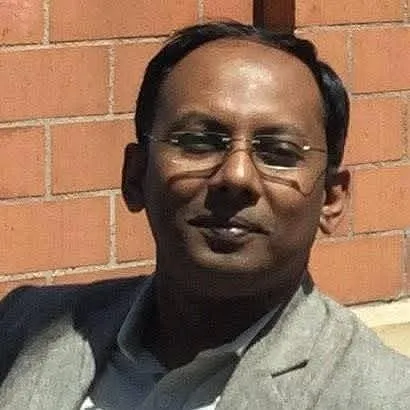
Professor Nazrul Islam of the Asian Growth Research Institute has pointed out that there is a semblance of some people-friendly initiatives in the first 100 days of the BNP government after taking office, but there is a lack of 'policy depth, transparency and integrated thinking'. Professor Nazrul Islam said this while presenting the article titled '100 Days of BNP Government - A Preliminary Assessment'.
Professor Nazrul Islam presented this article in an online discussion titled '100 Days of BNP Government - A Preliminary Assessment'. The discussion took place on Thursday at 9 pm. The Bangladesh Nationalist Party (BNP)-led government took office on February 17 this year. After that, on the occasion of nearly 100 days, the discussion was organized by the Social Research Center.
Pointing out that BNP's election manifesto 'Bangladesh first' was very broad, Professor Nazrul Islam said it included 415 programmes. However, according to him, despite such a large number of programmes, there is a lack of coherent structure and clear prioritization among them.
Regarding economic inequality in the country, Professor Nazrul Islam said that income inequality has increased rapidly in the country. But BNP's manifesto does not have any specific goals or outlines to reduce inequality. However, he sees initiatives like wage adjustment, farmer card and family card as positive. "There is an attempt to be mass-oriented, but those attempts don't seem thoughtful or holistic," he says.
On the question of good governance, Prof. Nazrul Islam said that the promise of reform and accountability before the election, the actual reflection of it after coming to power is not yet clear. He mentioned the hesitation and political tension in the position of the government regarding the recommendations of the National Consensus Commission, the formation of the upper house and proportional representation.
Professor Nazrul Islam also expressed concern about the position of the government in the field of environment and river policy. Mentioning positively the program of digging canals and planting 5 crore trees, he said, taking the river and environment as isolated projects without looking at them in an integrated manner will not bring the desired results. Nazrul Islam raised questions about Teesta Master Plan and Padma Barrage Project. He complained that there is a lack of transparency and public discussion in big projects.
This researcher questioned some of the recent steps taken by the government in the field of foreign policy. Professor Nazrul Islam commented that the people were not taken into confidence, especially regarding the trade agreement with the United States. He also said that democratic process has started again in the country after many years. However, to sustain this journey, the government has to be more responsible and transparent in meeting the expectations of the people.
Professor Nazrul Islam mentioned 10 priorities for the government to do in the coming days. These are reduction of economic inequality, good governance, proportional elections, environmental protection, formation of village councils, decentralization, social cohesion, special attention to disadvantaged groups, universal military education and neutral foreign policy. He said, sustainable change is not possible without concerted action in these areas.
Rashed Al Mahmoud Titumir, adviser to the prime minister on finance and planning, joined the discussion online from London, the capital of the United Kingdom. In his speech, he said, while critics are assessing the BNP's 100 days, the question is missing from which 'baseline' the government started—where debt mountains, a fragile energy system, zero reserves and protracted inflation were the legacy.
This adviser to the Prime Minister said that the BNP government has started its journey by standing on the ruins of the looting and patronage economy of the last decade and a half. In that reality, the government is moving creatively rather than following the path of book economics—poverty scoring systems in family cards, farm loan waivers and universal social safety nets have begun.
Rashed Al Mahmoud Titumir highlighted the specific plans of the government in the structural reforms of the economy. Besides, he presented the outline of five reforms in the country's energy sector. He also talked about economic democratization by forming three task forces to prevent tax evasion and activating the capital market. Rashed Al Mahmud Titumir, referring to the Haor-Bawar from the northern part of the country, Teesta from the Chittagong port, said that the main philosophy of this government will be unity and not division.
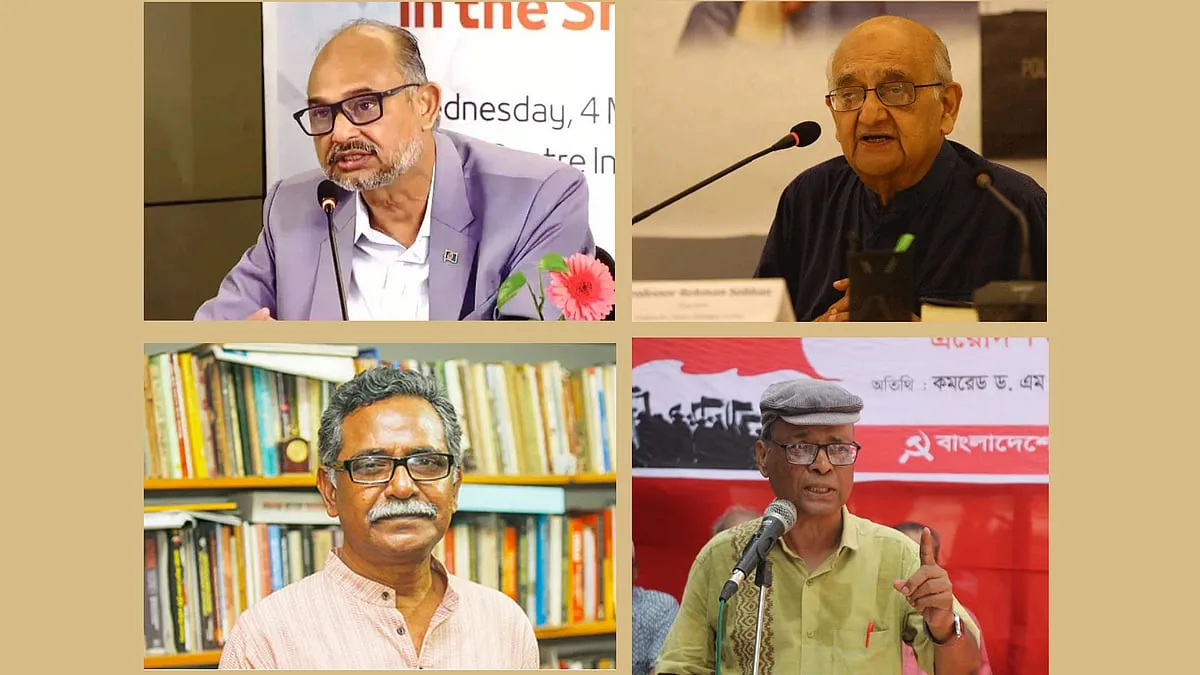
Prominent economist Professor Rehman Sobhan said in the discussion that the current political program of BNP is still mainly limited to the manifesto. Without real policy making and its effective implementation, it is not possible to understand the real intention of the government. He said, Bangladesh's main economic crisis is not only growth; Rather, increasing inequality.
Rehman Sobhan pointed out that even though growth has come due to the liberal economic structure dependent on the World Bank for a long time, the fair distribution of resources in the country has not been ensured. He said social protection programs can address the symptoms of discrimination, but cannot break the underlying structure of discrimination. That requires redistributive policies at the level of production and income, effective taxation, an end to the debt culture and a change in the economy dependent on political patronage. At the same time, he warned, the institutional capacity of the state will be further weakened if partyization continues in the administration and educational institutions.
Participating in the discussion, Professor Anu Muhammad said that the new expectations created among the people after the change of government—of a non-discriminatory, accountable and citizen-oriented state system—are not yet clear. He said, the old continuity like development philosophy, dependence on mega projects, commercialization of education and health, secrecy in policy making and dependence on international organizations are still in place.
Prof. Anu Muhammad pointed out that taking major decisions without public participation and 'transparency' undermines democratic expectations. At the same time, highlighting the risk of injustice, social discrimination and foreign interest-based agreements, he said, if the state really wants to go on the path of change, people's opinion, transparency and accountability should be prioritized.
Mahbub Ullah, a former professor and economist of Dhaka University, pointed out that it is not time to make a final assessment of the overall goals and political direction of a government after seeing the activities of only three months. He said, in the reality of India's one-sided behavior in Bangladesh's water crisis, especially the Ganga and Teesta water flows, Padma or Teesta-centric projects need to be considered not only from a political perspective but also as a survival strategy. However, he also commented that there are indications of sincerity in the reforms and public welfare programs announced by the government.
Mostafizur Rahman, Honorary Fellow of Center for Policy Dialogue (CPD), a private research institute presided over the discussion. He said, although 100 days is not a very long time, it is important to understand the new government's policies, priorities and basic guidelines for running the state. At this time, there is a need for research-based evaluation of the government's activities, economic management and democratic commitment.
In the discussion, Executive Director of South Asian Network on Economic Modeling (SANEM), a private research institute, Salim Raihan said, organized and visible reforms in the banking and tax sectors are necessary now to break the economic cycle of 'crony capitalism' (crony capitalism) and looting that has been going on for decades, but that initiative is not clear enough in the first 100 days of the BNP government.
Salim Raihan wants the success of the social protection programs that have been taken, including the family card. But he raised two major concerns. These are the uncertainty of sustainable financing and the risk of being used as a political tool.
Author and researcher Maha Mirza, questioning the effectiveness of social security programs, reducing inequality in the economy of Bangladesh, said that the issue of increasing the wages of workers and increasing internal demand is gradually missing in the mainstream economic discussion, while the role of labor income in the overall economy of the country is very important.
Tajul Islam, president of Social Research Center, commented that the 'weapons' that Awami League and BNP have developed to suppress their opponents have been repeatedly used against themselves. He said, to get out of this vicious cycle, BNP must establish a true rule of law, otherwise it will be difficult to retain the trust of the people.
Sharmind Nilormi, Professor of Economics Department of Jahangirnagar University and Saima Haque Bidisha, Professor of Economics Department of Dhaka University, also spoke in the discussion moderated by MM Akash, Professor of Economics Department of Dhaka University.