

It is not enough to increase the allocation in the social security sector, accountability is also needed
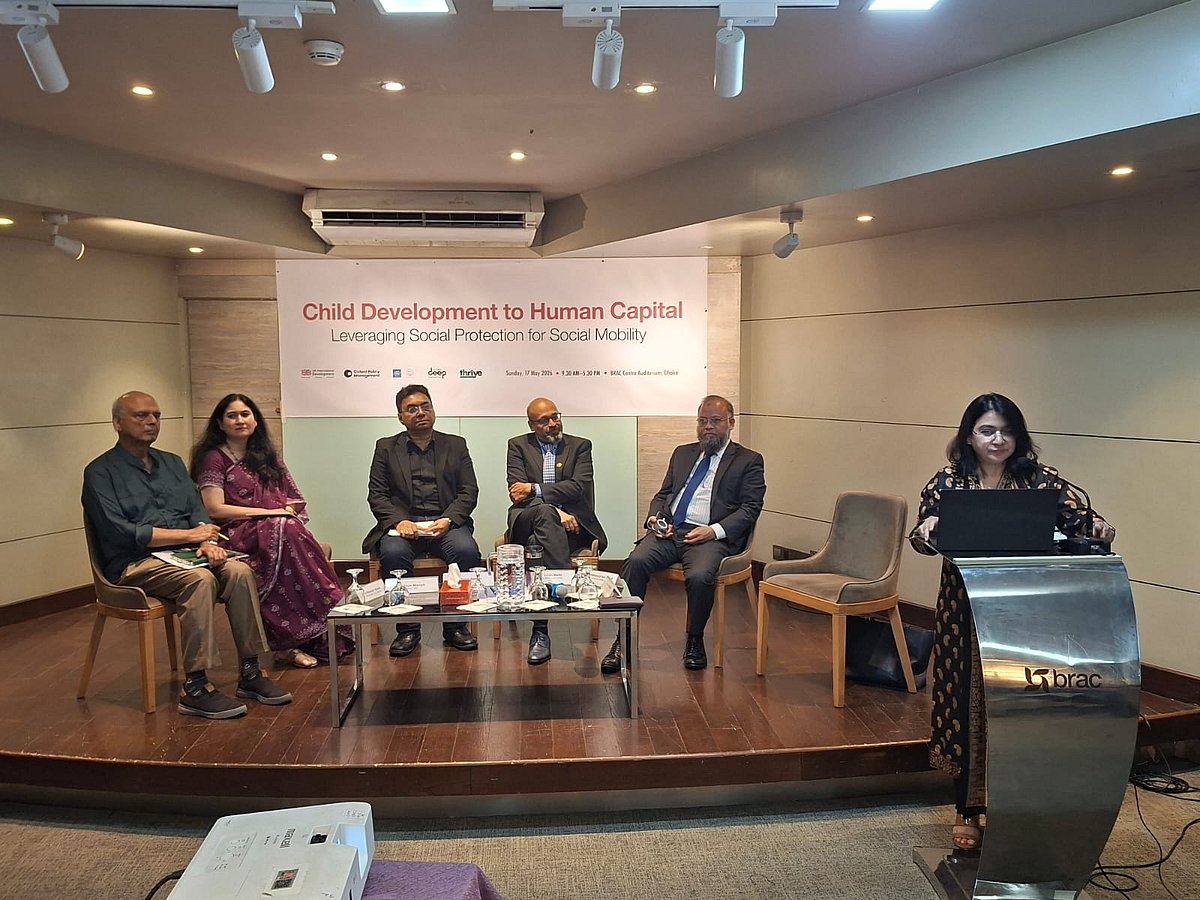
Photo Collected
Social protection programs should not only increase the allocation, but also need institutional reforms, accountability structures. Also, investment in child development and human resource formation should be viewed as a long-term strategic investment rather than as a social expenditure.
Experts gave this opinion in a workshop session titled ‘Child Development to Human Capital: Leveraging Social Protection for Social Mobility’ at BRAC Center in the capital on Sunday afternoon.
বিজ্ঞাপন
Officials from various ministries of the government, representatives of development organizations, researchers and representatives of civil society participated in this day-long workshop jointly organized by BRAC Institute of Governance and Development (BIGD) and Oxford Policy Management.
Salim Raihan said that it is not right to launch a new program without analyzing the overall context when a minister or political leader suddenly comes up with an idea. He said that the allocation to the social security sector should be increased from 1 percent to 3 percent of the gross domestic product (GDP). But increasing the allocation alone will not solve the problem. He also raised the question whether the concerned ministries and departments have the ability to use this extra money properly.
বিজ্ঞাপন
Executive director of SANEM said, ‘Increasing social security expenditure with external loans will not be sustainable in the long term. The government may benefit somewhat in the short term; But without a sustainable financing structure, we will be back to where we were.’
Citing the government’s ‘Family Card’ program as an example, Salim Raihan said that such initiatives could be an opportunity to bring separate activities under one roof; But adding new activities without fixing the structural problems of existing activities will repeat the same problems.
The Secretary of the Ministry of Social Welfare, Mohammad Abu Yusuf, highlighted the challenge of mutual agreement or alternative selection of the ministries in setting priorities among different social protection programs. He said investing in children as a priority would be a visionary and meaningful investment in the collective future.
Imran Mateen, executive director of BIGD, highlighted the challenges of implementing investment in social protection programs. He said that the empowerment of local governments is often neglected in discussions about integrated service delivery. He urged to face this challenge of inconsistency and decentralization together.
Iram Maryam, executive director of BRAC Institute of Educational Development, highlighted the gap between policy and reality from field experience in Early Child Care and Development (ECD) programs. He said, the common perception of the policy makers about the age of the child does not match the reality. Although five years is the ideal age policy, the field shows that four-year-olds are also close to school and can be included in the activities.
Iram Maryam said that ECD activities focus on building infrastructure; But who and how to connect with children is neglected. It is not enough to have a nice classroom, the program will not be effective if there are no people to work attentively with the children.
The session chair at the workshop was Fahmida Khatun, Executive Director of Center for Policy Dialogue (CPD), a private research institute. He said that investing in children is not just a social cost, it is now recognized around the world. It is the most strategic economic investment of a country.
CPD’s Executive Director said, “Especially in the developing world, early childhood nutrition, health care, education, social protection and family support have a profound impact on long-term productivity, labor market outcomes, reducing inequality, resilience and social cohesion.”
Fahmida Khatun added that this is why the discussion of social protection is gaining renewed importance around the world — not only as a tool for poverty alleviation, but also as an effective means of creating opportunities, reducing risks and developing human capacity.
Bangladesh ECD Network (BEN) Chairman Manjur Ahmed was also involved in this discussion.
0%
0%
0%
0%