


Former Bangladesh Bank Governor Farashuddin Proposes Sweeping Constitutional and Administrative Reforms
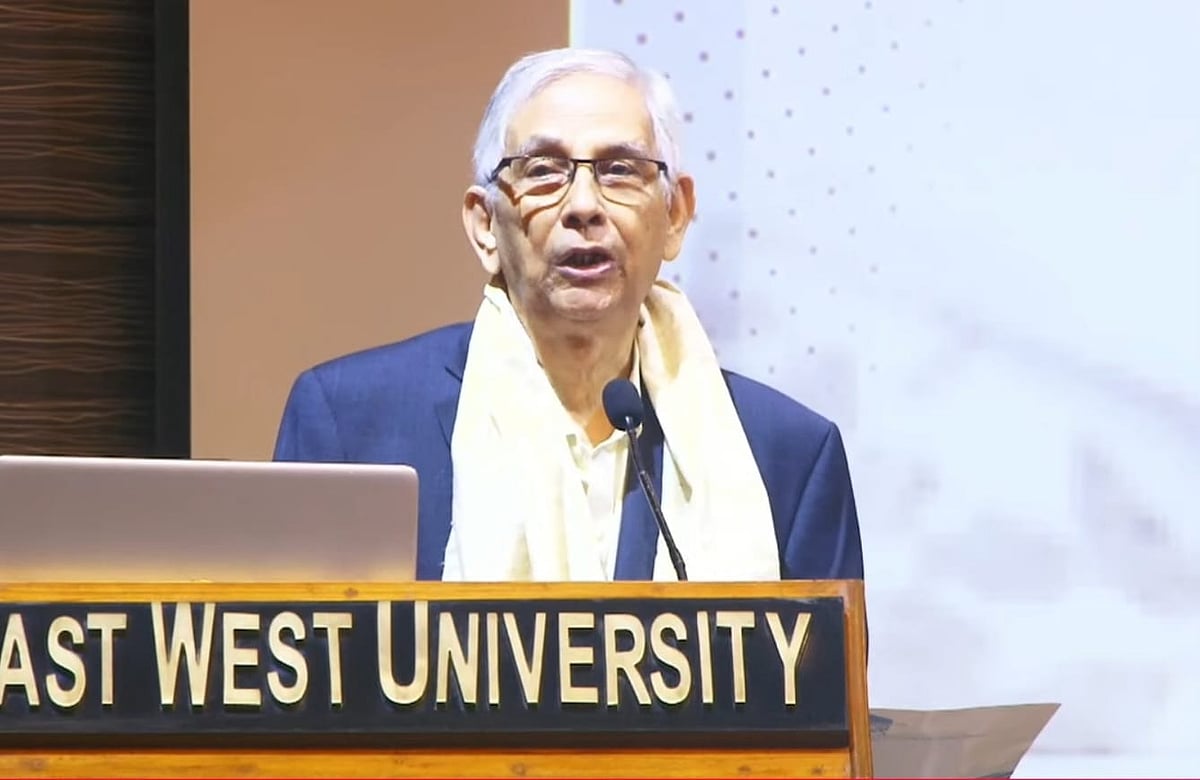
Photo Collected
Former Bangladesh Bank Governor and economist Dr. Mohammed Farashuddin has characterized the caretaker government system as a purely bureaucratic failure, arguing that its existence reflects a fundamental lack of confidence among political leaders in their own democratic processes. Speaking at the Nehrin Khan Memorial Lecture at East West University, Dr. Farashuddin unveiled a comprehensive roadmap for constitutional and parliamentary reform aimed at fostering a more robust and inclusive political landscape.
At the core of his proposals is a restructuring of the executive branch to improve checks and balances. Dr. Farashuddin advocated for a significant expansion of the electoral college responsible for electing the president, suggesting the inclusion of representatives from the Dhaka Metropolitan Authority, city mayors, and local government officials alongside members of parliament. He further proposed that while the president should retain authority over appointments to constitutional positions, such actions must be contingent upon consultations with both the prime minister and the leader of the opposition.
বিজ্ঞাপন
Addressing legislative concerns, the former central bank governor proposed the creation of a 100-member upper house of parliament, where members would be elected based on proportional representation. He argued that this body should hold the power to review significant bills and constitutional amendments. Furthermore, he urged for a revision of Article 70 of the Constitution, suggesting that the current rules governing floor-crossing have morphed into a tool for oppression. He proposed that, with the exception of constitutional amendments, no-confidence motions, and money bills, lawmakers should be permitted to vote according to their conscience rather than being strictly bound by party whips.
Dr. Farashuddin also emphasized the need for gender inclusivity, proposing that political parties be required to allocate at least one-third of their nomination tickets to women, with a long-term goal of reaching 50 percent. To improve the integrity of elections, he called for a reduction in security deposits and a system of state-funded campaigning combined with rigorous audits of electoral expenditures.
বিজ্ঞাপন
Beyond constitutional reforms, Dr. Farashuddin highlighted the urgency of administrative and economic restructuring. He recommended the establishment of an independent, high-powered commission to reform the bureaucracy, including provisions for the early retirement of inefficient officials and the filling of approximately 500,000 vacant government positions. Regarding the banking sector, he expressed alarm at the rise of non-performing loans, which he noted have surged from 9 billion taka in 1990 to roughly 6 trillion taka today. He urged for the full automation of tax administration, identifying weak revenue collection as the most critical challenge facing the nation’s economy.
Reflecting on the country’s economic trajectory, Dr. Farashuddin noted that Bangladesh’s GDP has grown from $10 billion in 1972 to $460 billion, projecting that the nation could reach a $1 trillion economy by 2036. He concluded his address by dismissing ongoing debates regarding the declaration of independence as unnecessary, asserting that historical records already provide clear resolution to these issues. He urged for an inclusive political culture, emphasizing that sustainable reform is impossible if any segment of the population is excluded from the democratic process.
0%
0%
0%
0%