
Experts urge unified action on climate resilience and early childhood development in Bangladesh
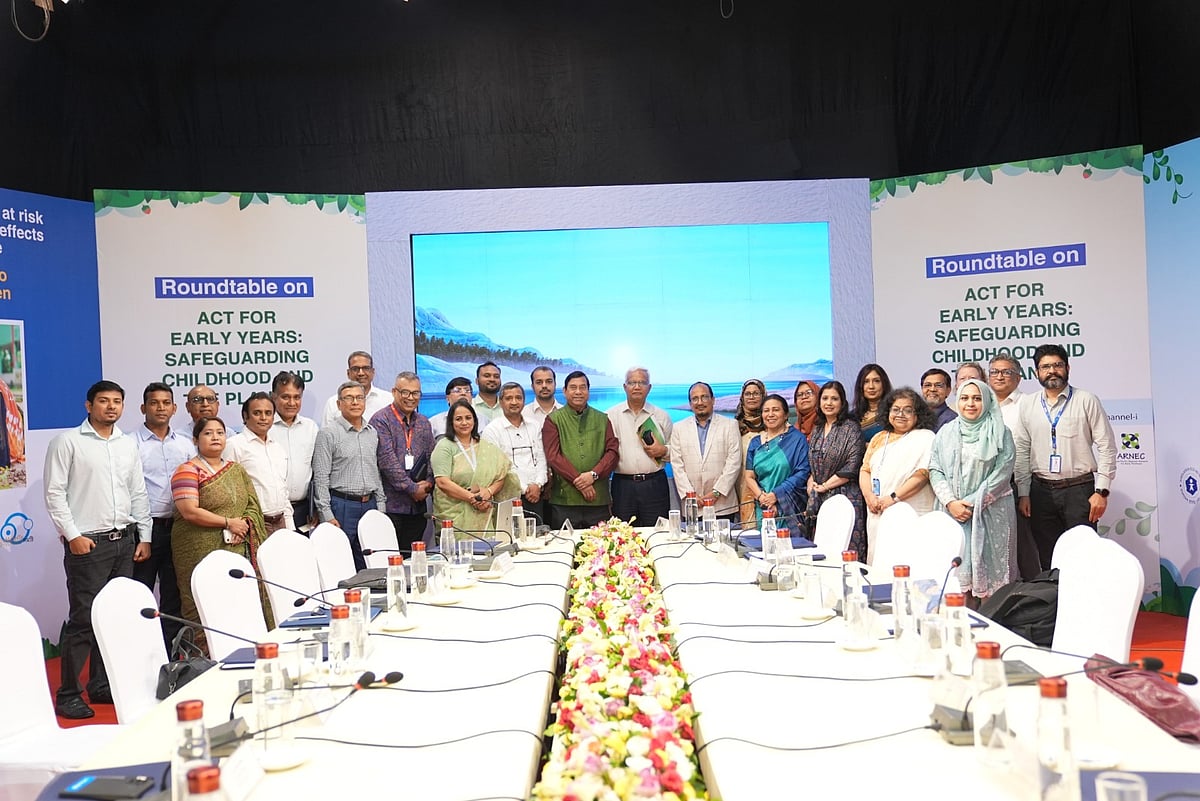
Photo Collected
Policy experts, development professionals, and civil society leaders convened in Dhaka on Tuesday to advocate for a unified, multi-sectoral approach to address the dual challenges of the climate crisis and the early development of children. The policy dialogue, titled “Actions for Childhood: Protecting Childhood and the Earth,” emphasized that a safe environment is an essential prerequisite for the healthy physical, cognitive, and intellectual growth of future generations.
Minister for Women and Children Affairs A.Z.M. Shafiul Quaid stressed that investments in early childhood development are not merely expenditures, but the most vital contribution toward a nation’s future. He called for the implementation of robust policies and increased funding to mitigate the impacts of climate change, ensuring that children are shielded from the environmental degradation threatening their well-being.
The event, jointly organized by the Bangladesh Early Childhood Development Network (BEN) and the Nature and Life Foundation, in collaboration with ARNEC and Samannoy Media Communication and Development Foundation, highlighted the critical nature of the first 1,000 days of a child’s life. During a keynote presentation, BEN Vice President Mahmuda Akhter argued that prioritizing healthcare, nutrition, care, and foundational education during this window is non-negotiable for long-term societal progress.
Mukul Majumdar Babu, Chairman of the Nature and Life Foundation, asserted that protecting biodiversity and the environment is inextricably linked to the protection of children. He noted that responsible stewardship of nature, coupled with dedicated care for children, remains the only path to a humane and sustainable society.
Representatives from international development agencies, including UNICEF and UNESCO, echoed these sentiments, noting that climate change has disproportionately increased risks for children. They urged stakeholders to integrate child-centric climate adaptation strategies into national development plans. The participants—a broad coalition including government officials, educators, media representatives, and non-governmental organizations—stressed that holistic progress can only be achieved if health, nutrition, education, and environmental conservation are treated as interconnected priorities.
The dialogue concluded with a collective call for policy alignment across all sectors to ensure that children’s rights and environmental health remain at the forefront of the national agenda. High-level delegates from organizations such as Manusher Jonno Foundation, Save the Children, Plan International, and the Department of Social Services were among those who reaffirmed their commitment to this integrated mission.
0%
0%
0%
0%