
Bangladesh to Install 2,000 Solar-Powered Cold Storages to Reduce Crop Waste

Photo Collected
The Bangladeshi government plans to construct 2,000 small-scale solar-powered cold storage facilities over the next two years to minimize post-harvest losses and eliminate transport costs for rural farmers. Minister of Fisheries, Livestock, and Agriculture Mohammad Amin ur Rashid announced the initiative on Monday in Dhaka, noting that the project aims to place storage units directly at the field level, bypassing the current reliance on distant district-level facilities that offer limited utility to smallholders.
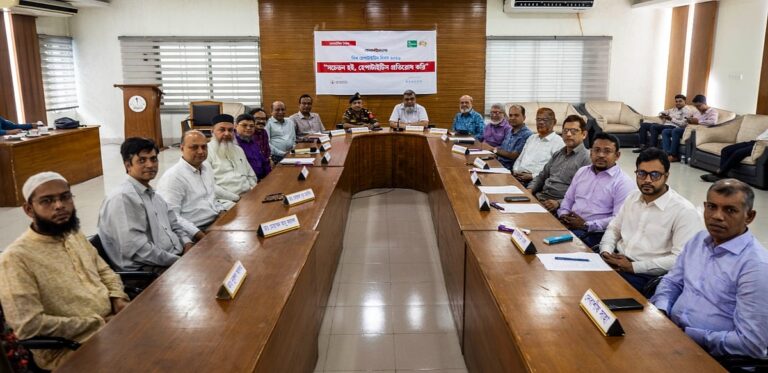
Speaking at the launch of a World Bank report titled “Public Expenditure in Agriculture for Growth and Employment in Bangladesh’s Agri-Food System,” held in collaboration with the South Asian Network on Economic Modeling (SANEM), the Minister explained that each facility will be managed by a committee of 20 local farmers. According to the government, a successful pilot phase suggests that this decentralization will directly benefit approximately 40,000 farmers while significantly curbing food waste.
বিজ্ঞাপন
The Minister emphasized a broader strategy to strengthen the agricultural sector, which remains the economic backbone for 75 percent of the population. Beyond storage, the government is prioritizing self-sufficiency in high-demand crops, with targets to become independent in onion production within 18 months and self-sufficient in ginger and onion seeds within three years. Additionally, efforts are underway to balance soil acidity to reduce fertilizer consumption by up to 30 percent, and to convert irrigation pumps to solar power—a move that would eventually allow excess electricity to be fed back into the national grid.
However, the World Bank report warns that Bangladesh’s agricultural sector faces stagnation, with productivity growth slowing since 2010. Researchers Mansur Ahmed and Jonaed Sohel highlighted that the current budgetary framework is heavily skewed, with roughly $2.5 billion spent annually on fertilizer subsidies—primarily for rice production. They argued that this allocation fails to incentivize crop diversification or meet the evolving nutritional demands of the population, which are shifting toward fruits, vegetables, and proteins.
বিজ্ঞাপন
Jean-Pierre, World Bank Country Director for Bangladesh and Bhutan, echoed these concerns, noting that 80 percent of the total agricultural budget is directed toward fertilizer subsidies, which often disproportionately benefit wealthier landholders while starving research and irrigation infrastructure of vital funding. The World Bank recommended shifting away from broad, untargeted subsidies toward “smart” investments in new technology, climate-resilient coastal infrastructure, and irrigation.
During a panel discussion featuring experts from SANEM, the Food and Agriculture Organization (FAO), and the Bangladesh Institute of Development Studies, participants reached a consensus on the need for systemic reform. As consumer habits shift toward processed foods and diverse diets, the experts stressed that the long-term sustainability of the agricultural sector hinges on modernization, equitable support for small farmers, and a transition from subsistence-focused policies to a model that encourages high-value exports and economic diversification.
0%
0%
0%
0%