


Bangladesh Supreme Court Reinstates Caretaker Government System Amid Legislative Uncertainty

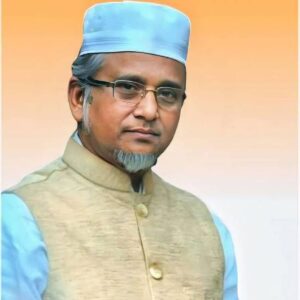
Photo Collected
Bangladesh’s constitutional framework regarding election-time governance has undergone a significant transformation, with the Supreme Court’s Appellate Division moving to revive the non-party caretaker government system. This mechanism, initially introduced via the 13th Amendment in 1996 to ensure impartial elections, was abolished 15 years ago following a previous court ruling and the subsequent passage of the 15th Amendment by the then-Awami League government.
The legal shift follows a series of high-stakes judicial interventions. On July 9, the Appellate Division dismissed appeals against a High Court verdict that had declared several sections of the 15th Amendment unconstitutional. Furthermore, in a landmark ruling on November 20, 2024, the Appellate Division revoked its own previous 2011 judgment, effectively breathing new life into the 13th Amendment and restoring the caretaker system as a constitutional mandate.
বিজ্ঞাপন
Legal experts note that while the core framework for a caretaker government has been restored, the transition is not without complications. The Appellate Division’s latest ruling clarifies that the revival of the system applies to future elections. However, the restoration appears incomplete in scope. While the court explicitly struck down sections 20 and 21 of the 15th Amendment—which had removed Articles 58(ka) through 58(unga) governing the caretaker administration—other consequential provisions remain on the books.
Senior Advocate Sharif Bhuiyan, representing petitioners including Shushashon Jonno Nagorik (SHUJAN) Secretary Badiul Alam Majumdar, pointed out that while the fundamental structure for the formation and functioning of a caretaker government is now legally active, eight sections of the 15th Amendment were directly linked to the system. Six of these remain technically in effect, creating potential constitutional friction.
বিজ্ঞাপন
Among the unresolved issues are discrepancies regarding the timing of general elections. The 15th Amendment introduced a requirement for elections to be held within 90 days prior to the expiration of a parliament’s term—a timeline that conflicts with the practical formation of a caretaker government. Additionally, the oaths of office, specific salary structures for advisers, and the legal definitions of the “Chief Adviser” and “Adviser” roles were not automatically reinstated, as the relevant sections of the Third Schedule and Article 152 were not formally struck down by the recent rulings.
Furthermore, constitutional hurdles persist regarding the eligibility of retired judges to serve as advisers. The current language of Article 99, which prohibits retired judges from holding “offices of profit,” remains unamended, potentially barring them from serving in a caretaker capacity unless further legislative or judicial action is taken.
Legal analysts are now awaiting the full text of the Appellate Division’s July 9 judgment, which may contain critical observations to resolve these ambiguities. In the absence of specific judicial guidance on these secondary provisions, the burden of constitutional reconciliation may fall upon the national parliament to formally amend the text and ensure the smooth implementation of the restored electoral mechanism.
0%
0%
0%
0%


