


Amrapali dominates Chittagong fruit markets as seasonal supply tapers off
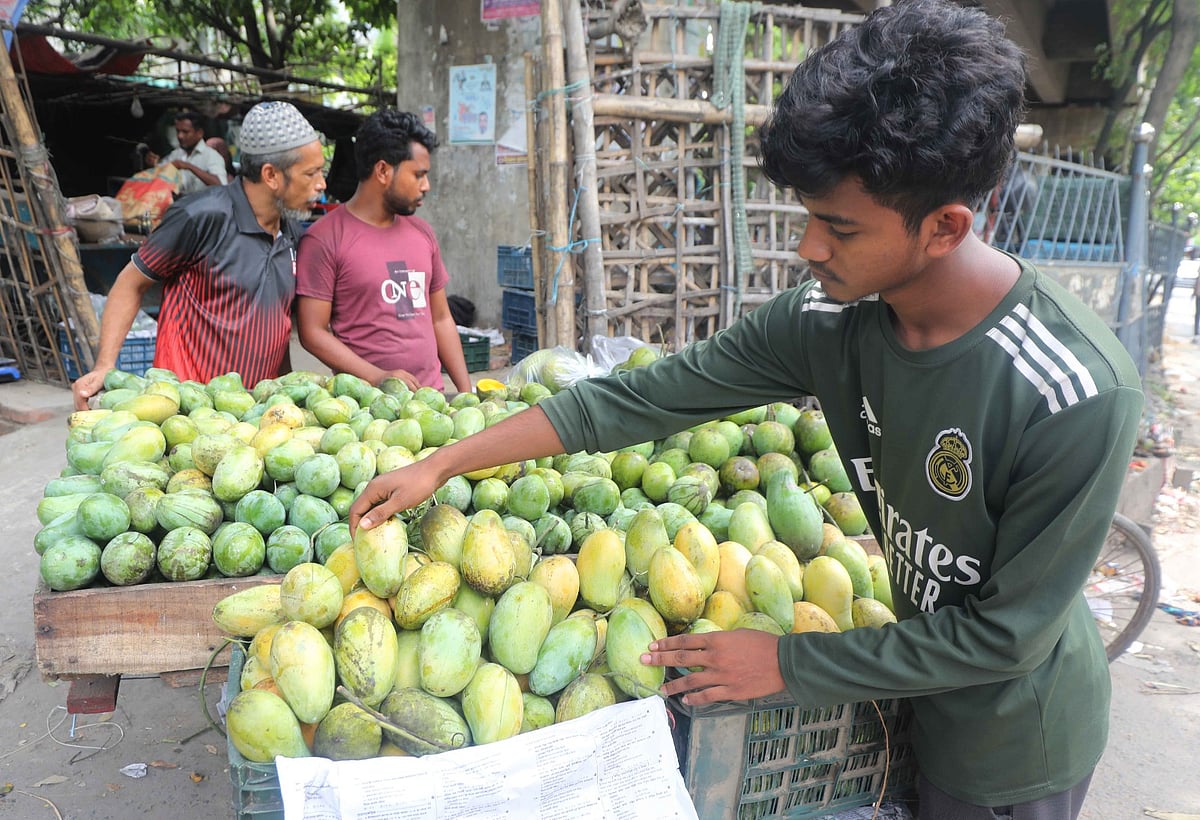
Photo Collected
As the peak mango season in Bangladesh draws to a close, the market in Chittagong’s Station Road wholesale hub is dominated by a single variety: Amrapali. While earlier weeks were defined by the presence of Himsagar, Gopalbhog, and Khirsapat, the Amrapali has now cemented its position as the primary commodity, driving a steady increase in prices across the region.
Market data indicates that the influx of fruit from major growing hubs—including Rajshahi, Natore, Chapainawabganj, Naogaon’s Sapahar, Satkhira, and Chuadanga—is beginning to wane. Wholesale traders report that each truck typically arrives with approximately 12.5 tons of mangoes, yet the overall supply has dropped significantly compared to the peak months of May and June. This scarcity, coupled with high consumer demand, has pushed wholesale prices for Amrapali up by 5 to 6 taka per kilogram within a single week.
বিজ্ঞাপন
Wholesale dealers note that high-quality Amrapali is currently trading between 70 and 80 taka per kilogram, while mid-range varieties command 55 to 65 taka. Despite the price hike, consumer interest remains robust. Retailers across Chittagong, from established storefronts in Chawkbazar and Agrabad to roadside vendors, report that shoppers prioritize Amrapali over other remaining varieties like BARI-4, Langra, and Fazli.
The dominance of Amrapali is no accident, as the variety has seen the fastest commercial expansion of any mango in Bangladesh. According to the Bangladesh Agricultural Research Institute (BARI), the fruit, originally developed in India through the hybridization of the Dasheri and Neelam varieties, has become a cornerstone of modern domestic orchards. Chief Scientific Officer at BARI, Md. Mosiur Rahman, stated that the institute released a localized, high-performing version known as BARI-3 in 1996.
বিজ্ঞাপন
The variety is prized for its regular, annual fruit-bearing cycle, which contrasts with traditional varieties like Langra or Fazli that often exhibit biennial bearing patterns—producing heavy yields one year and low yields the next. Furthermore, the tree’s compact stature allows for high-density planting, making it an economically attractive option for farmers. Current industry estimates suggest that 60 to 70 percent of new mango orchards established in regions like Jessore, Kushtia, and Meherpur are dedicated to this specific variety.
With an average fruit weight of 250 grams and a high edible portion, the Amrapali remains a staple for both farmers and consumers. As other early-to-mid-season varieties vanish from the supply chain, the Amrapali’s ability to remain available through July ensures its status as the definitive late-season choice in the Bangladeshi market.
0%
0%
0%
0%


