
Abandoned by family for her philanthropy, Bangladeshi woman finds purpose in caring for the elderly
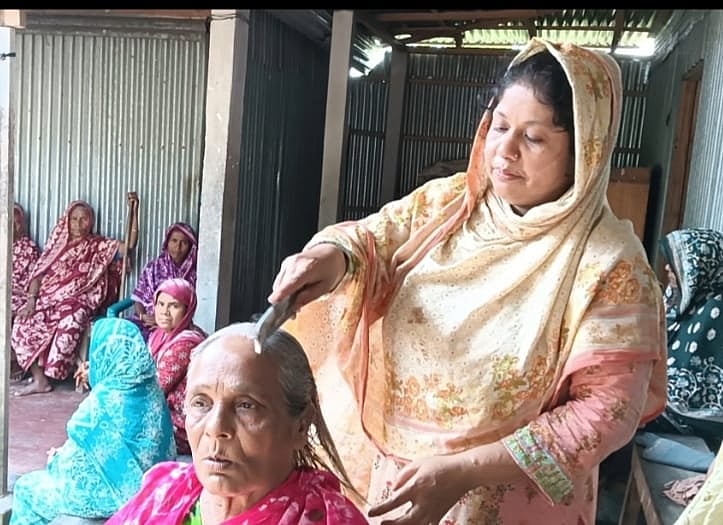
Photo Collected
In the Rangpur district of Bangladesh, Rajeka Rahman has transformed her life from personal hardship into a mission of profound humanitarian service. As the founder of the Devi Choudhurani Elderly Rehabilitation Center in Pirgachha, she has spent the last nine years providing a sanctuary for the destitute, elderly individuals who have been abandoned by society and their own families.
Born in 1983 into a family of nine children, Rahman grew up in poverty in Mithapukur. Her early exposure to the struggles of the underprivileged, combined with the legacy of the legendary humanitarian figure Devi Choudhurani, inspired her to dedicate her life to service. After years of financial struggle, Rahman established a beauty parlor and worked in the insurance sector to secure economic independence. In 2017, she took the defining step of her life by selling her jewelry to purchase 20 decimals of land, which she officially deeded to the rehabilitation center.
বিজ্ঞাপন
This act of profound sacrifice came at a significant personal cost. According to accounts shared by Rahman, the decision prompted her husband to divorce her and led to estrangement from her family, alongside widespread social stigmatization. Despite the isolation, she persisted, viewing the act as her life’s greatest achievement. Her dedication gained national attention in 2018, leading to an influx of support from across the globe, which eventually facilitated the formal registration of the center under the Department of Social Services.
The impact of her work is documented in the lives of those she has sheltered. Over the past nine years, more than 200 elderly residents have passed through the center; some have successfully reunited with their families, while others found their final resting place under Rahman’s care. Currently, the facility houses 23 residents, with ongoing construction of new infrastructure funded by charitable donations to expand the center’s capacity.
বিজ্ঞাপন
Rahman manages the daily operations of the facility, personally overseeing the cooking, healthcare, and emotional well-being of the residents. While the center requires roughly 60,000 to 70,000 taka monthly for operational costs, she credits the continued support of the public for keeping the mission alive. Local social welfare authorities have acknowledged her commitment, noting that her work serves as a vital safety net for the region’s most vulnerable.
Reflecting on her journey, Rahman maintains that the bond she shares with the residents transcends conventional social structures. Her family, including her brother Sirajul Islam, now recognizes the significance of her choices, acknowledging that her commitment to the marginalized has become a testament to human resilience and compassion.
0%
0%
0%
0%